
From your first batch to the next
Milk kefir
A jar of milk becomes tangy kefir, and the grains can start another batch. Follow the method, learn to recognise the changes, then adjust the texture to your taste.
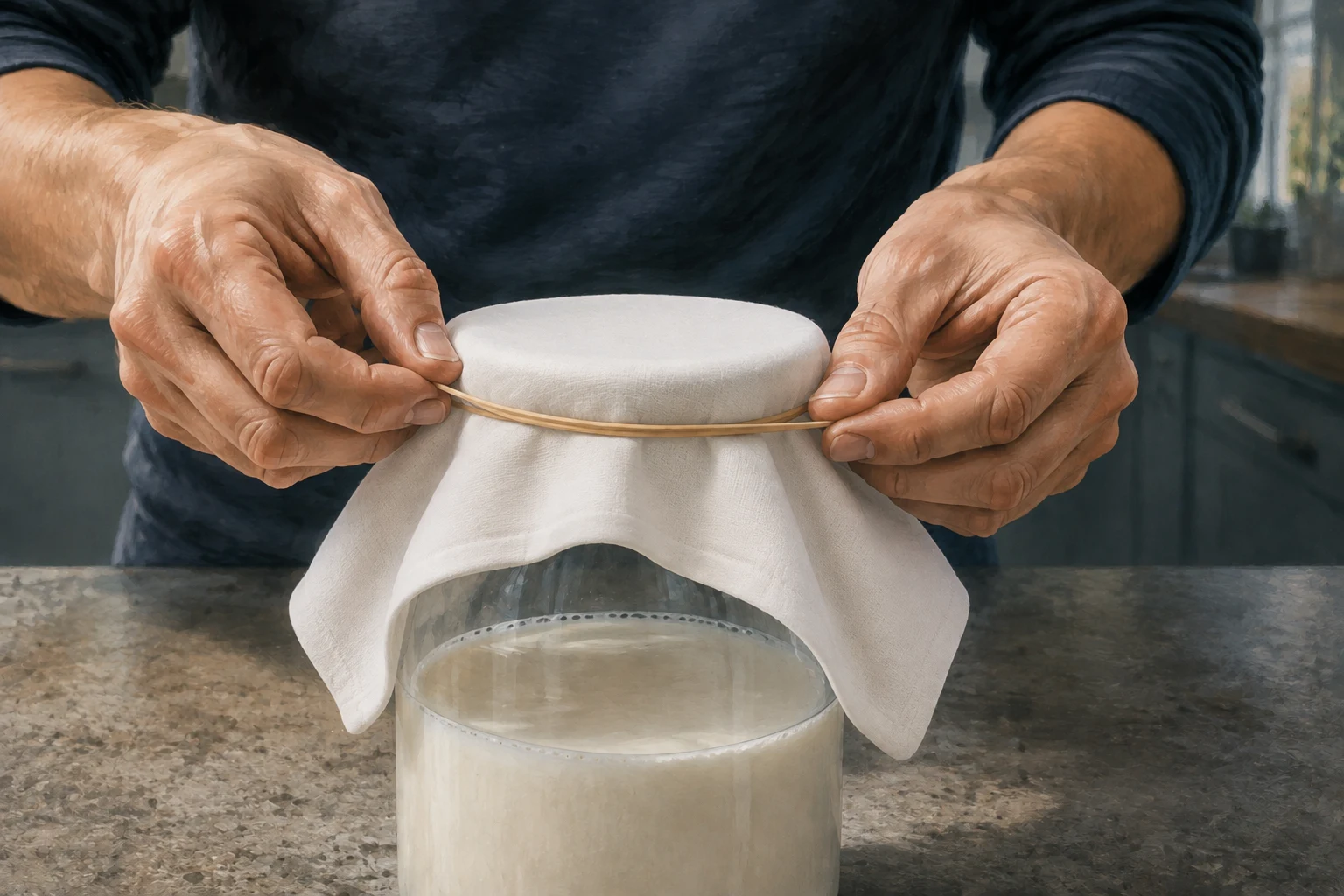
Milk kefir method
How to make milk kefir
From pasteurized milk and active grains to straining and refrigeration: the method, the changes to watch and the safety checks.
Follow the full method →What would you like to try next?
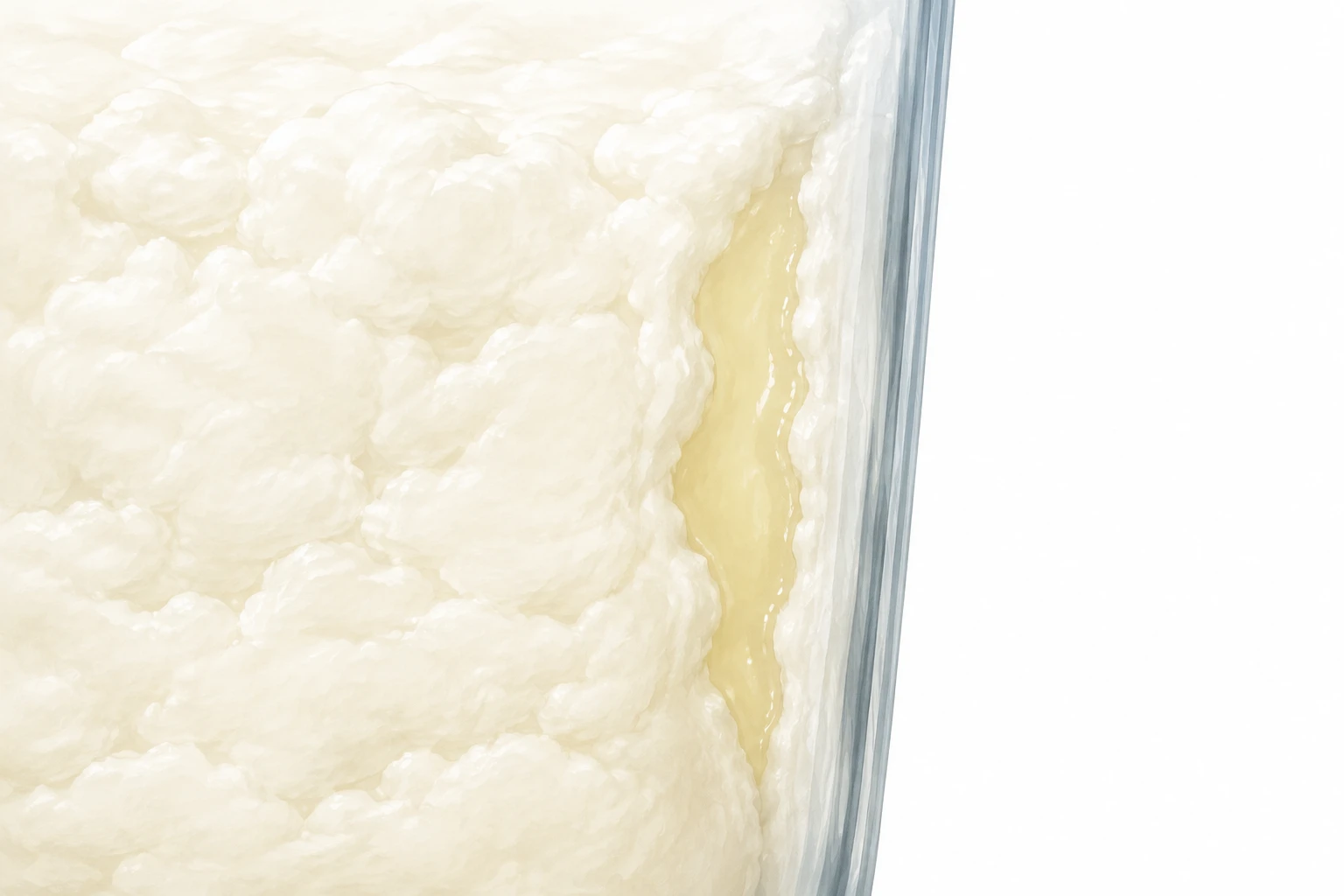 Read the fermentation
How do you know when milk kefir is ready?
Read thickening and whey pockets alongside time, temperature and handling. Appearance alone is not a safety test.
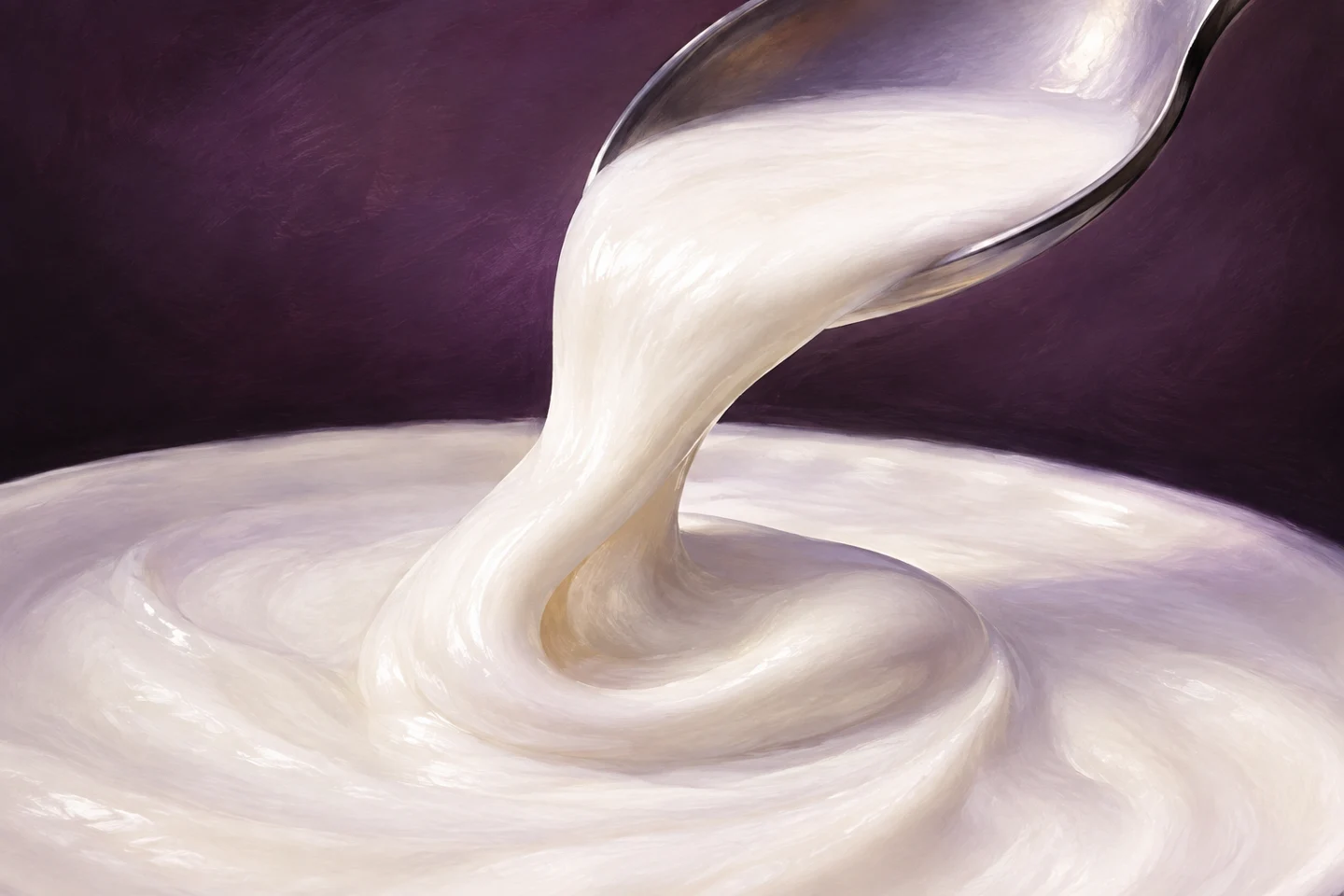 Milk kefir texture
Why is my milk kefir thin?
A jar that never thickened and one that thickened then separated need different adjustments. Find out which you have.
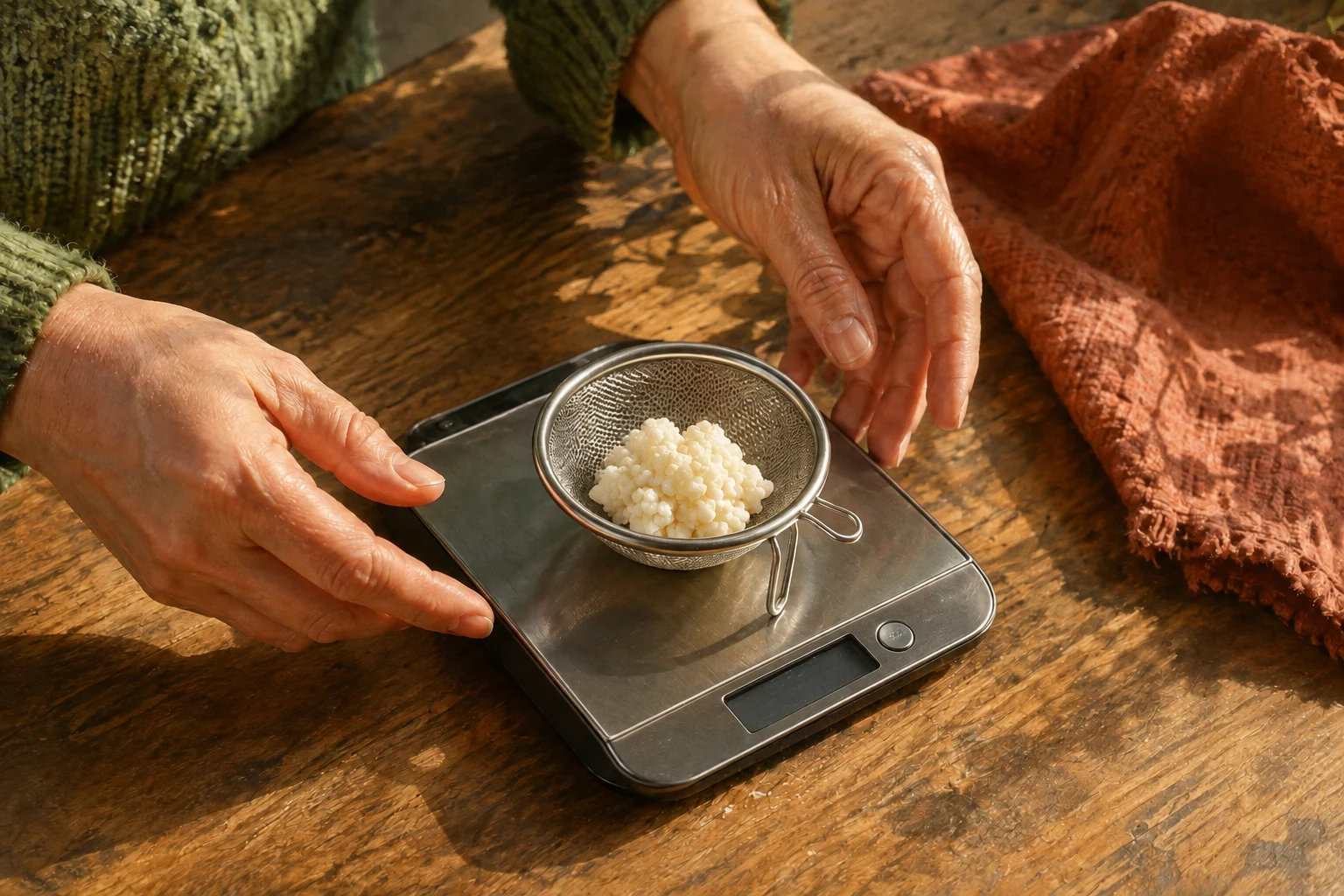 Milk grain care
How to care for milk-kefir grains
Build a feeding routine and learn which changes in the grains deserve attention.
Your first milk-kefir batch
Use the complete milk-kefir method for ratios, temperature, time and acidity checks, alongside the instructions supplied with your grains. These four steps are an overview.
- 01
Start clean
Wash your hands and use a clean jar, breathable cover, and strainer. Use fresh pasteurized milk.
- 02
Add milk and grains
Put the grains in the jar, add milk, and cover the jar so air can move without letting dust or insects in.
- 03
Watch the change
Keep the jar away from direct sun and follow the method’s temperature, time and acidity checks. Thickening, aroma and separation help you notice changes, but cannot establish safety.
- 04
Strain and chill
Strain the grains with clean equipment. Refrigerate the finished kefir and use the grains for the next batch.
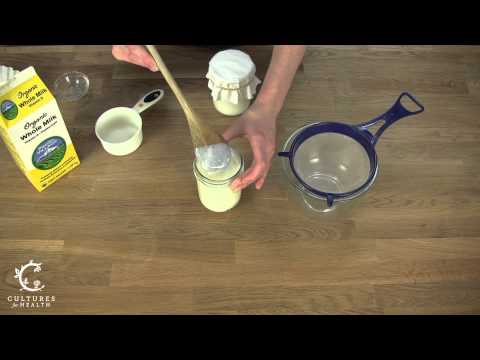
Watch the spoon move gently through the kefir in the strainer. The drink drains into the bowl while the grains stay behind.
English excerpt · 5:04–5:38. This clip shows straining; use the written method for ingredients, timing and refrigeration.
Julie / Cultures for Health
Open the original on YouTube (new tab)Mold, an unusual colour, or a rotten smell is not a normal first-batch problem. Discard the batch and grains.
Choose the milk and starter
Milk kefir or water kefir?
Compare the taste, uses, dietary fit and care needed for milk kefir, water kefir and cultured plant drinks.
Kefir grains or starter powder?
Compare reusable grains, direct-set powder and dried grains before buying a culture.
Which milk should you use for kefir?
Compare whole, lower-fat, UHT and other milks, and see why changing the milk can change the texture.
How to activate dried kefir grains
Distinguish dried grains from starter powder, then follow the feeding and recovery checks for milk or water grains.
Adjust taste and texture
Milk kefir: temperature and grain quantity
Understand why a warmer room or more grains changes the pace, and how to adjust one factor at a time.
Should you stir milk kefir—and which lid should you use?
Look at uneven thickening, insect protection and pressure when choosing how to stir and cover a jar.
Should milk kefir ferment a second time?
Compare flavouring strained kefir in the fridge with another warm fermentation, including the different pressure risks.
Do bigger kefir grains work better?
Look at grain size alongside total grain weight, temperature and the results of a controlled fermentation study.
Keep, use and compare
Making more kefir than you can drink?
Reduce the working quantity of grains, make smaller batches, or plan a break instead of letting surplus jars build up.
How long can you keep homemade kefir?
What refrigeration changes, what a date label can tell you, and why homemade batches do not share one fixed shelf life.
Homemade or store-bought kefir?
Compare ingredients, cultures, convenience and storage. Where kefir was made does not tell you everything about the drink.
How many live microbes are in kefir?
Learn what a CFU count measures, why counts vary, and what a large number cannot tell you about a health benefit.