
Milk kefir routine
Making more kefir than you can drink?
If kefir is piling up in the fridge, reduce the amount you make and the grains you keep working. If the same-sized batch is simply finishing too soon, adjust the grain-to-milk ratio or temperature. These are two different problems, and each has a manageable solution.

Is there too much drink, or is it ready too early?
Reducing the batch volume reduces how much kefir you produce. Reducing the grain amount relative to that milk usually slows fermentation. If you halve both quantities, the ratio stays the same; the batch is smaller, but it is not necessarily slower.
I make 500 mL but only use half. What should I change?
A 250 mL batch with half your previous grain weight keeps the same starting ratio. This is an arithmetic example, not a guaranteed fermentation time. Keep the same milk and conditions, then verify the normal process checks. The milk-kefir calculator can help estimate a starting amount; it cannot certify safety.
Keep only the working grains you need
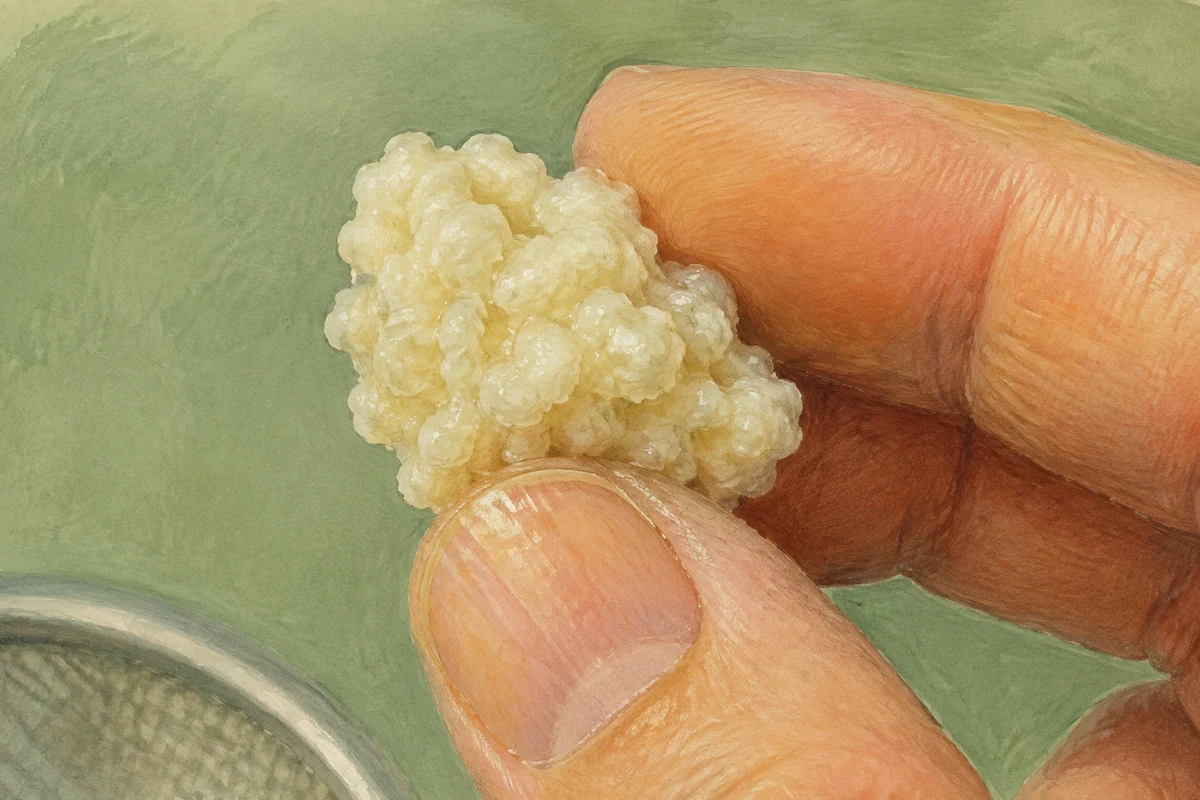
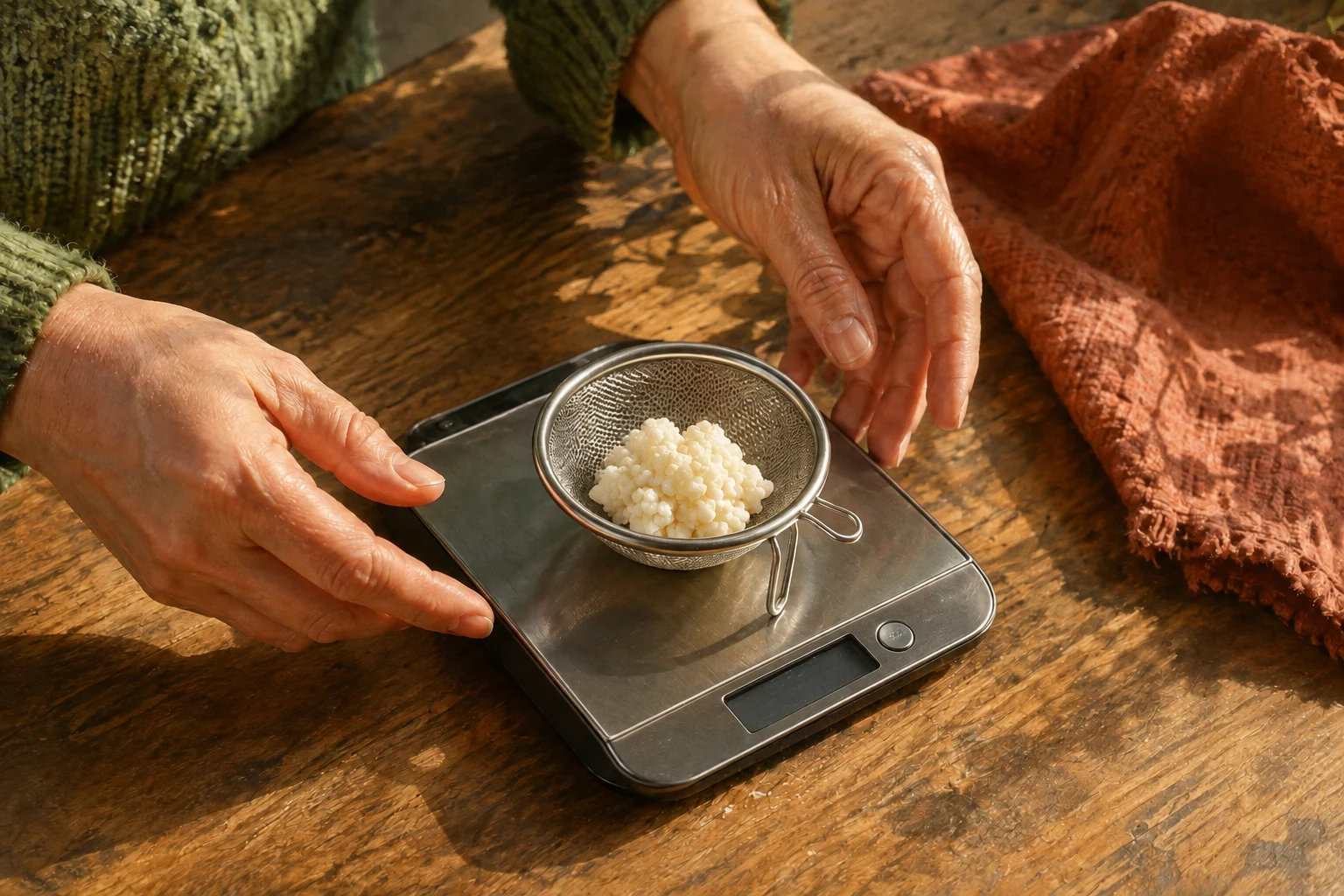
Grain growth can raise the ratio without an obvious recipe change. Weigh the drained portion occasionally. Remove healthy surplus rather than continually adding more milk to feed it. You can share surplus with clear instructions, keep a separately stored backup, or discard what you cannot maintain.
Start every batch with fresh pasteurized milk in clean equipment. Repeatedly topping up an old jar mixes liquids of different ages and makes timing harder to track.
Make an early finish easier to catch
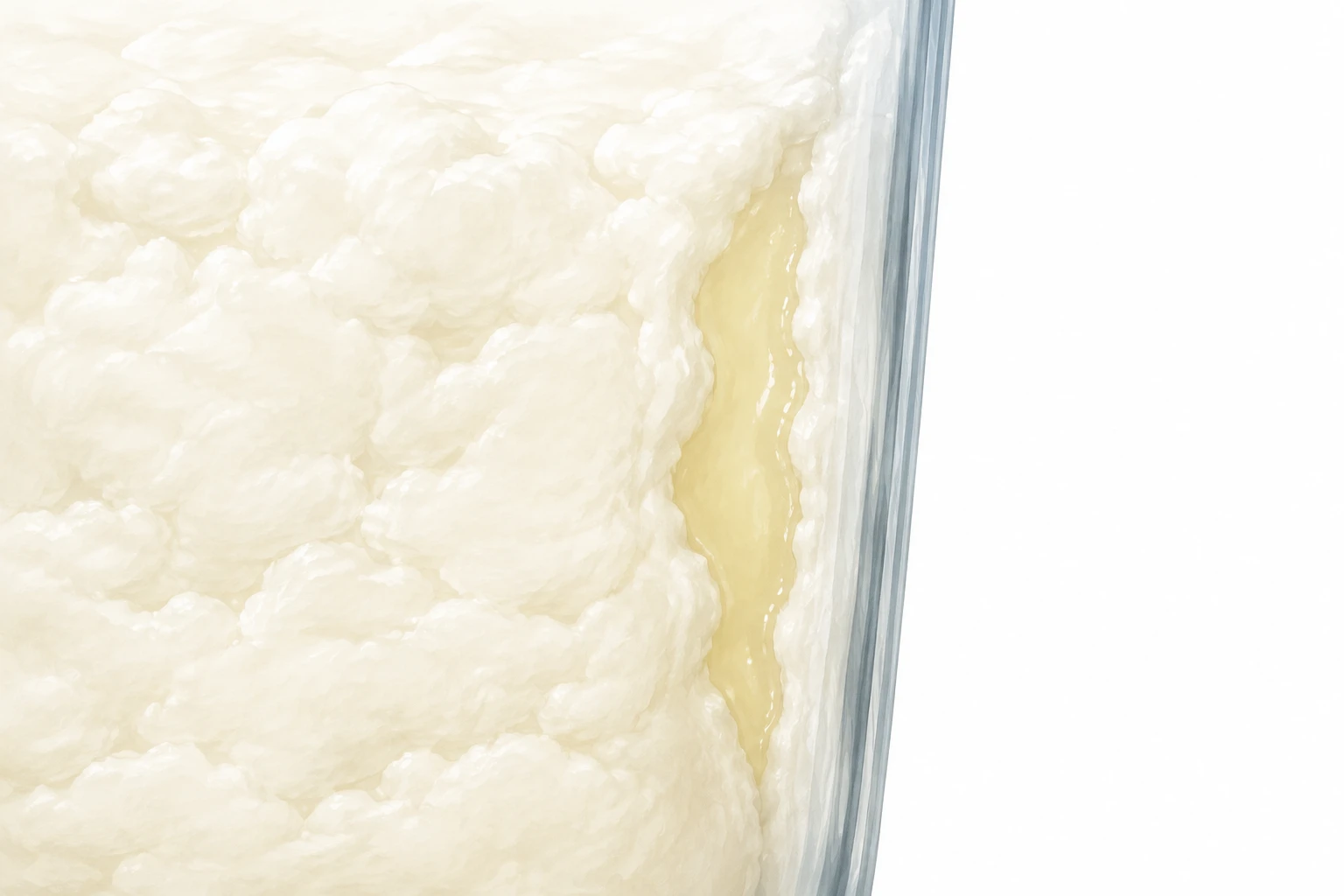
If the batch repeatedly separates before you can strain it, try fewer grains for the same milk, a cooler stable location within the established method, or a different starting hour. Change one condition at a time and record the next batches.
Do not slow the process indefinitely. Milk kefir that fails to reach pH 4.6 or less within 36 hours should be discarded. Fermenting at refrigerator temperature is not a direct substitute for the usual room-temperature process.
Use refrigeration for a planned pause
For up to seven days, put healthy grains into fresh pasteurized milk and store at 4°C or colder with a date label. Follow the short-break method and discard the storage liquid on returning.
Restart with small fresh feedings and confirm repeated normal acidification before drinking the result. Mould, unusual coloured growth or rotten odour means replacing the culture, not extending its recovery.
Pick one weekly rhythm
- 1Small and regular
Keep fewer grains working and make a smaller daily batch within the method’s process limits.
- 2Cooler and slower
Use the same recipe in a stable cooler spot and compare the finish time.
- 3A dated pause
Feed fresh milk, refrigerate for a defined short break, then restart with a small batch.
The practical questions that appear when you slow down
Can milk kefir ferment entirely in the refrigerator?
Cold can permit slow acidification, but a refrigerator-only routine is not interchangeable with the room-temperature method. Use refrigeration as the defined storage pause unless you have a validated cold-fermentation process.
Will fewer grains weaken the culture?
No, if the working portion receives enough fresh milk and is refreshed on time. A smaller well-fed culture is easier to maintain than a crowded one that exhausts its food too quickly.
How long can the grains stay refrigerated?
For the short-break method here, use fresh pasteurized milk at 4°C or colder for up to seven days, then discard storage milk and revive. Longer preservation needs a separate method.
Research behind this answer
Where to go next



Comments
No comments yet.
Comments could not be loaded.
Join the discussion