
Milk kefir texture
Why is my milk kefir thin?
Thin kefir can be an early batch that has barely acidified, or a later batch that formed curds and was stirred back together. Those need different corrections. First check the jar’s history and acidity; then decide whether to adjust fermentation, choose another milk or simply chill the finished drink.
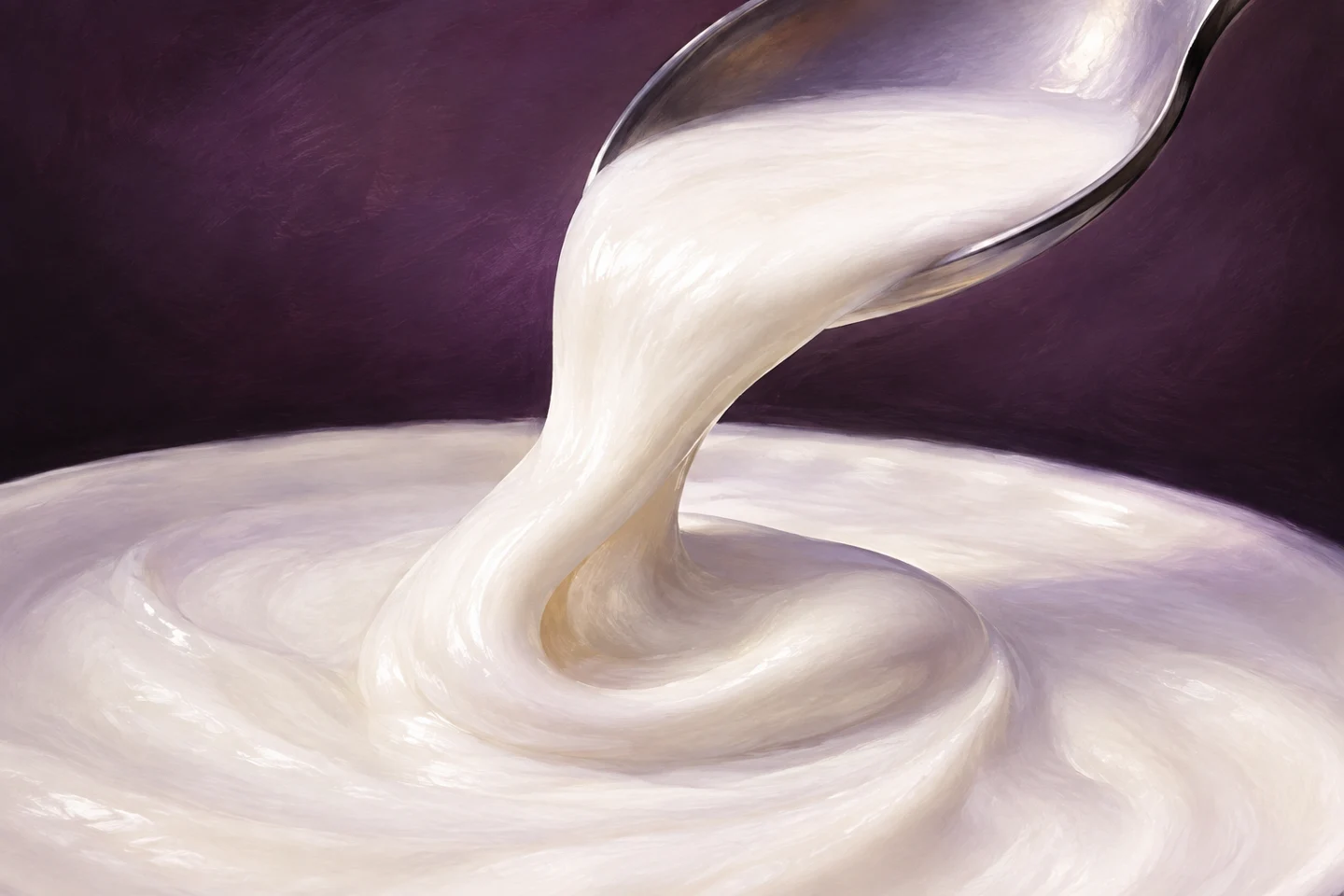
First, work out when it was thin
A milk-like batch with little change may not have acidified enough. A tart but lightly thickened batch may reflect the milk or an early texture finish. A batch that formed curds and whey before stirring has already passed through a thicker stage.
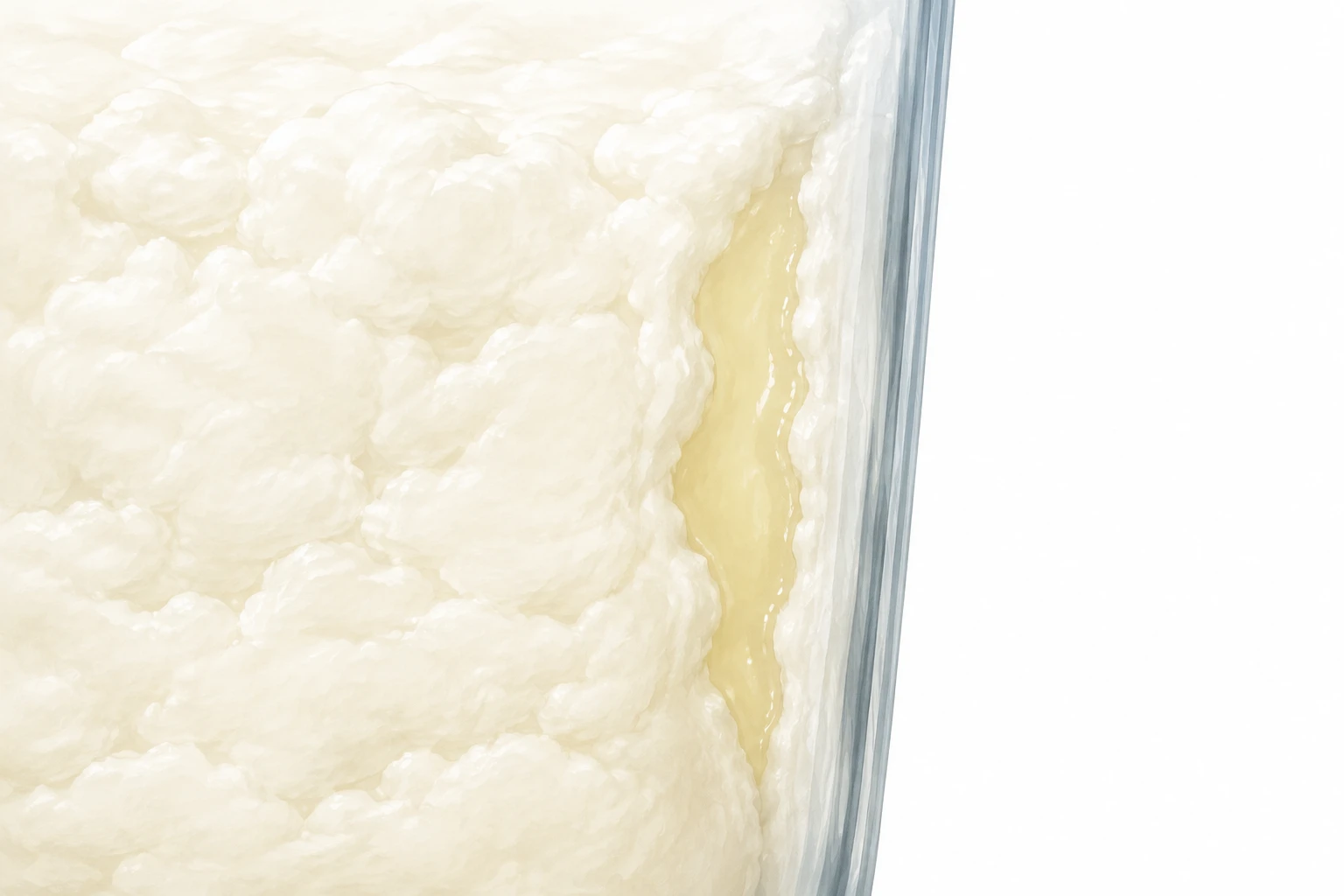
Look at the unshaken jar and your notes. Did it coat the glass? Were there small whey pockets or a large clear layer? The jar-reading guide shows what those signs mean.
An unchanged jar needs an activity check
Confirm that the grains were active, the milk was fresh and pasteurized, and the temperature was suitable. A starting range of 15–30 g active grains per 500 mL milk around 20–25°C can provide a comparison, but it is not a guarantee for a recovering culture.
Measure acidity. A milk batch that fails to reach pH 4.6 or less within 36 hours should be discarded, even if it smells ordinary. Do not leave it warm indefinitely to thicken. Repeated failure needs grain revival or replacement, not added cream or milk powder.
A separated jar needs an earlier finish next time
As acid builds, milk proteins form a network. Further acidification and handling can produce curds and released whey. Once stirred, that mixture may pour thinly even though it fermented extensively.
If its process and storage history are sound and there are no spoilage signs, stir or blend after removing the grains and use it promptly. For the next batch, check earlier or reduce the speed by changing one condition. More grains can make this particular problem worse.

Change milk only after timing is consistent
Fat affects richness; protein and processing help determine the gel. Compare milk types with the same culture, temperature and finish point. Cold finished kefir may feel fuller than a warm, freshly stirred sample, so chill both before judging.
I want something I can spread on toast. Should I ferment longer?
Drain properly finished kefir in the refrigerator instead. Removing whey creates a different consistency without extending room-temperature fermentation. The kefir spread guide explains how to stop draining at the texture you want.
Separate preference from contamination
Thinness or normal separation alone does not prove spoilage. Fuzzy growth, unusual coloured patches, insects, rotten odour or an unsafe handling history changes the decision: discard without tasting. A thicker texture would not make that batch safe.
Match the correction to the jar
- 1Milk-like and sweet
Verify acidity and the process time limit; change culture amount only for the next batch.
- 2Tart but only lightly thickened
Compare a higher-protein milk while keeping the other controls stable.
- 3Curd and clear whey
Finish earlier or slow the next batch.
- 4Smooth when warm, richer when cold
That is normal settling; judge it after chilling.
Texture fixes people often reach for too soon
Should I add milk powder?
It can raise milk solids and change body, but first establish a clean, repeatable ferment with ordinary milk. Otherwise it hides the real timing or culture problem.
Does more grain always make thicker kefir?
No. More active grain usually makes the batch move faster. If you miss the shorter finish window, it can cause more separation and a thinner stirred drink.
Can I blend separated kefir smooth?
Only if its time, acidity and handling checks passed and there are no spoilage signs. Remove the grains first; blending changes texture, not safety.
Research behind this answer
Where to go next
Diagnose thin, grainy, or sour kefir
Start from the texture you see and change the variable most likely to cause it.Get the next answerRead more
How do you know when milk kefir is ready?
How to activate dried kefir grains

Milk kefir: temperature and grain quantity
Which milk should you use for kefir?
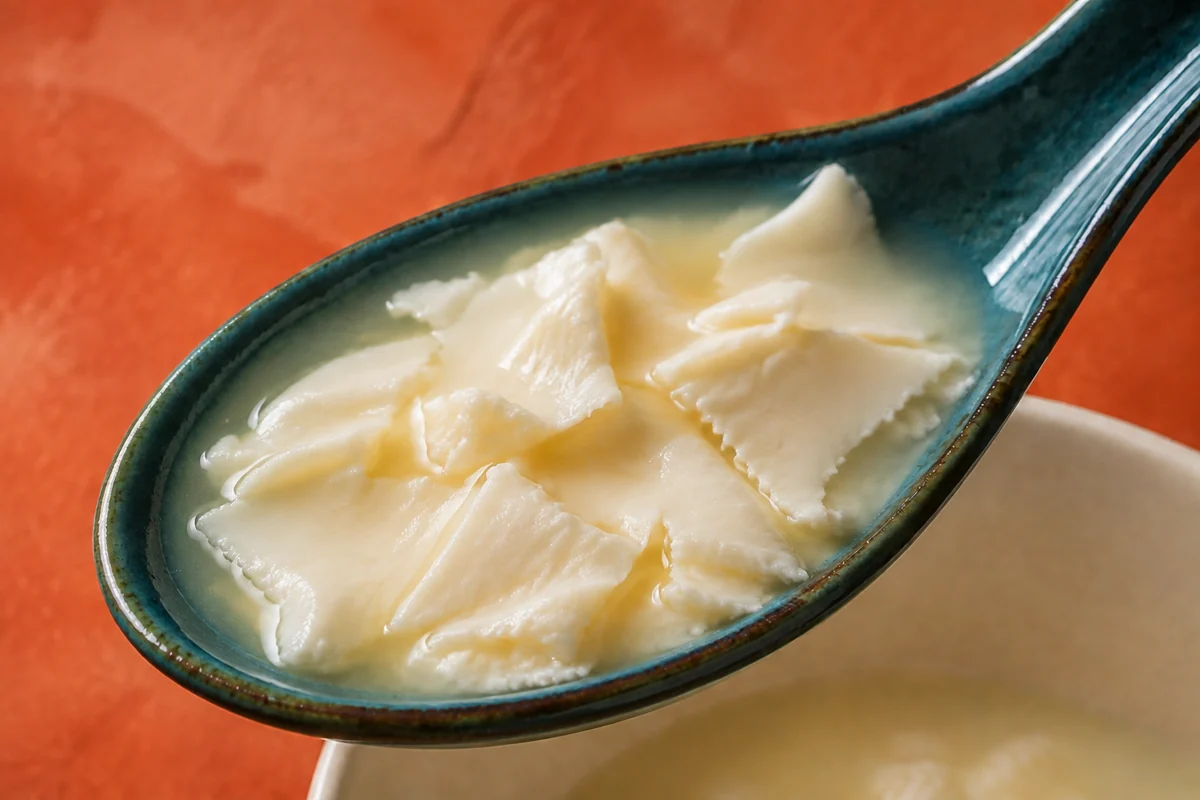
Why is my kefir grainy, separated or too sour?
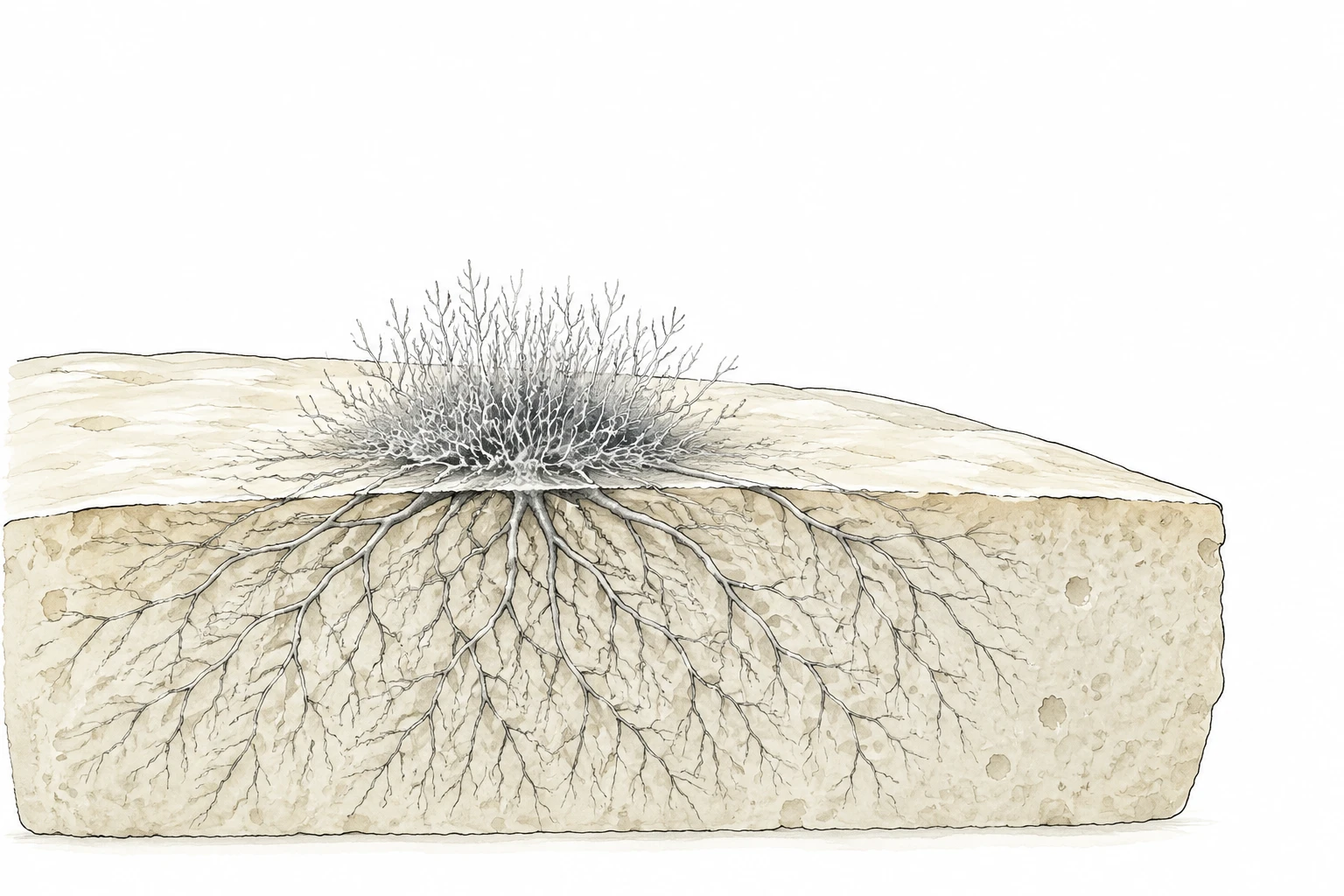
Is this kefir safe to drink?
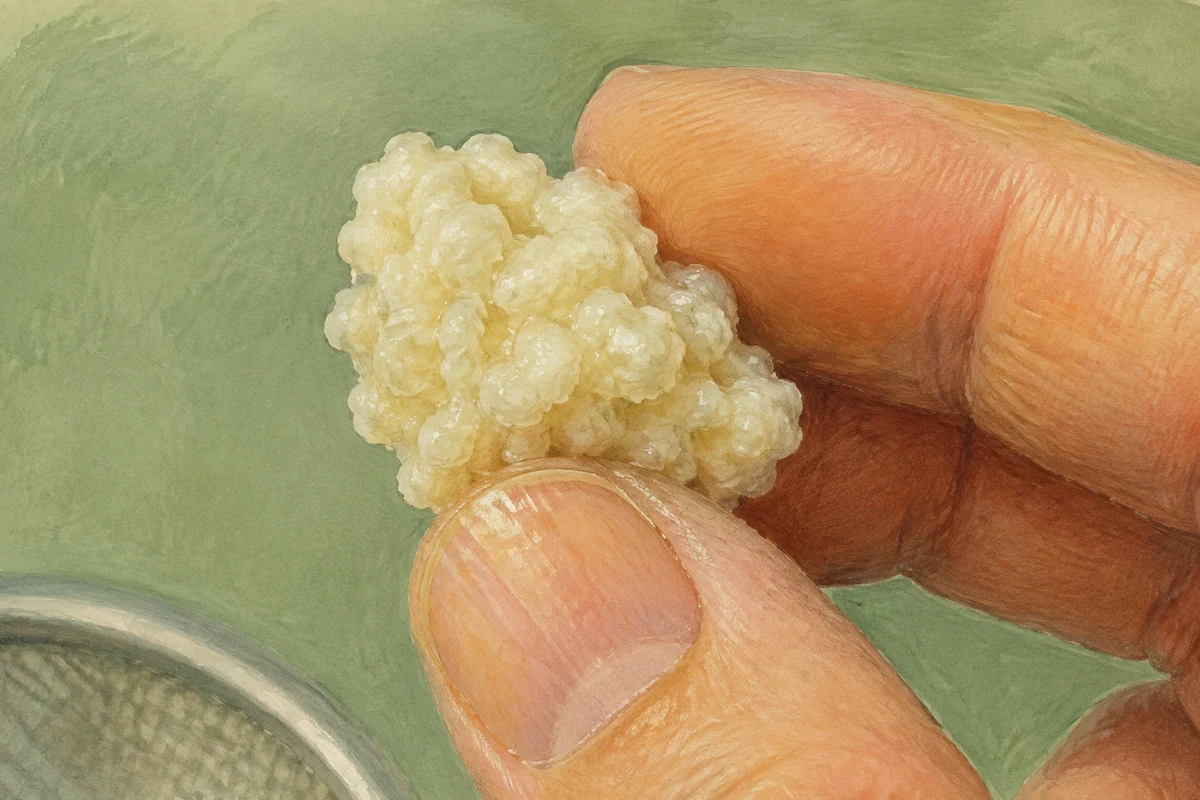
Do bigger kefir grains work better?

Comments
No comments yet.
Comments could not be loaded.
Join the discussion