
Kefir in the kitchen
Turn kefir into a spread
The same kefir you pour over breakfast can be thick enough to hold on toast. You do not need to cook it or add a thickener: line a sieve, put it in the fridge, and let some whey drain away. Stop while it is spoonable for a dip, or leave it longer for a spread. Then comes the fun part: garlic and chives, roasted pepper, or something sweet.
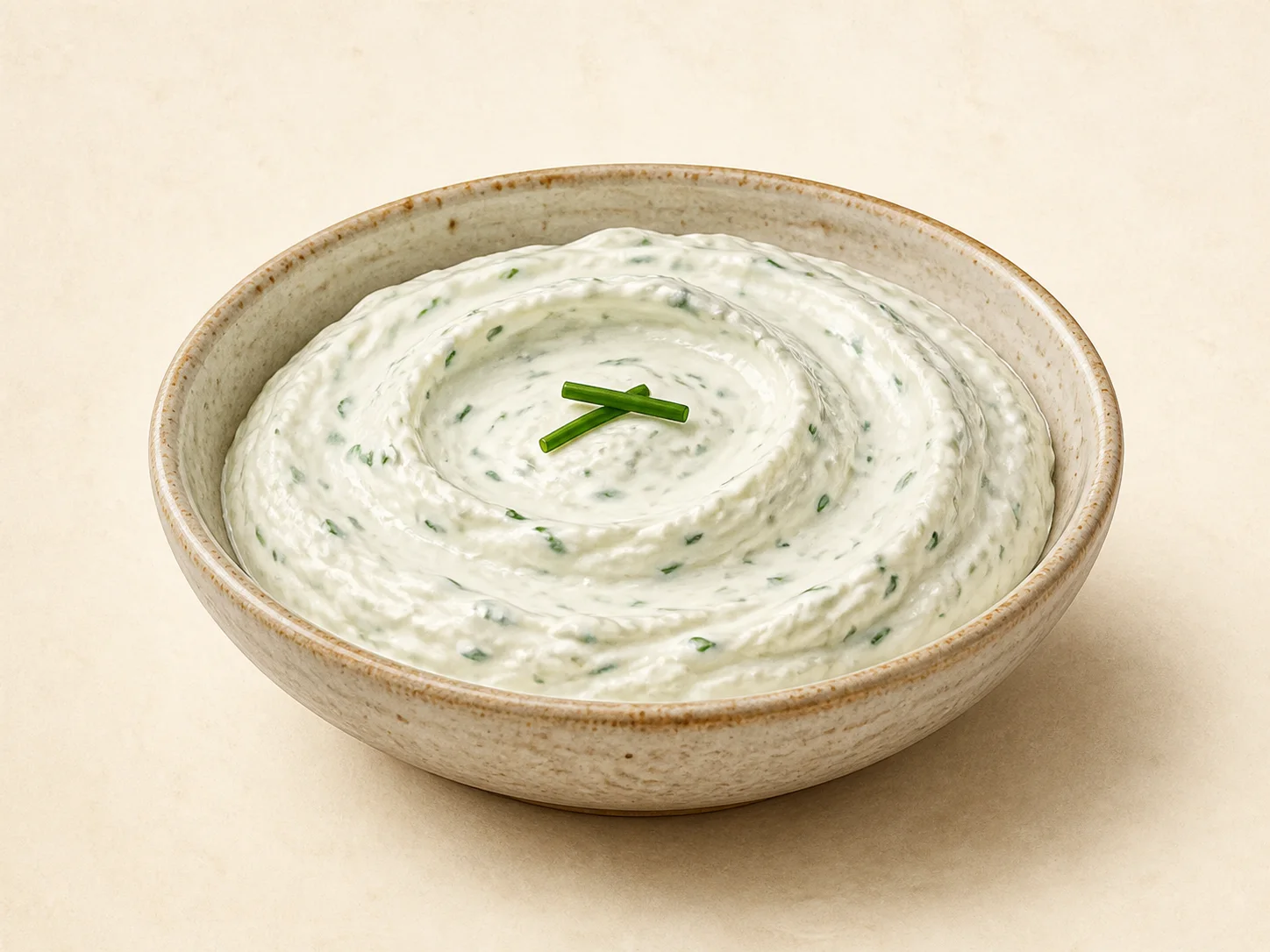
Let the fridge do the waiting
How to strain it
- Line the sieve with the clean cloth and sit it securely over the bowl. Leave enough space underneath so the kefir will not sit in the whey it releases.
- Pour in the kefir, cover, and refrigerate at 4°C or below. Start checking after about 12 hours; many batches need 12–18 hours, but thickness varies. If the bowl fills, empty the whey into another clean container.
- Lift a spoonful. Does it hold the shape you want? Transfer it to a bowl and fold in the garlic and chives. Add a small pinch of salt, taste, then adjust. You can start with half the garlic if you prefer it mild.
- If it is too loose for toast, drain it longer in the fridge. If it is too firm, stir in plain kefir a teaspoon at a time. Keep the finished spread covered and refrigerated.
How thick do you want it?
A dip that falls from the spoon
Stop when it is creamy but still easy to stir. Add herbs and serve with cucumber, carrot sticks or bread. The flavour is already tangy; taste before adding lemon.
A spread that stays on toast
Let more whey drain until a spoonful holds a soft mound. Add chopped flavourings after draining, so you can see how much they loosen the mixture.
Firm enough to roll into little balls
That takes a drier texture than a spread. Follow the za’atar kefir labneh balls recipe for the draining, shaping and serving steps.
The timing is a guide; the spoon test tells you when to stop. Thin starting kefir, the cloth and the depth of the mixture all change how quickly it drains.
Eight ways to flavour it
These starting amounts are for the spread drained from 500 ml of kefir. If you drained it very firm and have a small yield, start with less. Stir in the flavourings, then taste before adding salt.
Savoury: herbs, pepper, miso and tomato
Garlic and chive: 1 small grated garlic clove + 2 tablespoons chopped chives. Start with half the garlic for a gentler flavour.
Scallion and black pepper: 1 finely sliced scallion + up to ½ teaspoon coarsely ground black pepper. Add the pepper gradually.
Roasted pepper: 60 g drained, chopped roasted red pepper + ½ teaspoon smoked paprika. Pat the pepper dry so it does not turn the spread watery.
Walnut and herbs: 20 g toasted, cooled, chopped walnuts + 2 tablespoons chopped parsley, dill or chives. The nuts give it some crunch.
Miso and sesame: 2 teaspoons white miso + 2 teaspoons toasted sesame seeds. Miso brings salt of its own; you may not need any extra.
Sun-dried tomato and basil: 35 g drained, finely chopped sun-dried tomatoes + 1 tablespoon chopped basil. Taste before salting; tomatoes vary in saltiness.
Sweet: honey and cinnamon, or dates and walnuts
Honey and cinnamon: 2 teaspoons honey + ¼ teaspoon cinnamon. Spread on toast or spoon alongside sliced fruit. Do not give honey to a child under one year.
Date and walnut: 2 soft dates, pitted and finely chopped + 15 g toasted, cooled, chopped walnuts. Chop the dates small enough to distribute their sweetness.
The base contains milk. Walnut, sesame and miso variations introduce other allergens; check your ingredients. Straining does not make milk kefir safe for someone with a milk allergy.
What about the liquid in the bowl?
That is whey. Keep it covered and cold if you plan to use it. Its acidity can add tang to a dressing; try the kefir-whey cabbage slaw rather than treating it as waste.
Strained kefir still has the tartness of the drink. It can take the place of a soft, tangy spread at the table, but it will not behave exactly like commercial cream cheese in a cheesecake or other baking recipe.
Weigh the drained curd when another recipe asks for a specific amount of kefir cheese. The starting volume cannot guarantee that final weight.
Keep it cold, including while it drains
Keep the covered bowl and finished spread at 4°C or below. Make a batch you expect to eat within three days, and follow an earlier use-by date on any ingredient. Straining does not make old kefir fresh again.
Use a clean spoon each time. Serve only what you need and return the rest to the fridge. FDA guidance for perishable foods sets a maximum of two hours out of refrigeration, or one hour above 32°C. Do not store this fresh spread submerged in oil.