
Your first glass of kefir—and what comes next
Start by choosing a kefir you want to try. Then find a comfortable serving. If you enjoy it, you can explore making your own; buying it ready to drink is also fine.
Begin the plan
Find the kefir that suits your day
Milk kefir is creamy; water kefir is a lighter fermented drink. A plant-based version needs a culture suited to its base. Start with the ingredients and allergens, then decide whether you want a ready-to-drink bottle or a culture to make your own.
 What kefir isLearn the plain-language difference between kefir, yogurt, and fermented drinks.
  Milk, water, or plant-based?Compare the base, taste, sugar, and everyday use.
  Check a store-bought labelUse six details to compare bottles without relying on brand claims.
  Kefir or probiotic pills?Choose by what you want, what you can eat, and what you will use consistently.
 Start small enough to notice the difference
Keep the kind, amount, and time of day steady for a few days. If your digestion feels comfortable and you want a larger serving, you can increase it gradually; staying with a small serving is fine too. Changing one thing at a time makes your response easier to understand.
 Choose your first servingSee a practical starting amount and how to adjust it.
  If lactose worries youUnderstand why fermented milk can feel different from regular milk.
  Track one gut questionFollow one symptom instead of trying to judge everything at once.
  Kefir and bowel habitsSee what changed in a four-week human study.
 Learn what the jar is telling you
Start with the complete milk-kefir method and follow its hygiene, ingredient ratios, temperature, time and acidity checks. Texture and aroma can help you notice changes, but cannot establish safety. Get familiar with the basic method before experimenting.
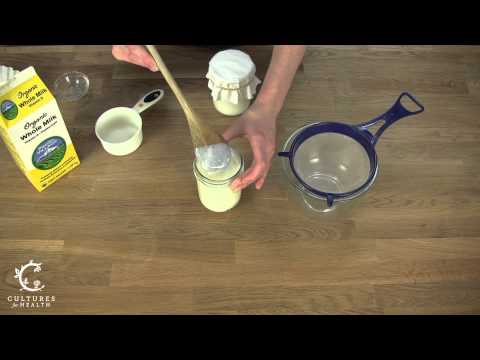
Watch the spoon move gently through the kefir in the strainer. The drink drains into the bowl while the grains stay behind.
English excerpt · 5:04–5:38. This clip shows straining; use the written method for ingredients, timing and refrigeration.
Julie / Cultures for Health
Open the original on YouTube (new tab)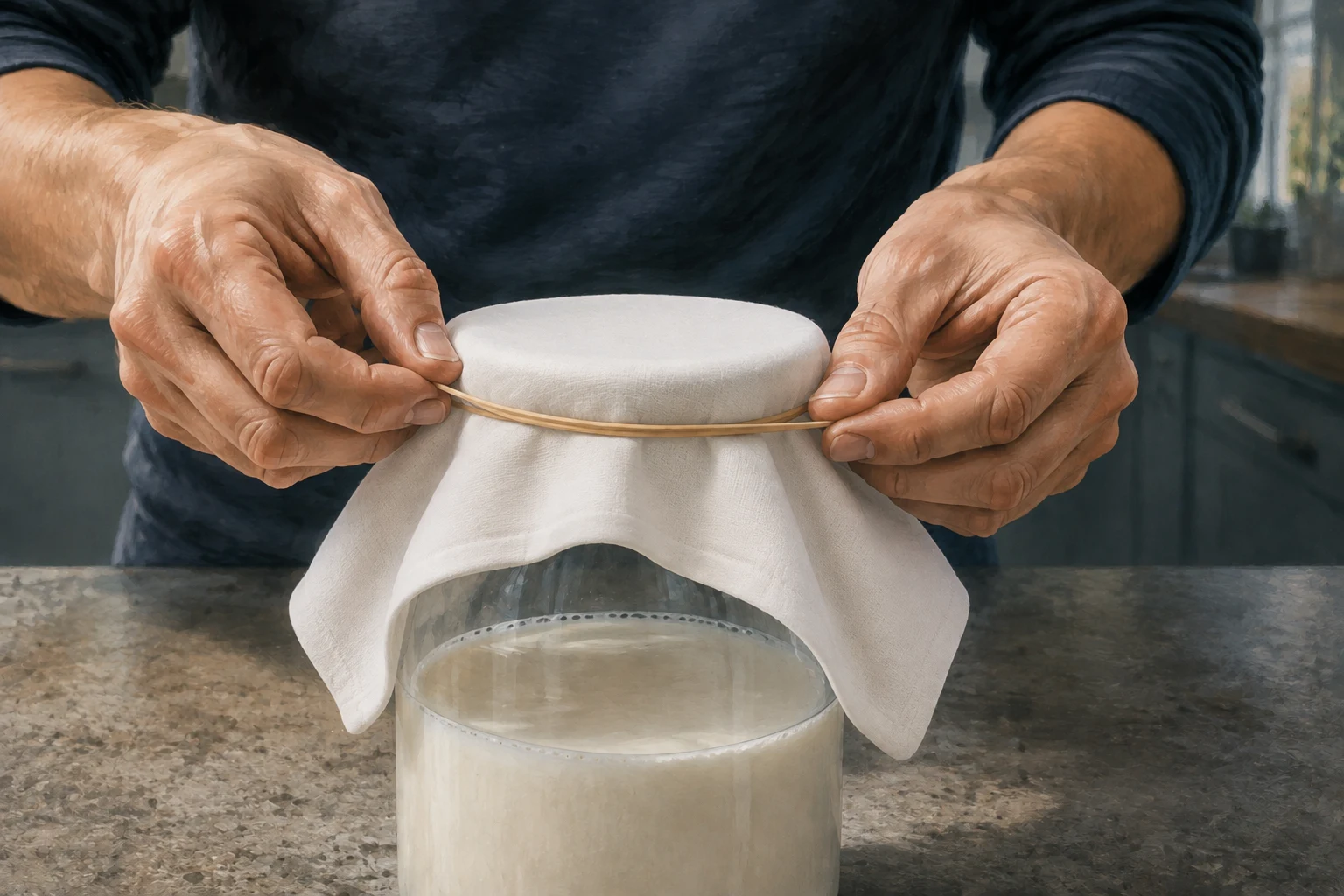 Make your first milk kefirFollow the basic method from jar to finished drink. Calculate milk and grainsEstimate a starting ratio for your room and schedule.
 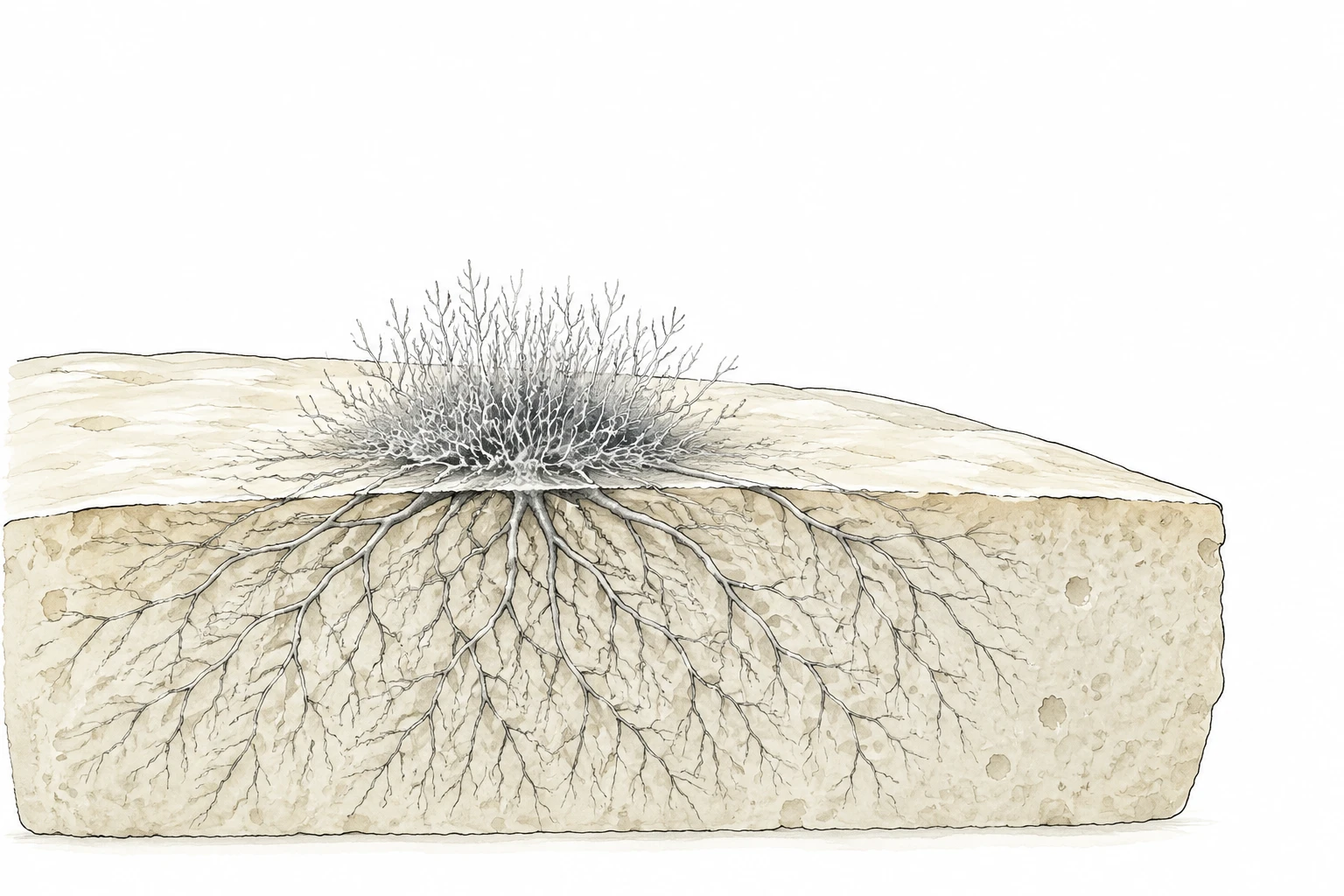 Check an unfamiliar changeSeparate normal sourness and separation from clear discard signs.
 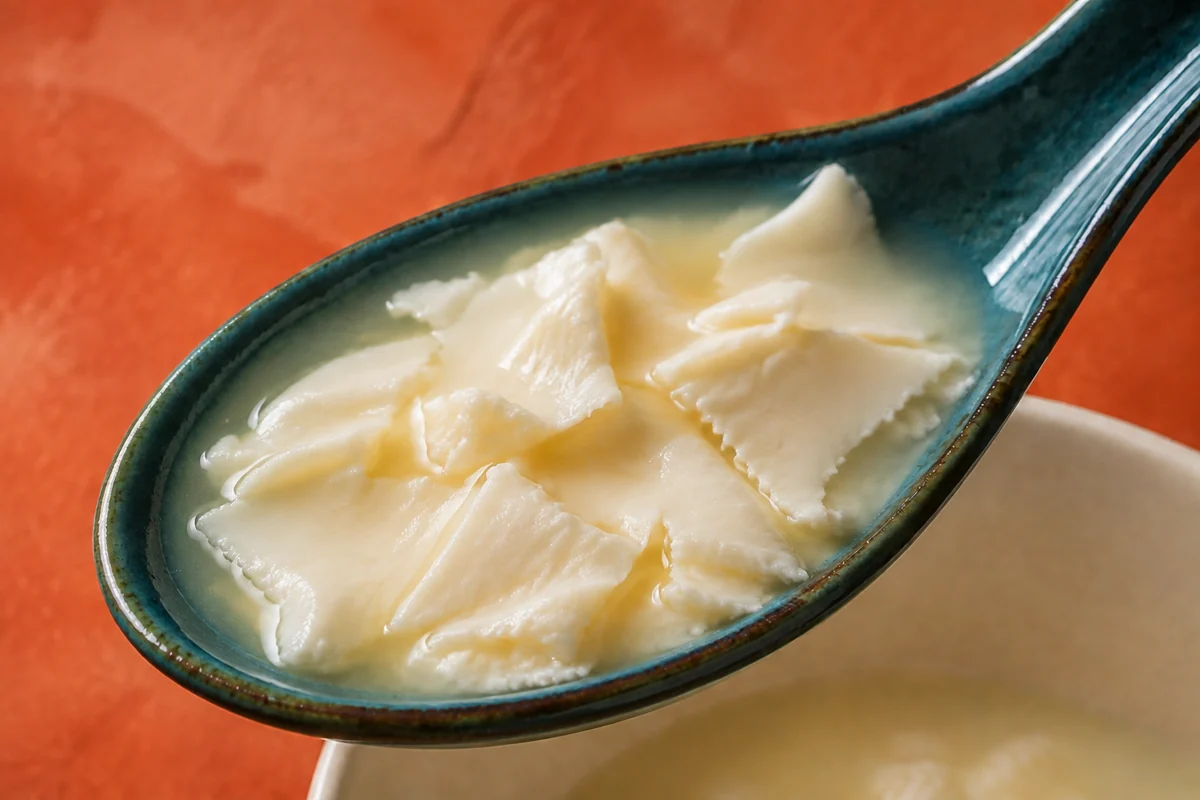 Fix thin, grainy, or sour kefirChange one variable and see what improves. Watch the basic methodPair a demonstration with the written measurements and safety notes.