
Understand the starter
Kefir grains or starter powder?
Two packets can both say “kefir starter” and ask very different things of you. Active grains are ready for a regular feeding routine. Dried grains first need reactivation. Direct-set powder starts a batch according to its instructions, but is not meant to turn into reusable grains. Choose the routine as well as the product.
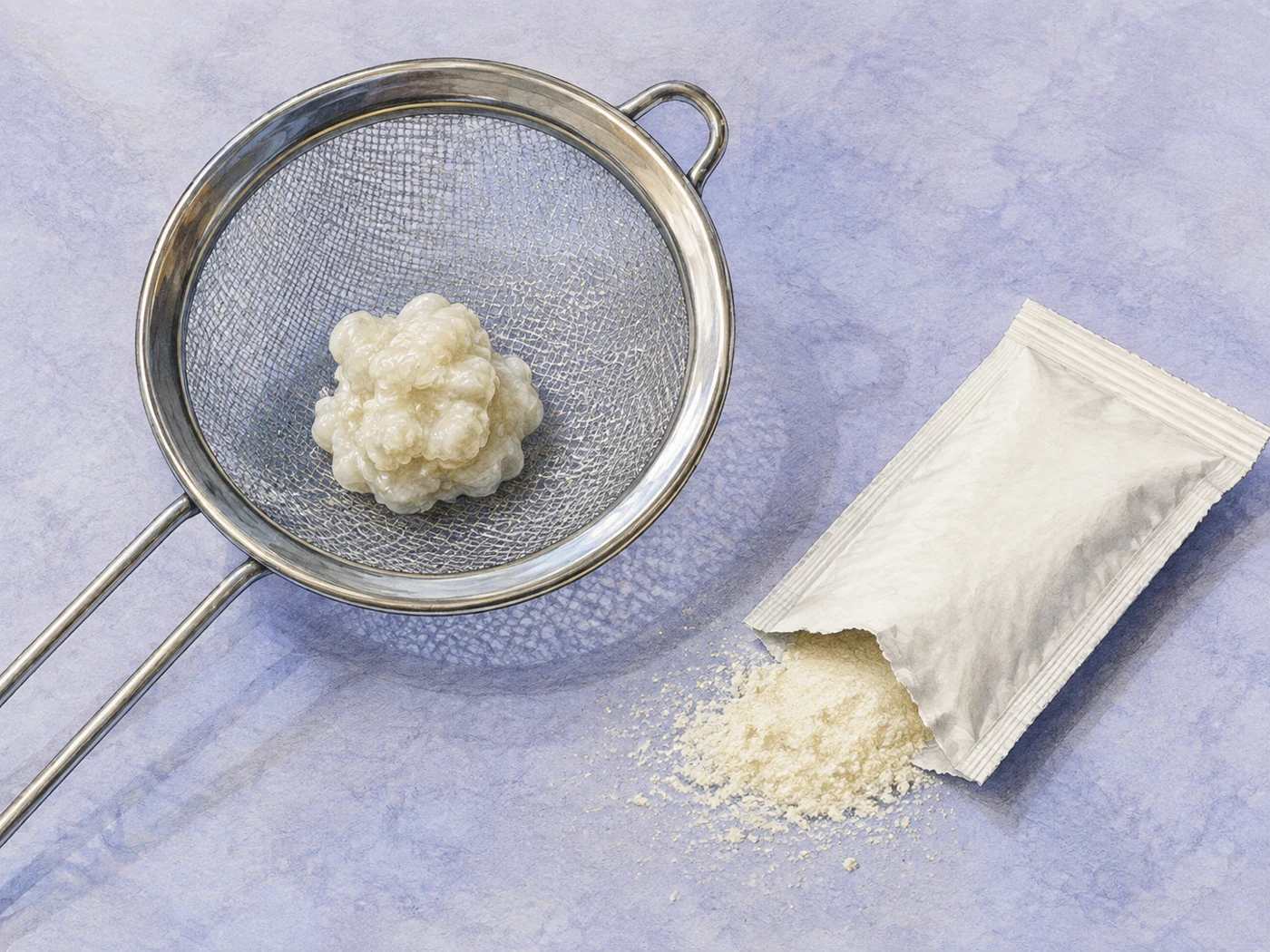
With grains, the next batch starts with what you keep
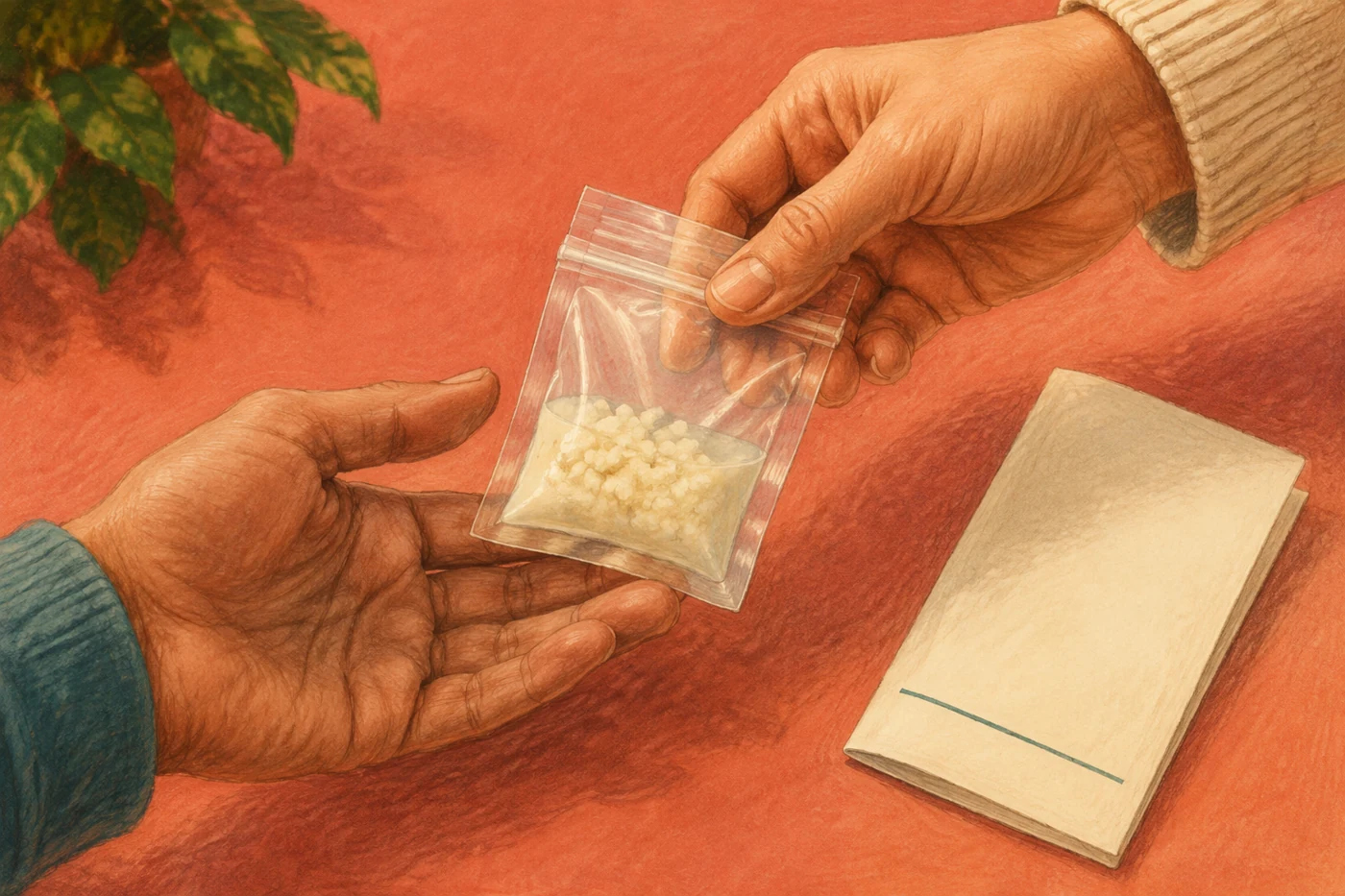
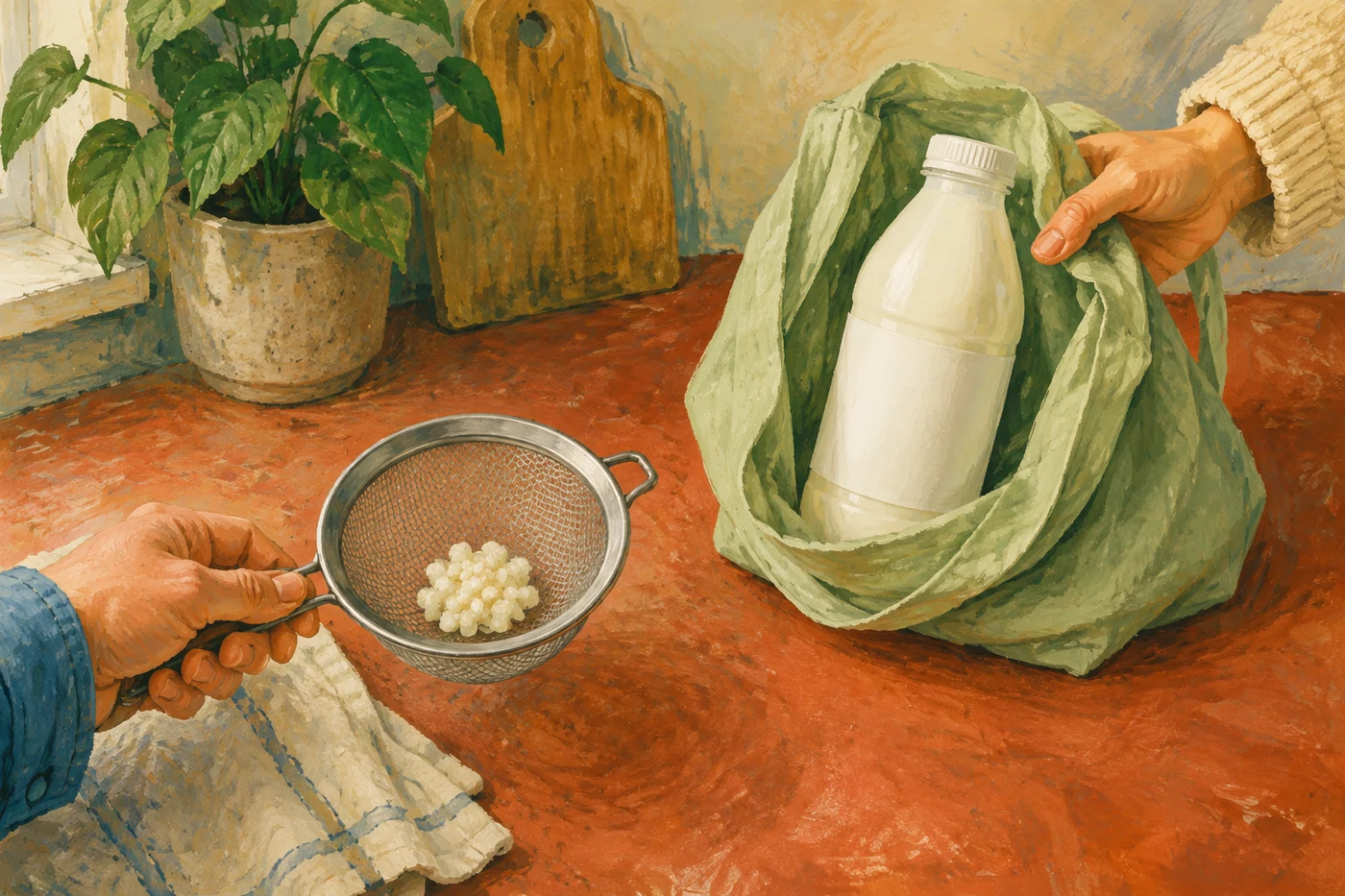
Put active milk-kefir grains into fresh pasteurized milk. After fermentation, strain them out, refrigerate the drink and feed the grains again. A well-cared-for culture can continue through repeated batches and may grow enough to share.
The grains are a physical structure containing a community of microbes. Their response changes with milk, temperature, ratio and feeding. If you like comparing one jar with the next, that is part of the pleasure of keeping them. The grain-care guide explains the routine.
With powder, the packet defines the method
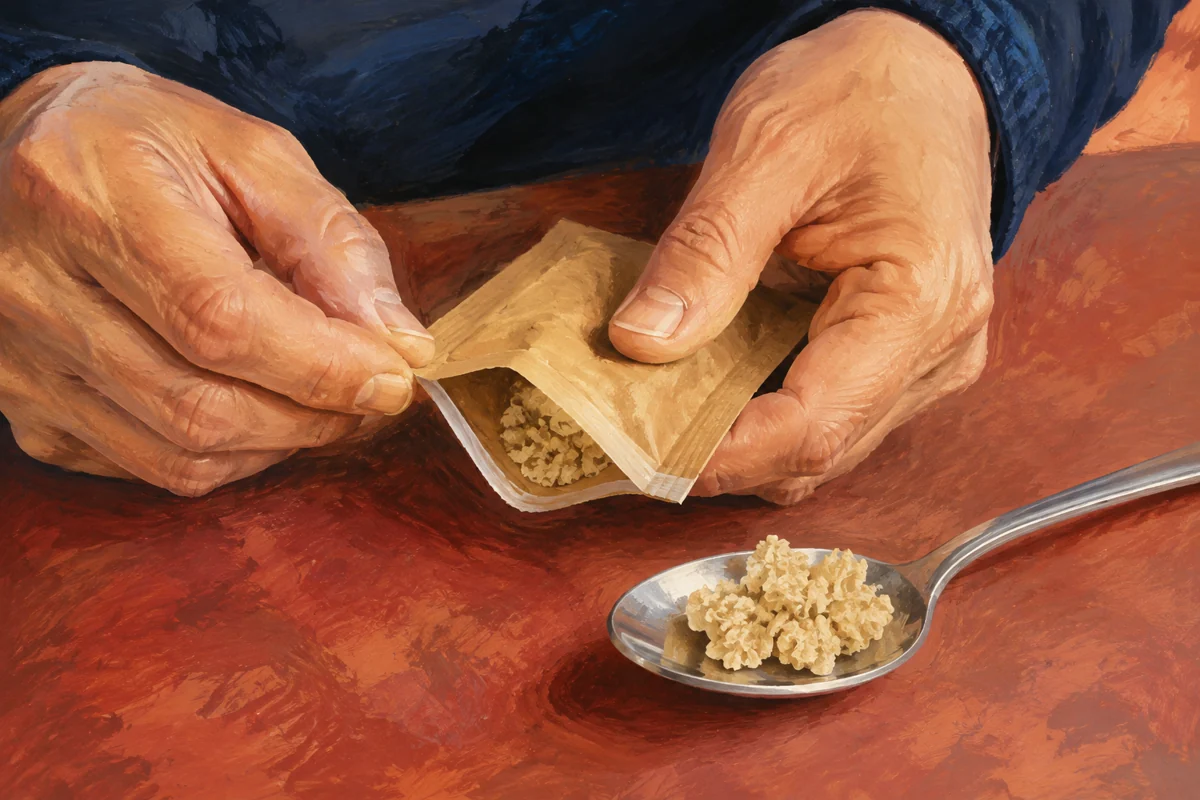
A direct-set starter provides selected organisms in a measured amount. Use the volume, temperature and time specified by that manufacturer. Some allow a limited number of batches started with the previous finished drink; others do not. A batch becoming thick does not establish that indefinite reuse is reliable.
This can suit occasional making because you do not have to maintain a grain culture between batches. Store unopened packets as directed; some starters need refrigeration or freezing.
Dried grains need a different first week
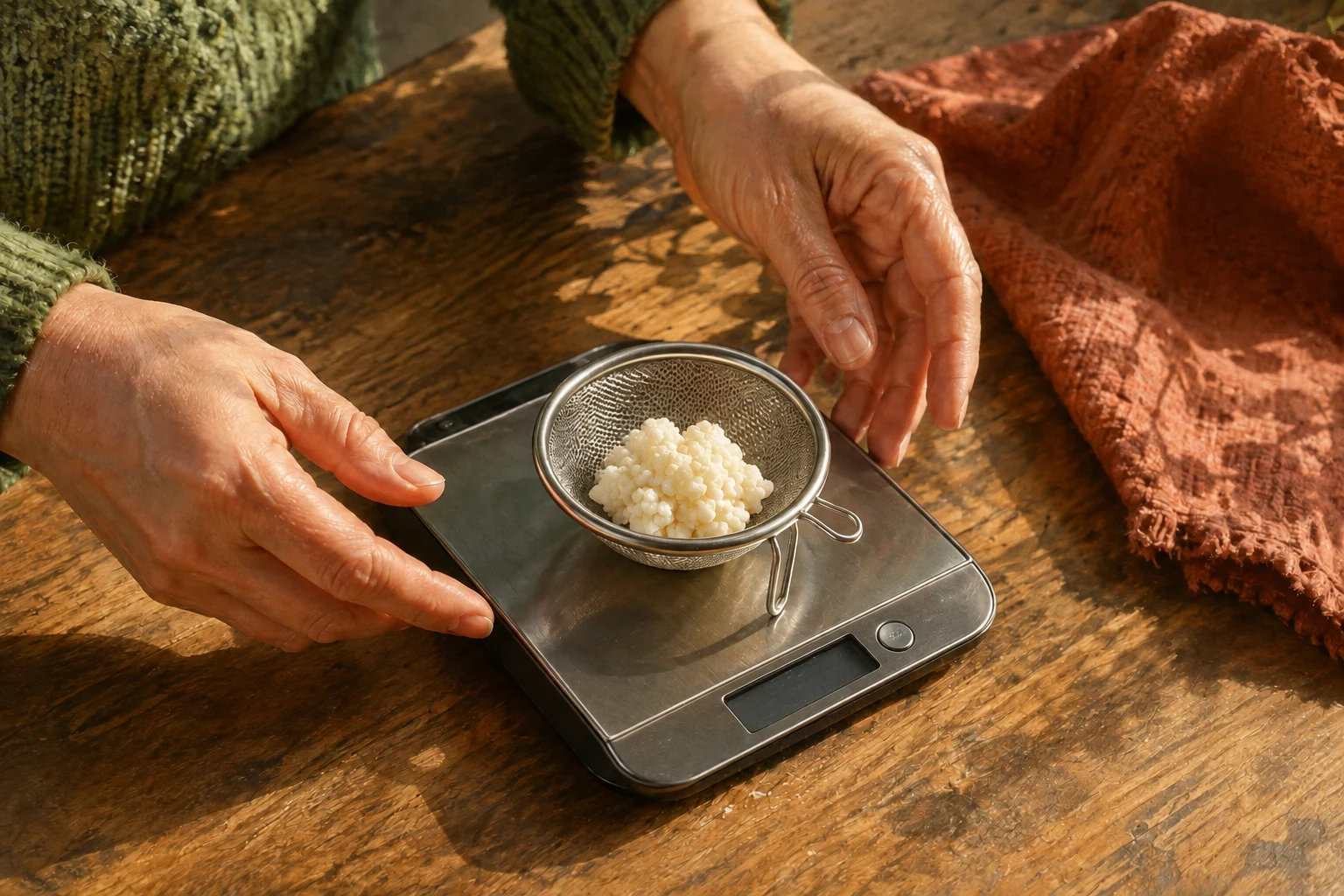
Drying can make grains easier to transport, but they need reactivation after arrival. Follow the supplier's feeding method and judge recovery by reliable fermentation, not one fixed number of days. Do not drink activation liquid from a culture that has not yet shown a sound process. The dried-grain guide covers that transition.
A sachet promises “reusable kefir”. What should you ask before buying?
Ask whether it contains dried grains that you will strain out, or a powder whose finished drink can start a limited number of later batches. Also ask for the feeding or reuse instructions. The word “reusable” alone does not distinguish them.
Choose for the week you actually have
| If you want… | Consider… | Plan for… |
|---|---|---|
| Regular batches and a culture to share | Active grains | Feeding, straining and a storage plan for breaks |
| Real grains sent in a dry form | Dried grains | Reactivation before normal use |
| Occasional batches with a specified starter | Direct-set powder | Packet storage and any limit on reuse |
Milk and water kefir need separate cultures; buying milk grains is not a way to make water grains. For a plant drink, choose a culture and method suitable for that base. Milk-fed grains can carry milk residue, so they are not an allergy-safe shortcut to a dairy-free ferment.
The culture is only part of a health claim
A culture selected to make pleasant fermented milk is not automatically a clinically tested probiotic. Health results depend on the tested preparation, amount and purpose. More listed organisms, or the word “traditional”, does not establish greater benefit.
You can choose a starter for the food you want to make. For a specific symptom, use the health-evidence guide to see what was actually studied. You do not need to expect a treatment effect to enjoy tending grains or making an occasional batch.
Questions worth settling before the first batch
Will starter powder eventually grow kefir grains?
No. A direct-set culture can ferment milk, but it should not be expected to build traditional reusable grains.
Are dehydrated grains weaker than wet grains?
Drying and transport can affect recovery. A dried culture that resumes reliable fermentation may work well, but recovery is not guaranteed. Judge the actual batches and follow the activation instructions.
Do more listed strains make better kefir?
No. The useful comparison is the actual culture, dose, live status, finished food, and the result you want.
Which system is easier when I travel?
A stored starter packet may suit occasional making if you can meet its storage conditions. Living grains need a planned break or someone to care for them.
Research behind this answer
Before the culture arrives



Comments
No comments yet.
Comments could not be loaded.
Join the discussion