
Follow a batch from start to finish
What happens while kefir ferments?
Milk kefir can move from freely pouring milk to a soft gel and then separated curds. Water kefir stays liquid while its sugars, acids and aroma change. Explore both paths, then see how temperature, grain amount and bottling affect them.
Follow one ferment at a time
Milk kefir and water kefir follow different paths
Follow texture and acidity together. The stages below are a guide to change, not fixed hours or a safety test.
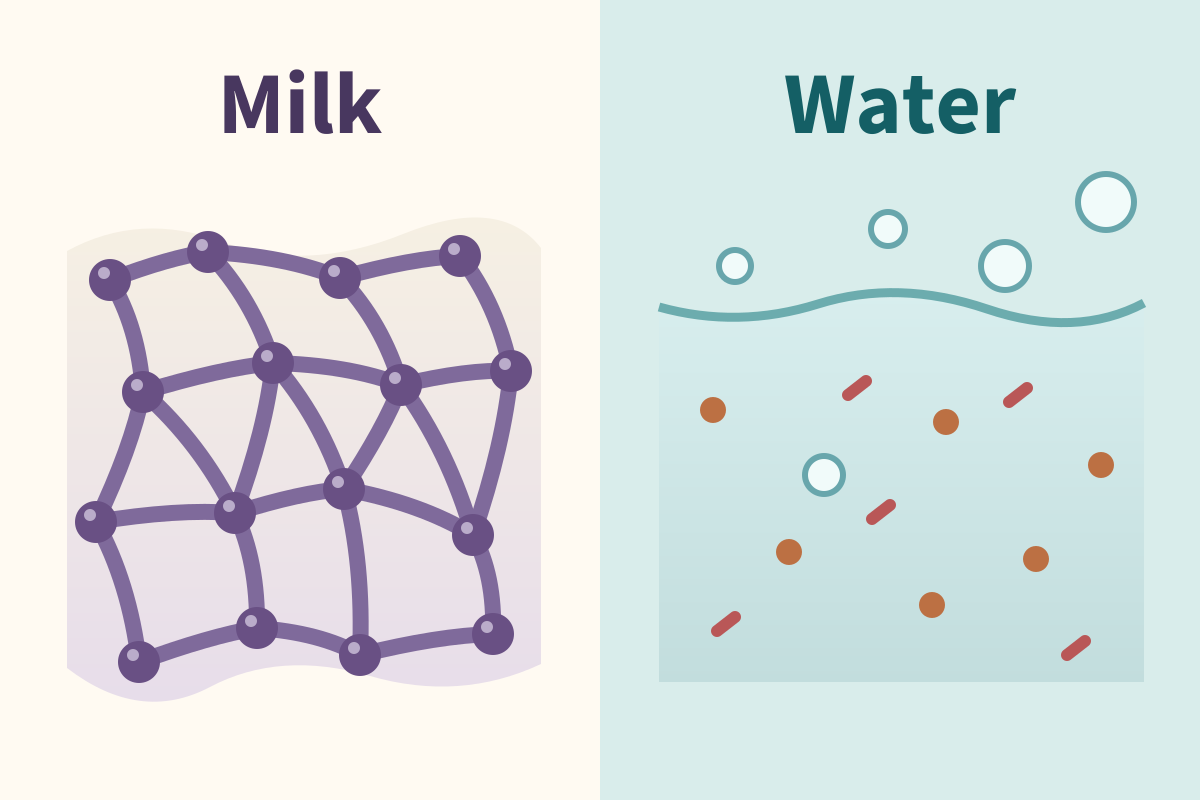
Why milk can form a gel
Dispersed milk proteins
A network can hold liquid
Simplified material illustration · not microscopy or a timed measurement
Protein is dispersed in the milk. This drawing is not a view of microbes.
Acidification begins before a visible gel necessarily appears.
As milk acidifies, protein can form a network that holds liquid.
Texture varies. Finish by the method’s process checks, then strain and refrigerate.
Begin with pasteurized milk, active milk-kefir grains and clean equipment. Record the starting time and temperature.
Acidity begins to rise and a clean cultured aroma develops. Texture may start to coat the glass, but different milk and cultures thicken differently.
The drink usually becomes more tart and may thicken. Microbial balance and flavor compounds keep changing, so this stage is more than a simple countdown.
Use the normal aroma and texture alongside the process checks: milk kefir must reach pH 4.6 or less within no more than 36 hours. Discard a failed batch. Strain a properly finished batch and refrigerate promptly at 4°C or colder.
Follow sweetness, clean tartness, aroma, and gas. A still first ferment can be active, and a fizzy bottle is a separate pressure step.
Water can change without setting
Dissolved products
Acids and ethanol remain in the liquid.
Carbon dioxide
It can stay dissolved or escape as gas.
Selected pathways only · remaining sugar and product amounts are not shown
Sugar and the other ingredients feed the culture.
Microbial activity may begin without visible bubbles.
Several products form together; the drawing does not show their amounts.
Straining is not the end of fermentation. Refrigeration slows further change.
Use active water-kefir grains and a complete verified recipe, including ingredient preparation, starting acidity and the method’s time limit.
Sweetness may begin to fall while a clean, lightly tart aroma develops. Visible bubbles are optional because gas can escape or stay dissolved.
Acids, aroma compounds, carbon dioxide and ethanol change as microbes use the ingredients. The amount of ethanol cannot be predicted from sweetness or bubbles.
Strain only when the verified recipe’s process checks are met. Refrigerate promptly at 4°C or colder. A still first ferment may be complete; warm carbonation requires a separate verified method and pressure-rated equipment.
What changes the pace?
Change one variable, then read the next batch
These conditions can change fermentation speed. Use them to choose one adjustment; none predicts an exact finishing time.
Temperature
Warmer conditions usually speed fermentation within a culture’s working range. Keep the method’s temperature limits and compare actual jar-side readings. Adjust temperature and grain ratio.
Culture ratio
More active grains for the same liquid generally speed acidification. Record both quantities; halving both makes a smaller batch without changing the ratio. Plan a smaller routine.
Air exchange
Cover and headspace change how gas escapes and which microbial pathways are favoured. They do not create one universal result for every culture.
Culture condition
Grains recovering from transport or storage need their activation method and repeated normal performance before drinking the result. Check the revival stages.
Sealed bottle
A sealed bottle retains carbon dioxide and raises pressure. Continued fermentation can also change alcohol; cold does not remove ethanol already formed. Understand alcohol and bottle pressure.
Make the timeline useful at home
Record the finish you like, not only the number of hours
Sources behind this explanation
- Microbial Succession and Flavor Production in the Fermented Dairy Beverage KefirmSystems, 2016
- Microbial Species Diversity, Community Dynamics, and Metabolite Kinetics of Water Kefir FermentationApplied and Environmental Microbiology, 2014
- Water kefir multi-omics reveals functional redundancies despite taxonomic differences and the underappreciated contribution of yeastnpj Science of Food, 2025
- Homemade water kefir: Characterisation and first evidence of an effect on breath alcohol testingFermented Foods, 2025
- Kefir improves lactose digestion and tolerance in adults with lactose maldigestionJournal of the American Dietetic Association, 2003