
Water kefir troubleshooting
Why is my water kefir slow, sweet or flat?
No bubbles, too much sweetness and a slow restart are different problems. First check whether the batch met its recipe’s acidity and time limits. If it did, a flat drink may only need a different serving method. If it did not, discard the failed liquid and investigate the culture before making another drinking batch.

Check the batch before changing ingredients
Keep the recipe, start time, temperature, starting and finishing pH, water source and recent grain-storage history together. Mould, unusual coloured growth, insects or rotten odour require discarding liquid and grains without tasting. Excess bottle pressure needs safe equipment handling, not a flavour test.
Record the water source with the ingredients and add the recent grain-storage history. Use the fermentation journal to keep these clues together. Do not taste a suspect batch to complete a note.
Still sweet and barely changed
Check that the grains were active, all required ingredients were measured, the starting mixture cooled before inoculation, and the temperature stayed within the method’s range. Verify an unexpected pH reading with correctly prepared fresh samples.
If the batch failed the verified method’s process limit, discard the liquid. Do not extend warm fermentation indefinitely. Follow the supplier’s activation plan with small fresh feedings and discard recovery liquids. Repeated failure despite the correct method calls for replacing the culture.
Tart but flat
A vented primary ferment may release its gas. If all process checks passed, the absence of bubbles is not a reason to change grain food or add minerals. Drink it chilled and still, or use the carbonation guide to understand what a complete bottle method needs.
There is sediment at the bottom. Is that contamination?
Sediment can contain yeasts or grain fragments. Compare it with the same recipe’s usual appearance and the batch record. Sediment alone cannot establish spoilage or safety. New coloured or fuzzy growth, a rotten odour or a failed process check means discarding, even if previous jars also had sediment.
Plan a refrigerator break before leaving
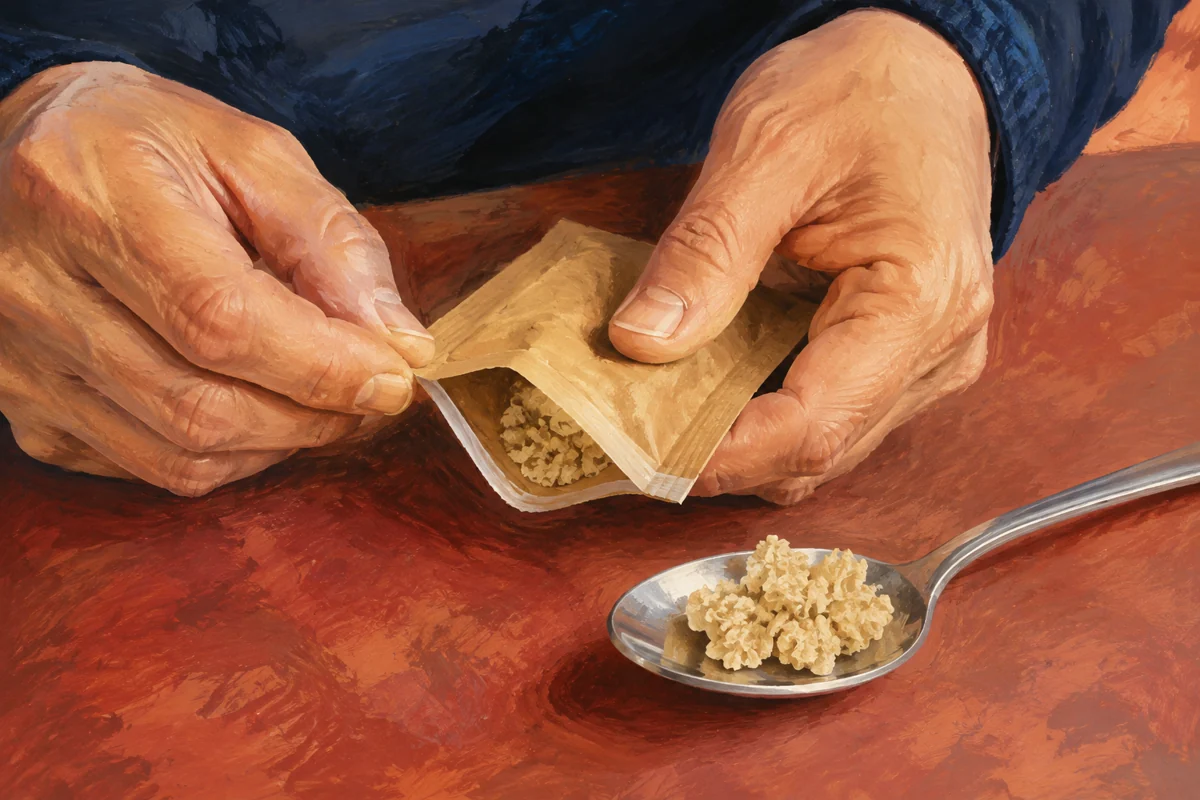
Use the supplier’s specified sugar-water storage method, clean equipment and a date label at 4°C or colder. Do not assume a milk-grain storage interval transfers to water grains. For a longer break, obtain instructions for that duration rather than simply extending the same jar.
A 30-day study compared refrigerated and frozen water-kefir grains and found better microbial survival with refrigerated sugar-water storage. That is evidence about grain preservation, not permission to drink month-old storage liquid.
On returning, discard the storage liquid and use the activation method. Increase volume only after fresh batches repeatedly meet normal process checks. The activation guide explains which signs are useful and why a burst of foam is not enough.
The symptom-to-first-move map
- 1Sweet + unchanged
Reset a small plain baseline and verify water, sugar, temperature, and culture history.
- 2Tart + flat
Keep the grains stable and repair the separate carbonation step.
- 3Tart + overpressurized
Keep people away from suspected overpressure; follow the bottle maker’s handling advice.
- 4Visible contamination
Discard liquid and grains; clean and replace.
The signs people often read backwards
Why are my grains not growing?
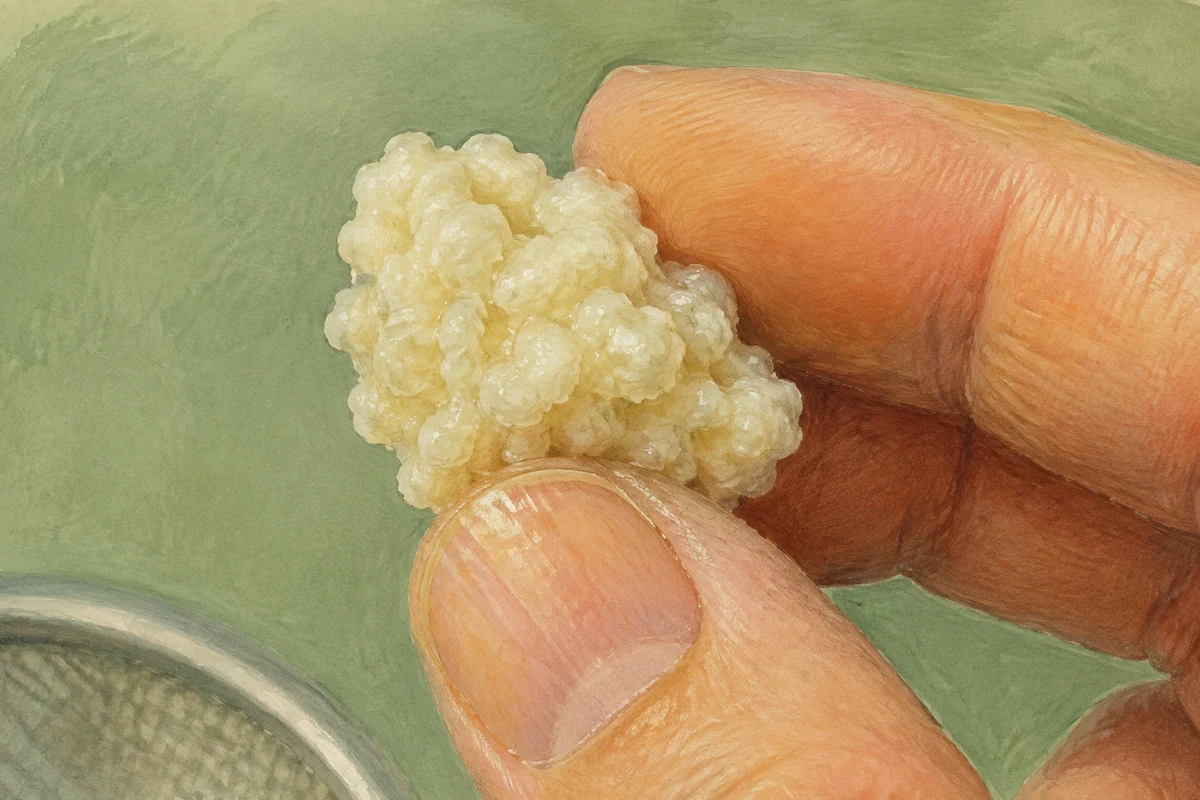
Grain growth varies. Repeated clean acidification matters more than dramatic size gain. Do not chase growth with several supplements.
Can I freeze water-kefir grains?
Freezing changes the culture. In one 30-day comparison, refrigerated sugar-water storage preserved microbial survival better. Use a method matched to the planned break and expect recovery batches.
Is cloudy water kefir spoiled?
Not by itself. Compare aroma, acidification, sediment, recipe, and the normal look of your culture. Coloured or fuzzy growth and rotten odour remain direct discard signs.
Research behind this answer
Where to go next




Comments
No comments yet.
Comments could not be loaded.
Join the discussion