
Water kefir ingredients
Sugar, water and minerals for water kefir
Sugar feeds water-kefir microbes; minerals and other nutrients help shape how the culture grows. Adding more of either does not necessarily improve a batch. Start with a complete verified recipe, including its required fruit or nutrient source, and keep those ingredients consistent before testing a change.
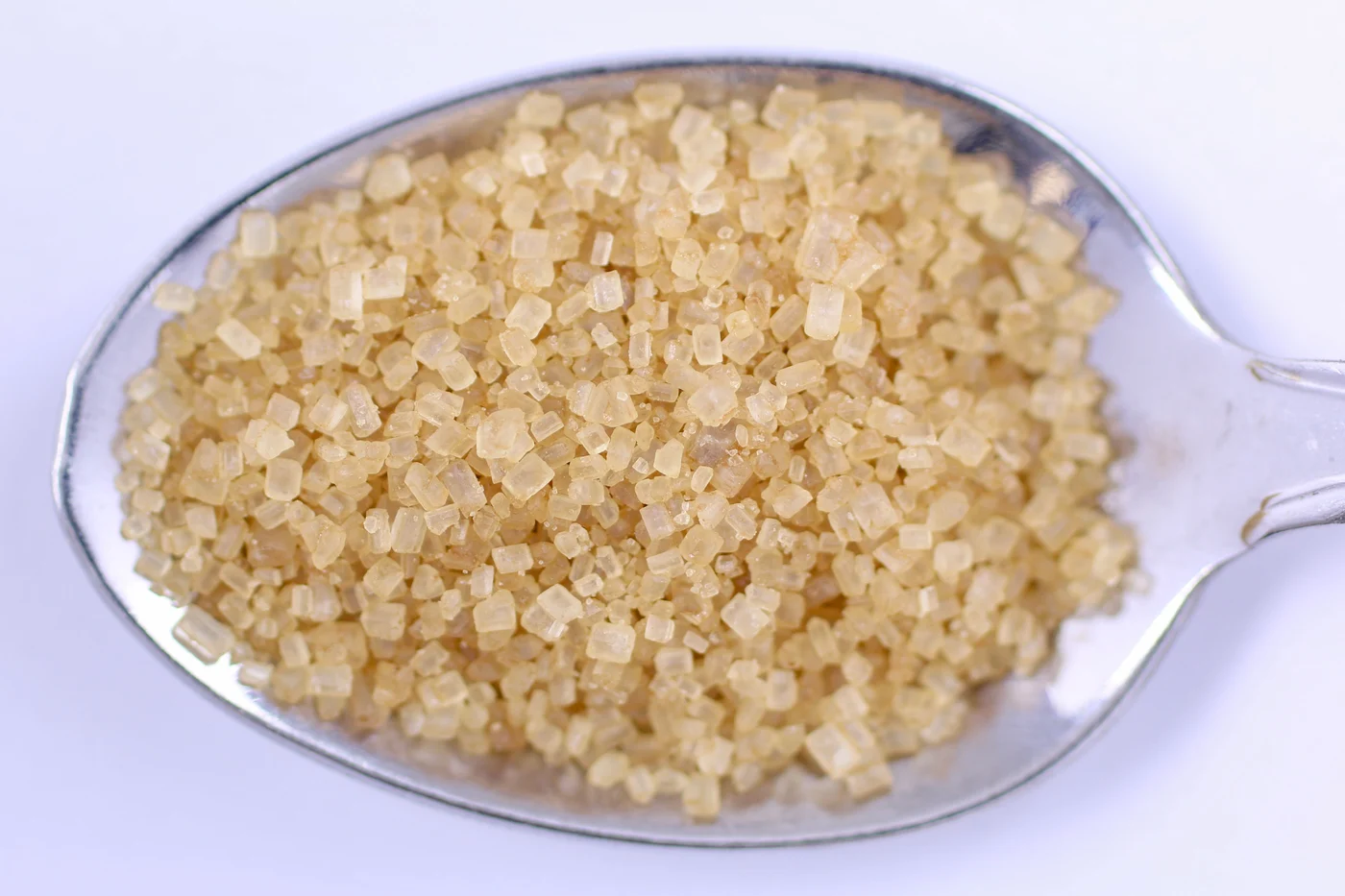
What each part contributes
Sugar supplies fermentable carbohydrate. Water brings dissolved minerals, and any required fruit or other ingredient can supply additional nutrients. Buffering means resistance to a change in pH: two mixtures can produce acids yet show different pH trends.
A controlled study of eight repeated water-kefir fermentations found that calcium and buffering changed grain growth and microbial activity. Low amounts could gradually reduce grain growth. It did not establish an ideal dose for every household recipe.
Keep the whole recipe together
Use the sugar and nutrient sources specified by a verified method. White sugar makes a consistent sugar source, but sugar and highly purified water alone are not automatically a complete long-term feed. Do not remove specified fruit or nutrient ingredients simply to make the jar look plainer.
Dark sugar and molasses add flavour and minerals as well as sugar. Dried fruit can add nutrients, acids and microbes; it needs the preparation specified in the method. Honey has a different sugar composition and is not a direct substitute for table sugar. Non-caloric sweeteners do not replace fermentable sugar.
| Change | What else changes with it? |
|---|---|
| White sugar to molasses-rich sugar | Flavour and mineral content |
| Tap water to reverse-osmosis water | Much of the dissolved mineral content |
| Adding dried fruit | Sugar, nutrients, acidity and ingredient handling |
| Adding baking soda | Buffering and pH |
Check water before adding supplements
Use drinking-quality water. A change of filter or supply can explain a change in the culture, but “filtered water” is not one fixed composition. The tap-water guide describes a two-jar comparison with spare grains.
The grains stopped growing. Should I add eggshell or baking soda?
Do not add either casually. Eggshell adds an avoidable handling concern; baking soda changes the acidity conditions you are trying to monitor. Check the complete recipe, actual water source, temperature and recent storage first. If a verified method specifies a food-grade mineral addition, use its measured quantity rather than combining supplements.
Judge the ferment by more than growth
Keep pH, time and the recipe’s other process observations together. Floating, foam or bigger grains alone cannot prove the drink is ready. When a batch stalls, follow the water-kefir troubleshooting guide instead of leaving it warm indefinitely.
Once a complete recipe performs consistently, retain it. Flavour experiments can happen in the strained, refrigerated drink without repeatedly changing the parent culture’s food.
The ingredient ladder
- 1Baseline
One complete verified recipe, with its specified water and nutrient ingredients.
- 2Water test
Compare one alternative source with everything else equal.
- 3Mineral test
Only when needed, add one measured source and repeat.
- 4Stop
Keep the simplest recipe that acidifies cleanly and reliably.
Ingredients that sound mandatory but are not
Do water-kefir grains need molasses?
Not every recipe uses molasses. Keep the nutrient source specified by your verified method rather than adding it automatically.
Should I add eggshell or baking soda?
Do not add them casually. Eggshell introduces handling concerns and baking soda changes pH and buffering. Use only a measured addition required by a verified method.
Is brown sugar healthier for the grains?
Not automatically. It supplies different compounds and minerals, which can help, do nothing, or unbalance a recipe. Compare one measured change.
Research behind this answer
Where to go next



Comments
No comments yet.
Comments could not be loaded.
Join the discussion