
Read the fermentation
How do you know when milk kefir is ready?
A small pocket of pale whey can be the clue that milk kefir is ready to strain. A large whey layer usually means it has gone further and may taste sharper. Learn the difference by looking from the surface to the bottom, then combine those clues with the batch’s time and acidity checks.
Look before stirring
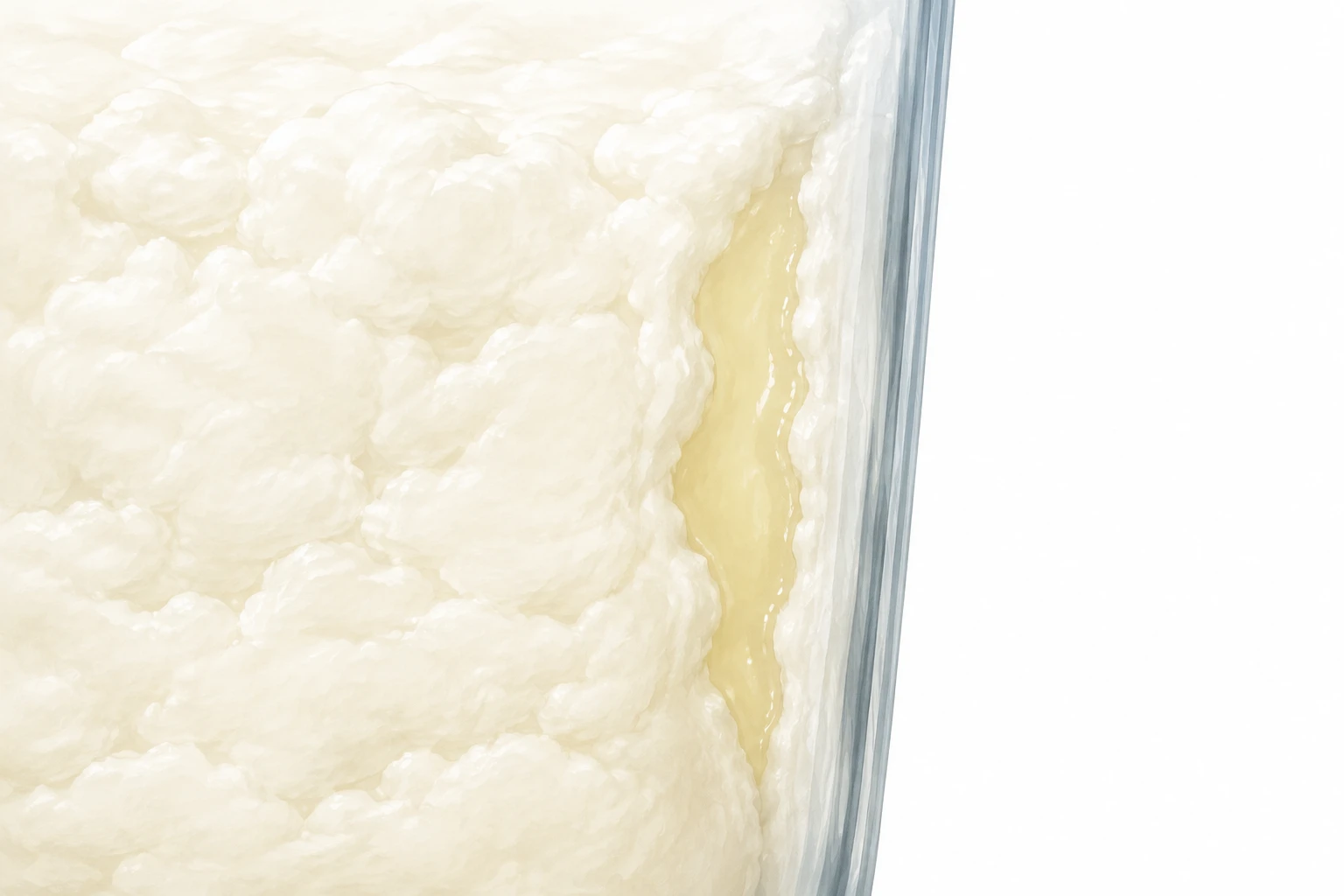
- Soft white curd
- Pale whey beside the glass
What changes before the milk separates?
Fresh milk pours freely. As fermentation develops, it often coats the glass and moves as a soft gel when you tilt the jar. The aroma becomes tart, and small pale-yellow whey pockets may appear around the grains or near the bottom. Different milks make different textures, so use several clues together.
These observations help choose texture. They do not replace the milk-kefir process checks: use pasteurized milk, an active culture and clean equipment, and verify pH 4.6 or less within no more than 36 hours. A low pH cannot make mould or a poor handling history safe.
Look at the surface first
A smooth or rippled surface, small bubbles and a cream layer in non-homogenized milk can all occur normally. Floating grains may carry trapped gas. None of these alone proves readiness.
Fuzzy growth, unusual coloured patches or insects mean discarding the liquid and grains. Do not remove a surface patch and keep the rest. Leave a suspect jar untasted and follow the safety decision.
Tilt gently and look through the glass
A light coating suggests that the milk is developing body. Small whey pockets show that the gel is beginning to separate. A large clear layer beneath white curds usually indicates a later, more acidic stage. Shaking the jar first destroys some of the evidence, so look before stirring.
Mine has a large whey layer. What can I do with it?
First confirm the time, acidity, refrigeration history and absence of spoilage signs. If those checks are sound, ordinary curds and whey can be stirred together. A sharper batch may suit herb dressing or a drained spread. Blending or cooking cannot rescue contamination.
Smell, then use a clean spoon if needed
A normal batch may smell yogurt-like, mildly yeasty or lightly cheesy. Rotten, sewage-like or sharply chemical odour is a reason to discard, without tasting.
If the glass is hard to see through, lift one sample with a clean spoon. Early milk runs off quickly; developing kefir leaves a coating; separated kefir brings curd and whey together. This is a texture check, not an invitation to taste an unverified batch. Do not return the sample to the jar.
Save your preferred finish
Write a short observation such as “tart aroma, coats glass, first whey pockets,” beside the time, temperature and pH. Repeat the setup and see whether those clues return. If the finish always happens while you are away, the grain-ratio guide shows how to adjust the schedule.
The finish ladder
- 1Early
Mostly milk aroma, fast pour, little glass coating.
- 2Mild
Clean light tartness, soft body, little or no visible whey.
- 3Full
Clear cultured aroma, stronger coating, first small whey pockets.
- 4Late
Curd plus a clear whey layer; check time, acidity and handling before reuse.
Common jar-reading questions
Are bubbles a sign that milk kefir is ready?
Not by themselves. Yeasts can make bubbles early or late. Read them beside aroma, body, and whey development.
Is a separated jar spoiled?
Not automatically. Normal-looking curd and whey with a clean aroma usually mean the batch fermented farther. Direct spoilage signs still mean discard.
Can pH replace these checks?
No. A calibrated meter adds acidity data, but it does not identify mould, explain aroma, or choose the texture you enjoy. Use the number beside the jar history.
Research behind this answer
Where to go next
Keep the grains working steadily
Use regular feeding and one-variable troubleshooting.Get the next answerRead more
How to make milk kefir
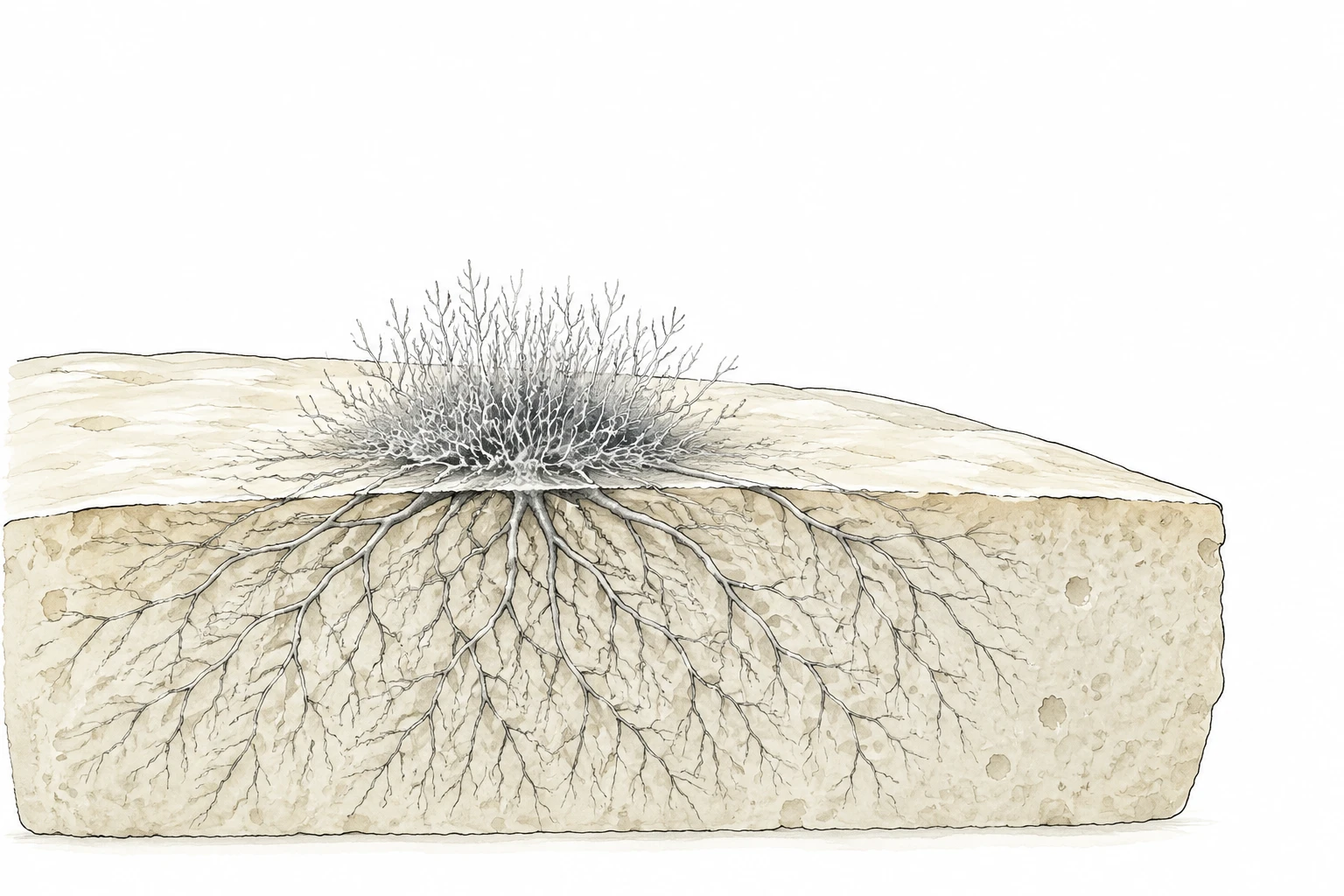
Is this kefir safe to drink?

Milk kefir: temperature and grain quantity
How to care for milk-kefir grains
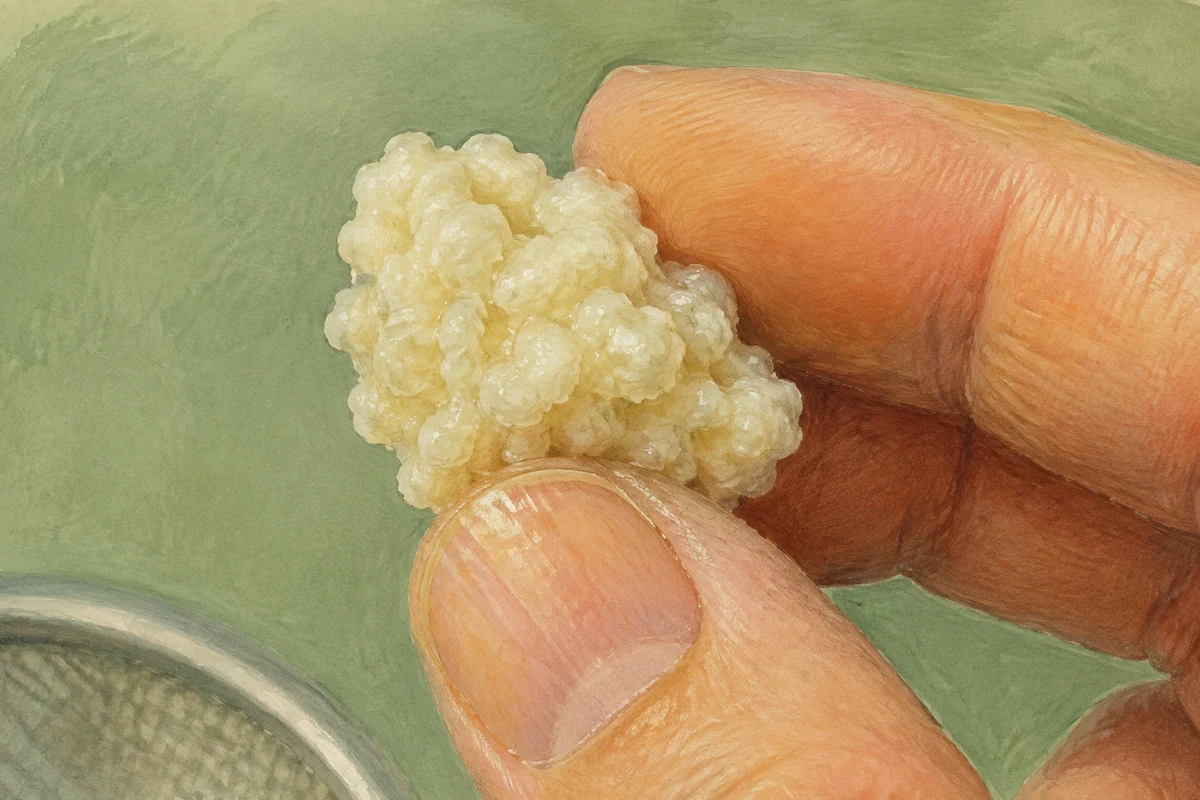
Do bigger kefir grains work better?

Taking a break from making milk kefir
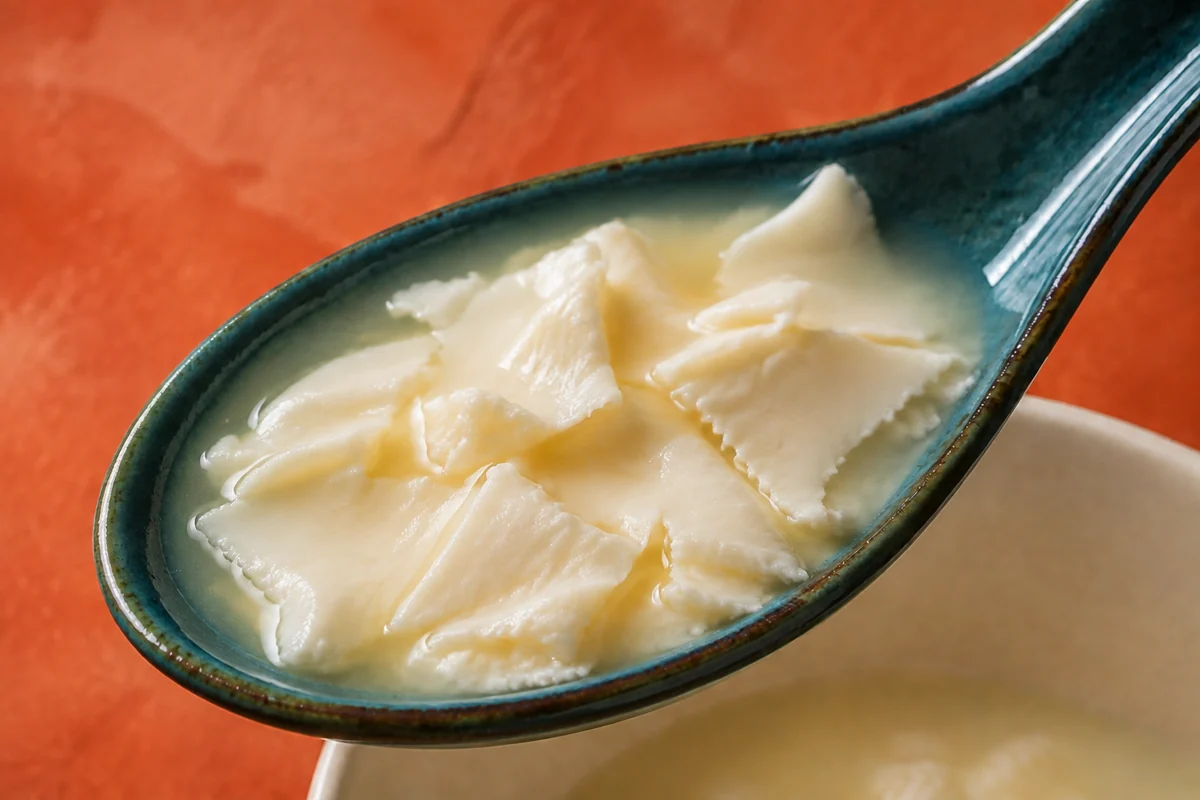
Why is my kefir grainy, separated or too sour?
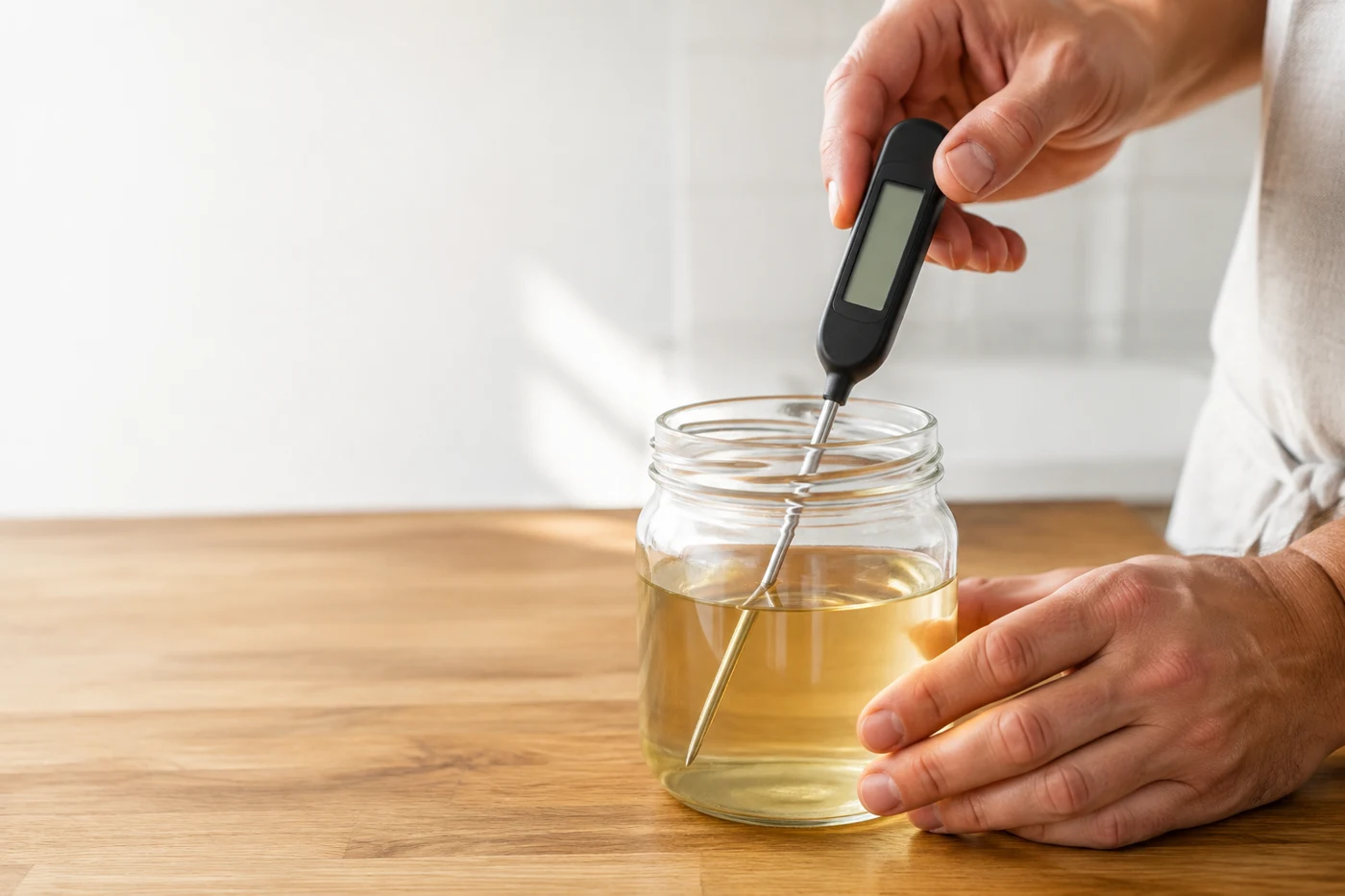
Comments (0)
No comments yet.
Comments could not be loaded.
Join the discussion