
Water kefir at home
How to make water kefir: a supplier-method example
Water kefir starts with sweetened water and reusable grains. The example below shows the measured method supplied by Cultures for Health for its own culture, followed by the checks and limits that matter before you drink a batch. Other cultures may come with different instructions.
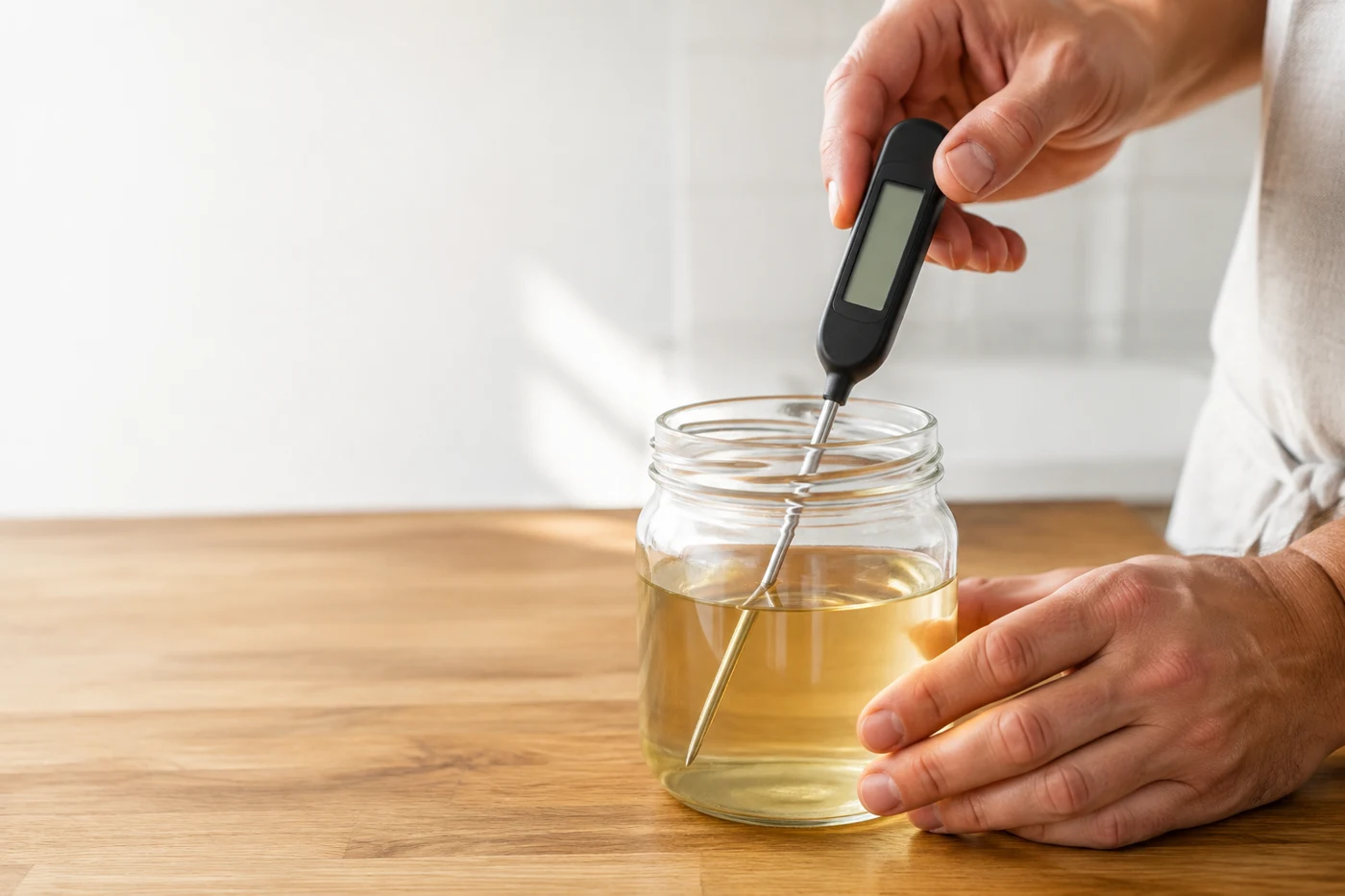
A measured example from Cultures for Health
This method is for the activated grains from one Cultures for Health packet. Dried grains need the packet’s separate activation steps first. If your grains came from another source, use their own instructions: the amount and condition of the culture may differ.
Prepare a clean one-quart glass jar (about 950 mL), a thermometer, a coffee filter or tightly woven cloth, a rubber band and a mesh strainer. The supplier specifies bottled spring water and cane or turbinado sugar.
| Ingredient | Amount |
|---|---|
| Hot water | ½ US cup, about 118 mL |
| Cane or turbinado sugar | ⅓ US cup |
| Molasses | ½ teaspoon |
| Cool water | 3 US cups, about 710 mL |
| Grains | The activated culture from the packet |
Use a measuring cup marked in US cups; a rice-cooker cup is a different size. These quantities come from the supplier’s instruction packet.
- Dissolve the sugar and molasses in the hot water, then add the cool water.
- Check the temperature before adding the grains. Keep the liquid and culture within the packet’s 70–85°F range, approximately 21–29°C.
- Add the activated grains. Secure the filter or cloth over the jar; do not seal this first fermentation in a pressure-tight bottle.
- Culture for 24 hours. The packet uses cloudiness as a progress cue and allows another 24 hours if it has not developed. Do not keep extending an inactive batch beyond that instruction.
- Strain out the grains and transfer them to fresh sugar water for the next batch. Refrigerate the strained drink as described below.
Cloudiness cannot tell you whether a batch is safe
The supplier gives a household method, not evidence of a public-health-validated process. Its packet has no starting or final pH acceptance test or validated heat treatment for the whole mixture. Hot water used to dissolve sugar does not pasteurize ingredients added later.
BCCDC’s public-health guidance calls for a verified process with ingredient treatment, acidity and other controls. Do not assume that adding one pH target to this recipe supplies that validation: harmful microbes can survive acidity. Temperature, appearance and smell are useful observations, but cannot certify a homemade batch as safe.
Know what the jar can tell you
Water kefir stays liquid. It may become cloudy, develop sediment or smell lightly yeasty. A vented jar can release most of its gas, leaving a nearly still drink. Record these changes with time and temperature in the fermentation journal.
Do not extend a stalled batch indefinitely or taste it to decide whether it is safe. Discard liquid and grains with mould, unusual coloured growth or a rotten smell. Unknown handling history is also a reason to discard, even when the jar looks ordinary.
It became cloudy, but there are no bubbles. Did it fail?
Cloudiness and bubbles describe different changes, and a covered jar can release gas. Lack of fizz alone does not establish failure, just as visible activity does not establish safety. Do not add extra sugar to force bubbles. Use the troubleshooting guide to compare activity with handling history.
Strain, refrigerate and keep flavouring simple
Use clean, sanitized straining equipment. Keep grains separate from the drink, transfer them to fresh feed and refrigerate the strained drink promptly at 4°C or below. Refrigeration does not repair a batch with uncertain handling.
For a batch with satisfactory handling and process checks, keep one chilled portion plain and add a little pasteurized juice to another. The flavour guide offers pairings. Start with cold flavouring before considering bottle fermentation.
Cold slows fermentation but does not remove alcohol or prevent every pressure problem. If alcohol must be avoided, choose an unfermented drink or a suitably tested product. The alcohol and pressure guide explains why taste and bubbles cannot measure either.
Questions the first quiet jar raises
Does finished water kefir have to be fizzy?
No. A vented first ferment can be almost still. Carbonation is a separate optional stage after the grains are removed.
Can I put fruit in the first jar?
The example above uses molasses, without fruit. Keep additional flavouring for the strained, refrigerated drink.
Can I use milk-kefir grains instead?
No. Use water-kefir grains for sugar water. The two grain cultures are not interchangeable.
Research behind this answer
Where to go next
Choose sugar, water, and minerals
Understand what feeds the grains and what makes a batch drift.Get the next answerRead more

Keep a kefir fermentation journal

Why is my water kefir slow, sweet or flat?
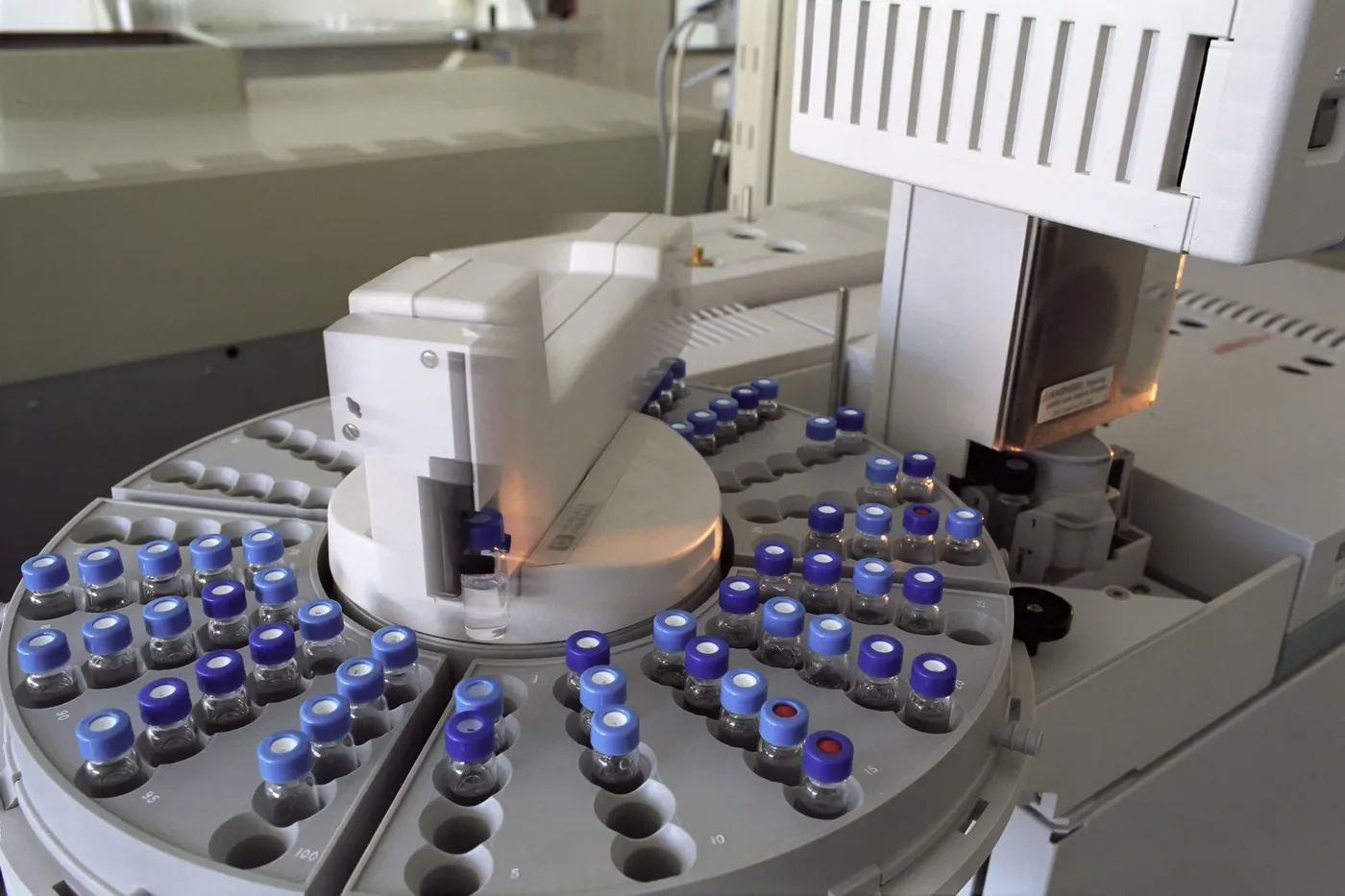
Does water kefir contain alcohol?
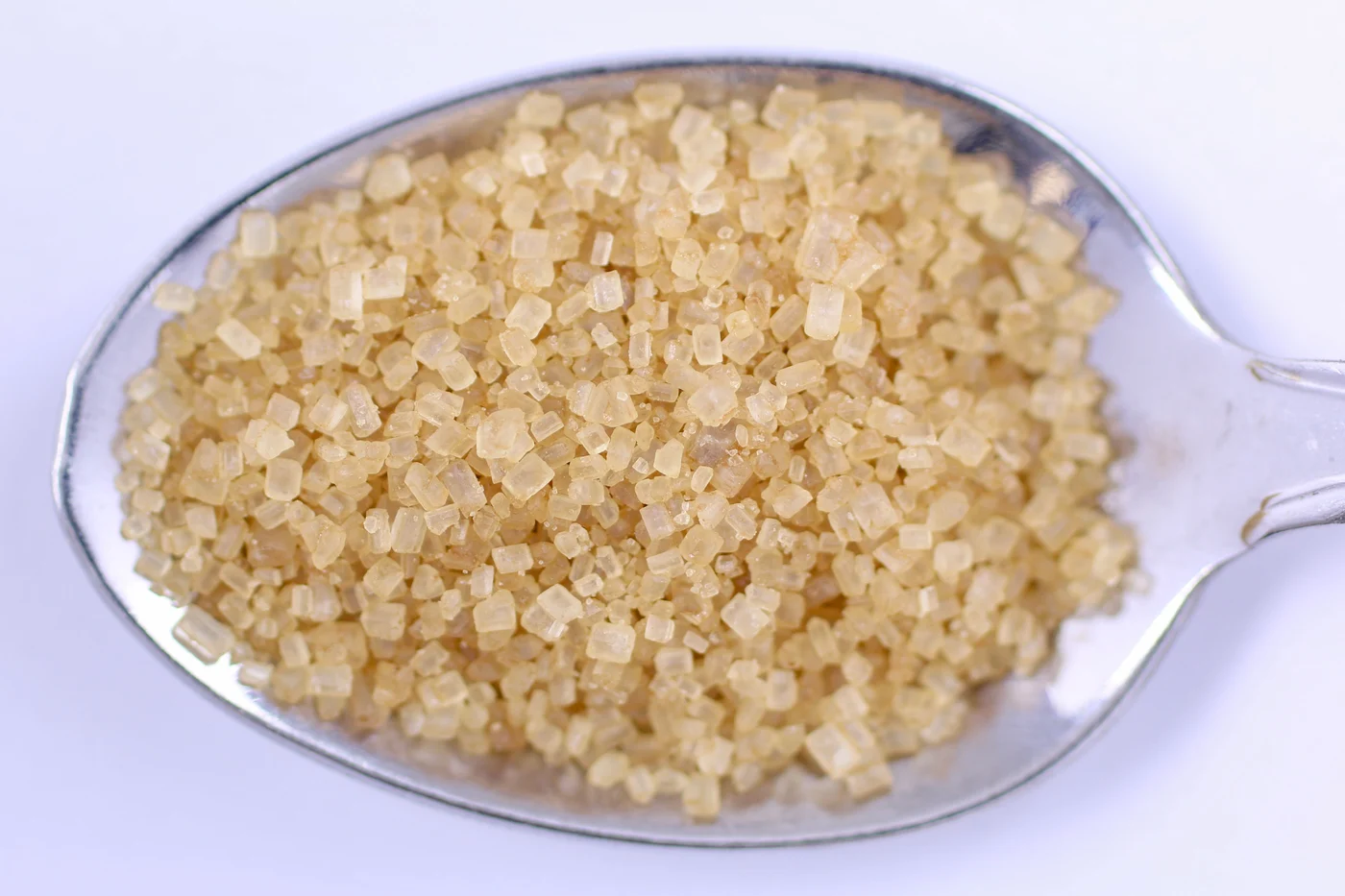
Sugar, water and minerals for water kefir
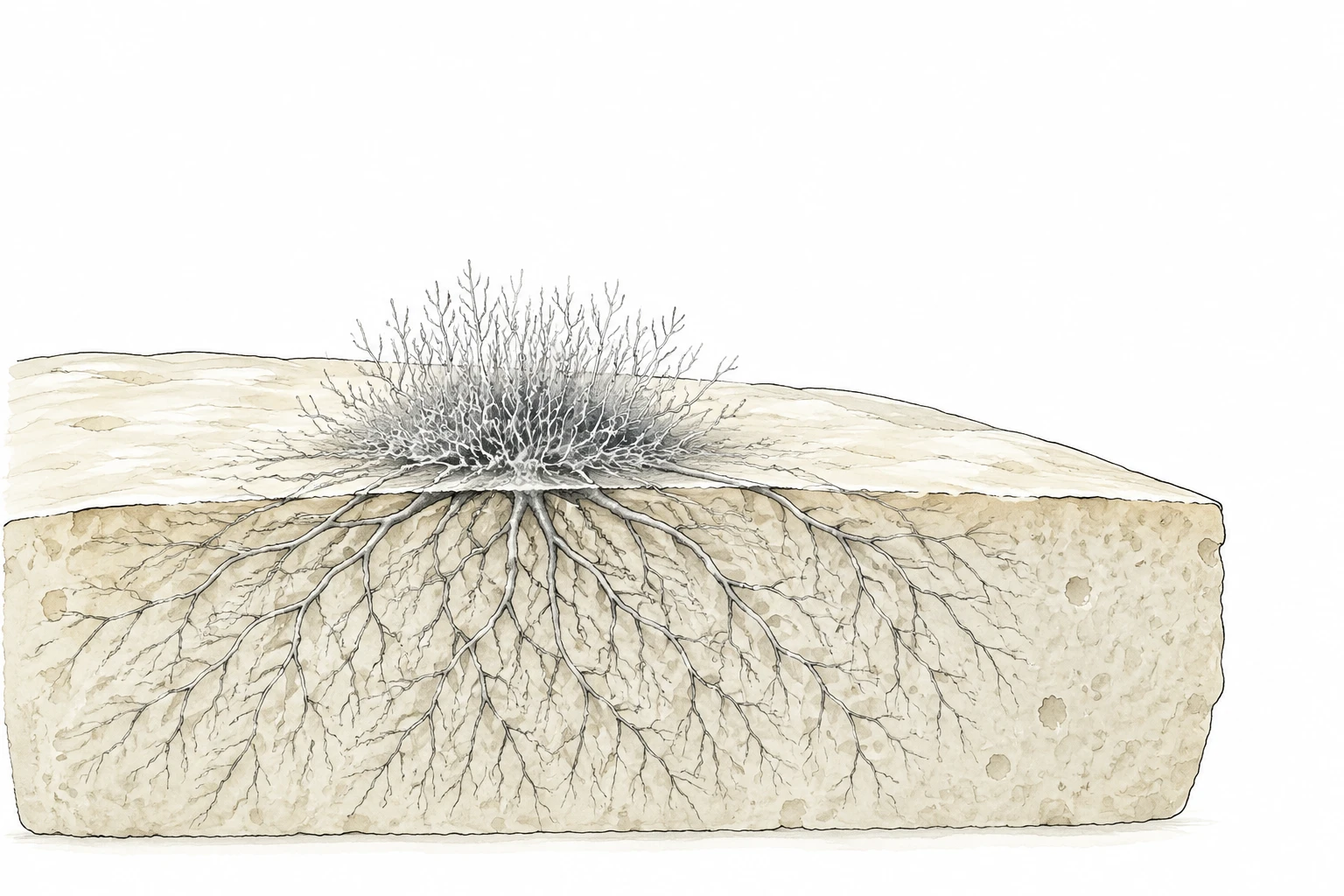
Is this kefir safe to drink?
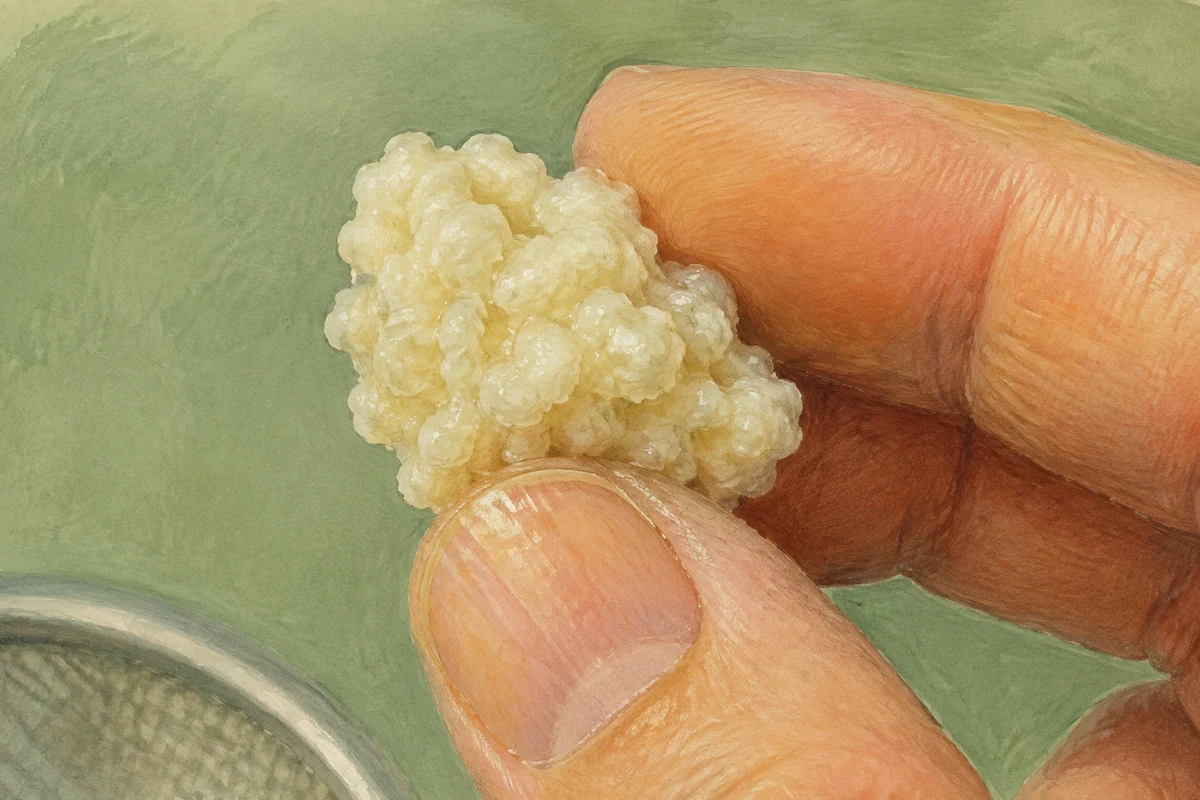
Do bigger kefir grains work better?
Taking a break from making milk kefir
Comments (0)
No comments yet.
Comments could not be loaded.
Join the discussion