
Make kefir
Why is my kefir grainy, separated or too sour?
Thin kefir is not always under-fermented. Grainy kefir is not automatically spoiled. Separation usually means the ferment went farther than you wanted, and very sour kefir usually needs an earlier finish, fewer grains, more milk, or a cooler position next time.
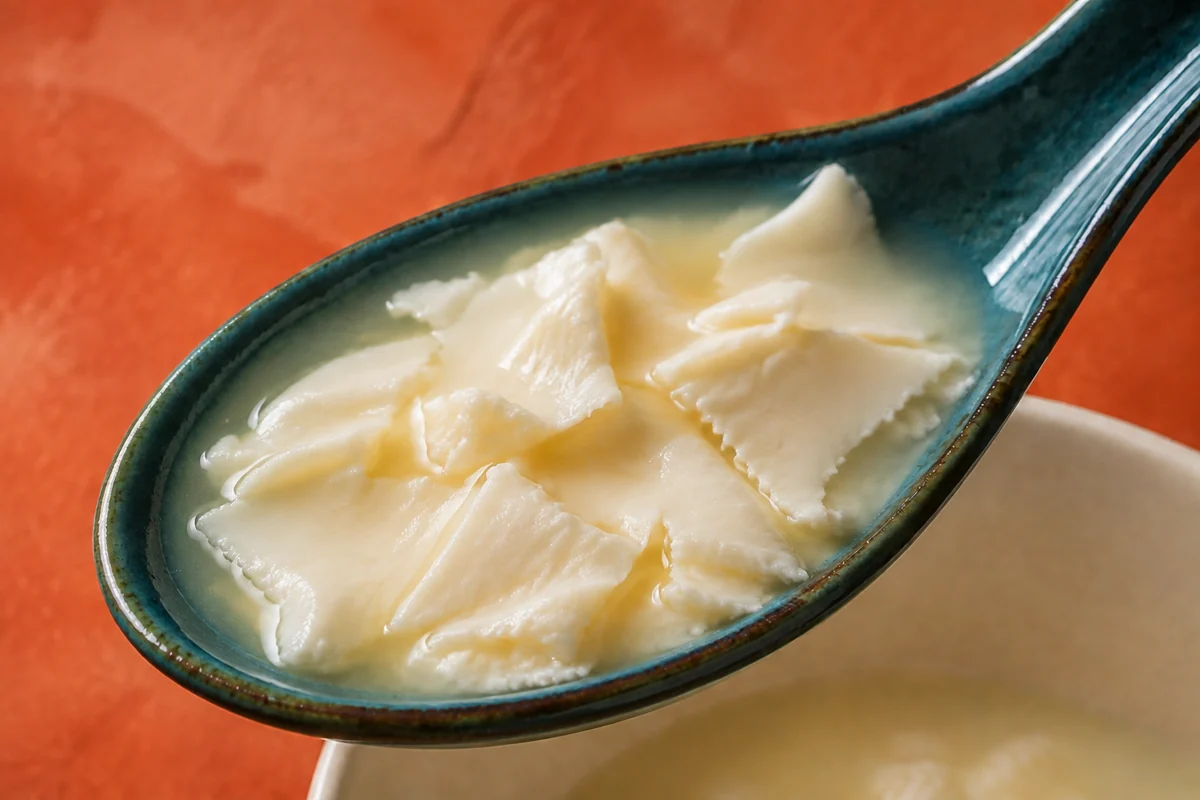
Match the change to what happened in the jar
Still milk-like, with little acidification
Check whether the grains are active and the room is within the method's temperature range. Recently shipped, refrigerated or dried grains may need a separate revival process. More time is only an option within the process limits: BCCDC says to discard milk that has not reached pH 4.6 or lower within 36 hours. Do not taste it to decide.
Use the revival guide for an inactive culture. Keep recovery feedings small and discard their liquid.
Thin after curds and whey formed
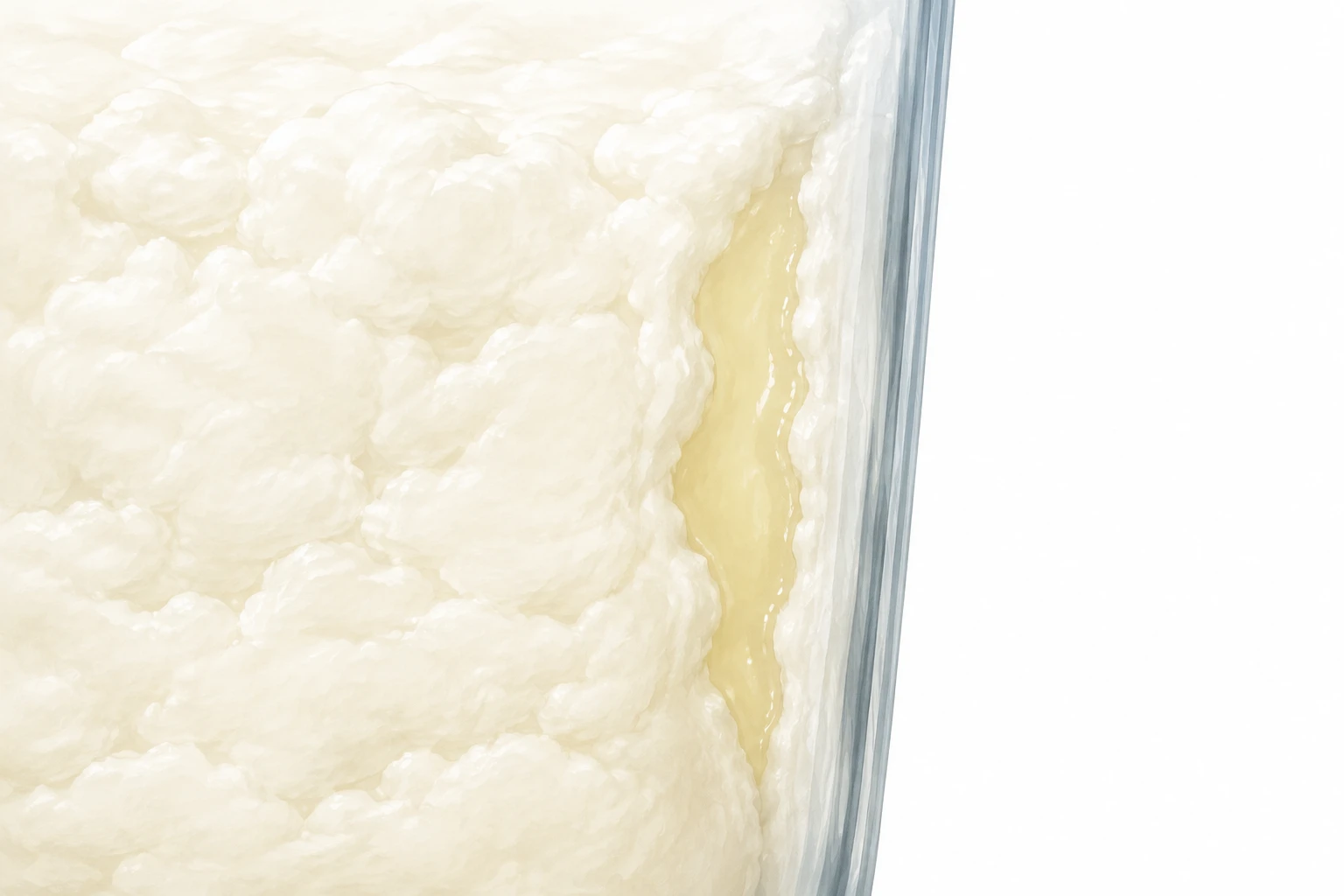
This jar already passed through a thicker stage. As milk acidifies, proteins form a gel; further acidification can cause it to contract and release whey. Stirring makes the mixture pourable but does not undo the acidification.
Next time, strain earlier after the process checks are met. If it finishes while you are away, adjust the temperature or ratio.
Small curds or a grainy mouthfeel
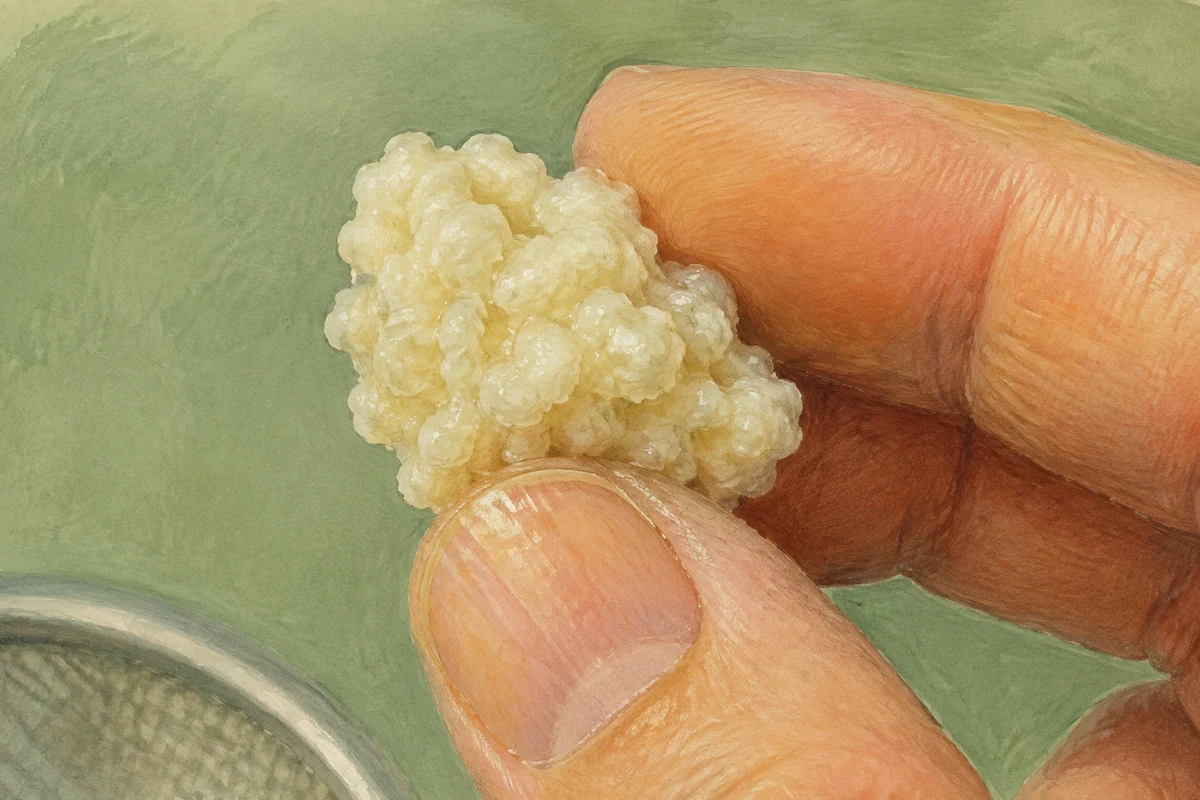
Uneven setting and forceful handling can leave small curd pieces in the drink. Keep the next batch's temperature stable and strain gently. For a batch that met its process checks, remove the grains before blending the drink smooth. Blending grains destroys the reusable culture's structure.
Normal fermentation, but too sour for you
First check that this is a normally fermented batch with known handling—not a failed or suspicious jar. Next time, shorten the ferment within the method, or adjust grain amount and temperature. For the current batch, the recipe collection offers ways to use kefir in dressings, breakfasts and cooking instead of drinking it plain.
Weigh the grains when a familiar routine changes
Grain growth can raise the grain-to-milk ratio without you noticing. More active grains in the same volume generally accelerate acidification; adding them is not a dependable way to make kefir thicker.
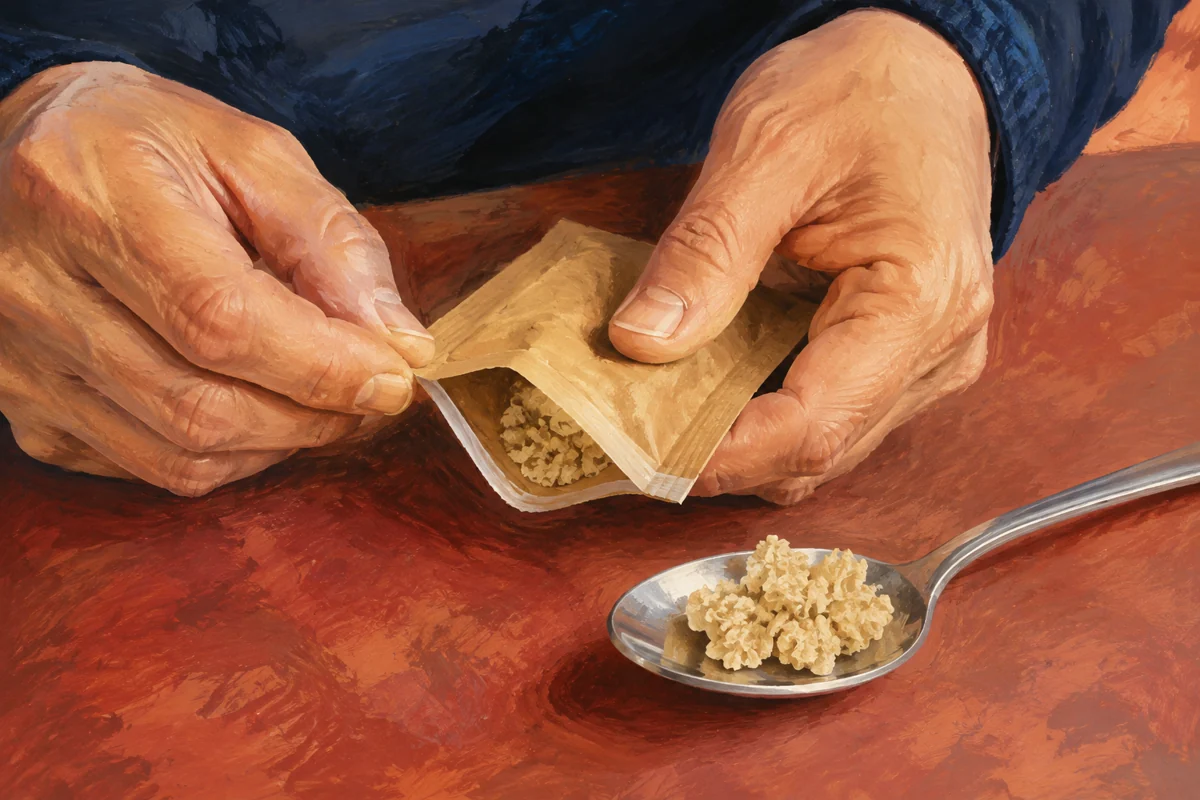
BCCDC describes 2–10 g of active milk grains per 100 mL milk, with 5 g per 100 mL as an average process ratio. These are published process quantities, not a guarantee that every culture will perform identically. Measure your present ratio before changing it, then check the batch's time, temperature and acidification. The ratio guide explains how to compare batches.
Check the temperature near the jar
A warmer room can shorten the finish time even when the milk and grain weights stay the same. BCCDC describes a common process of 20–25°C for about 18–24 hours. Keep a thermometer near the jar and record the actual reading.
Set a reminder to check; a timer cannot certify completion. Use visible stages to follow texture and a calibrated pH meter to confirm acidification. If separation is already extensive, waiting for a familiar clock time will not restore creaminess.
The milk changes texture, but it does not define success
Whole, low-fat, goat, UHT, and different brands of pasteurized milk can produce different bodies and flavours. Protein concentration, fat, heat treatment, stabilizers, and the milk's starting condition all affect the finished texture. Household research has successfully made kefir with UHT semi-skimmed cow's milk, so a carton marked UHT does not prove the grains cannot work.
Keep the same milk for several batches while troubleshooting. If you change the milk, ratio, temperature, and finish time together, even a perfect next jar cannot tell you which change fixed it.
Judge fermentation first by reliable acidification and clean aroma. Thickness is a preference and a product characteristic. It is not the sole test of a healthy culture.
A controlled reset for the next batch
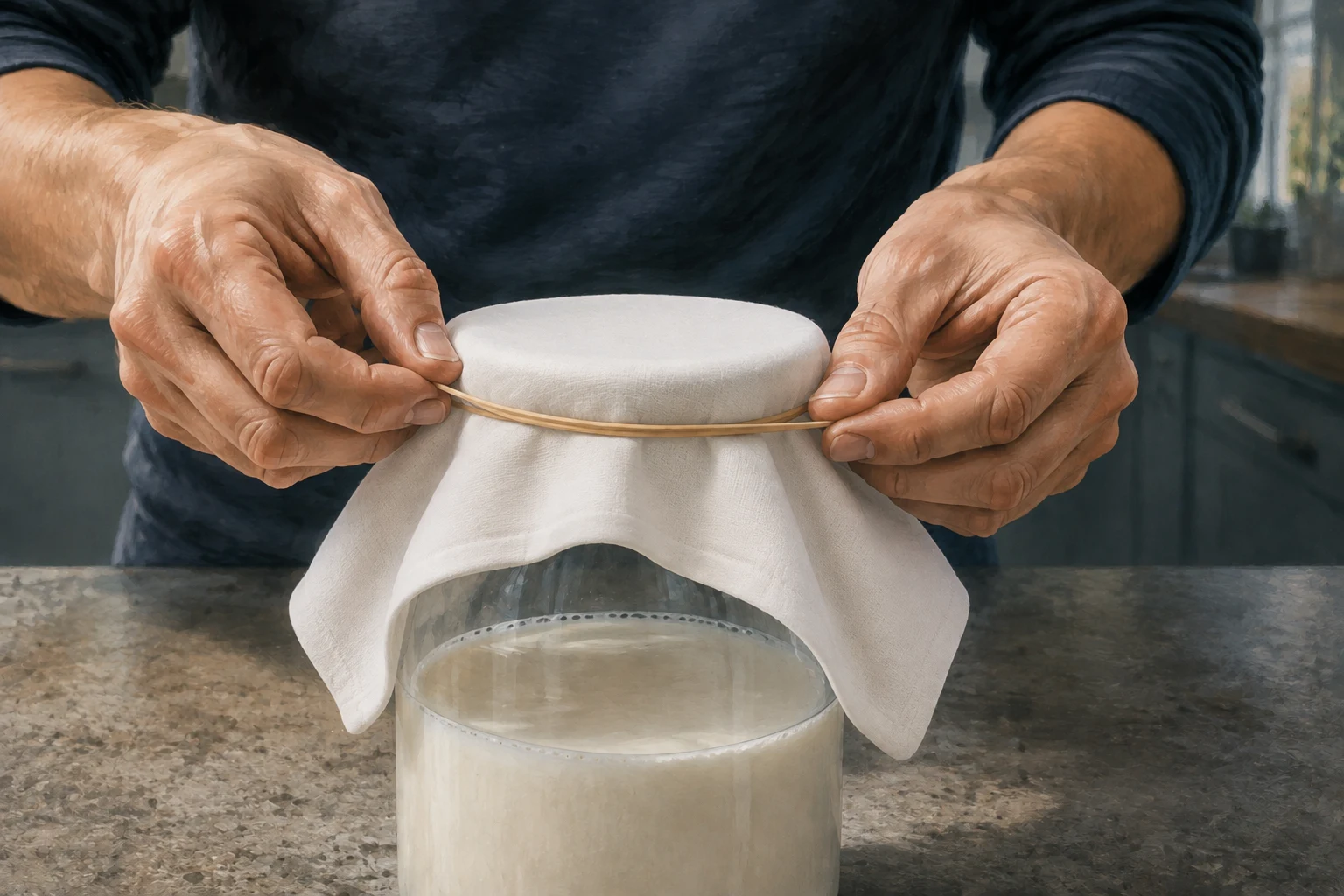
Use the milk-kefir method with a measured amount of active grains, 500 mL of the same fresh pasteurized milk and a stable 20–25°C environment. Record start time, temperature, texture changes, finish time and measured pH. If the culture is inactive, complete revival first.
Change only the factor that best matches the symptom:
- Little acidification: check activity and temperature; do not extend a failed batch beyond the process limit.
- separated or too sour: strain earlier first;
- repeatedly too fast: use fewer grains, more milk, or a cooler stable place;
- repeatedly too slow: confirm the grains are active, use a smaller milk amount, and keep the temperature in range;
- grainy: slow the ferment and strain more gently;
- changed after a new milk: return to the previous milk or hold the new one steady for several batches.
Compare the result before making another adjustment. Troubleshooting is much faster when every batch is allowed to answer one question.
Milk, water, and plant kefir do not share one texture chart
This diagnosis is for milk kefir. Water kefir stays liquid, may form bubbles and sediment, and does not make milk curds or whey. Soy can set into a firm gel. Coconut products can separate because of fat. Oat drinks may thicken because of starches or stabilizers as well as fermentation.
Compare a plant-based batch with the normal behaviour of that same base, culture, and recipe. If a dairy-free ferment is too thin for the way you want to eat it, that can be a formulation issue rather than a failed culture. A more suitable soy or coconut base, or a recipe designed for that product, is the practical solution.
Stop troubleshooting when the jar shows contamination
Normal milk kefir can be white or cream, tart, lightly yeasty, thick, curdled, or separated into white curds and pale yellow whey. These changes belong to fermentation.
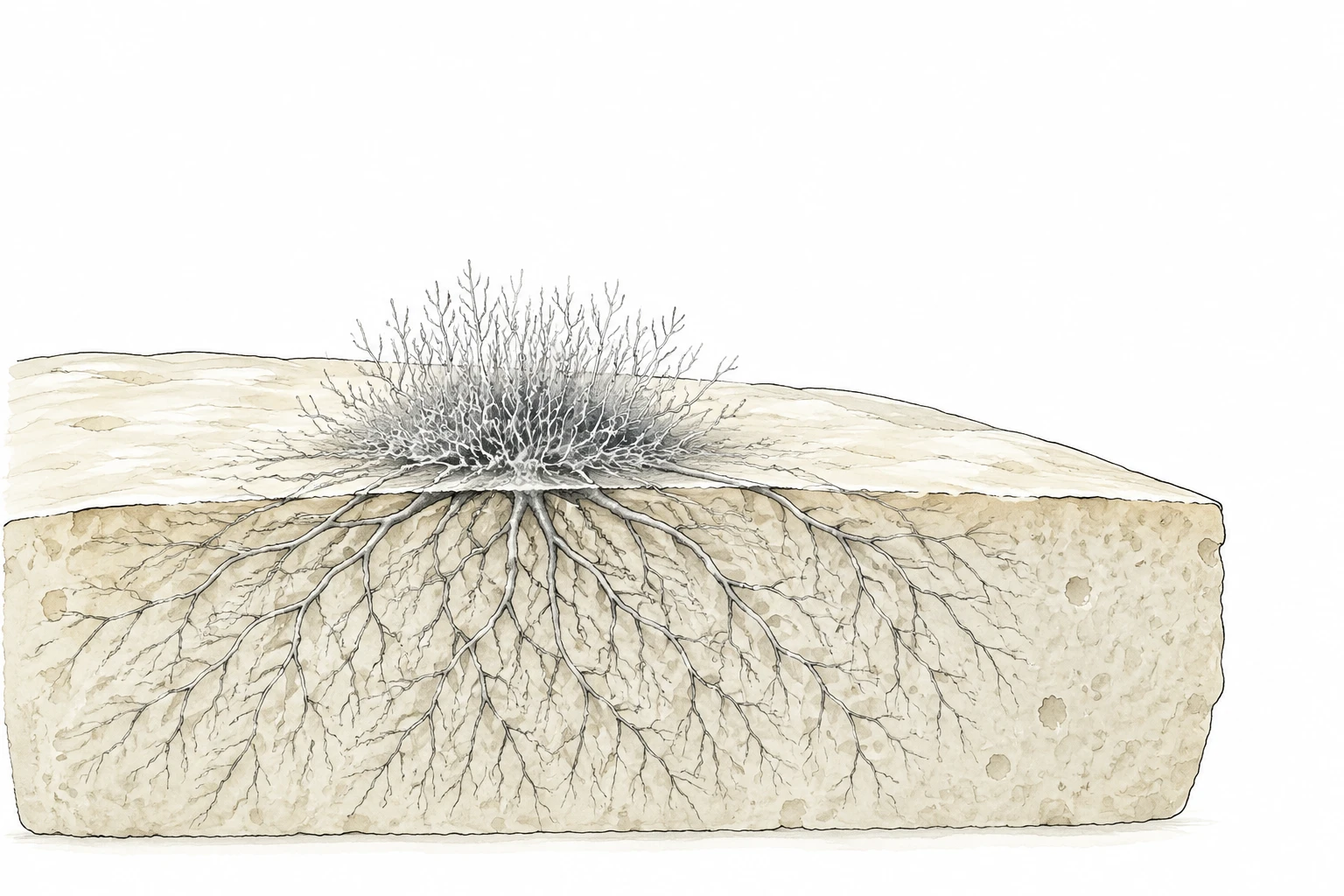
Fuzzy growth; green, blue, black, pink, or orange spots; insects; a rotten, putrid, ammonia-like, or sharply chemical smell; a damaged container; or an unknown warm-storage history changes the decision. Discard the liquid and any reusable grains that touched it. Do not taste the batch to settle the argument.
Fruit, sugar, blending, and cooking can make a normal over-sour batch more pleasant. They cannot make a contaminated batch safe.
Questions from frustrating jars
Is separated kefir spoiled?
Usually not. White curds and pale whey commonly mean milk kefir fermented beyond the creamy stage. Check colour, smell, ingredients, container, time, and temperature before deciding.
Should I add more grains to make kefir thicker?
Not automatically. More grains usually speed acid production and can make sourness and separation worse. Fix a genuinely slow ferment with a measured ratio; fix a fast thin-after-separation ferment by going the other direction.
Does milk kefir need visible bubbles?
No. Yeast may produce bubbles, but dependable acidification and a clean fermented aroma are more useful signs of progress.
Can I strain twice to remove the grainy texture?
You can remove curd pieces, but fine straining will not undo over-acidification. For the next batch, slow the ferment and finish earlier. For this clean batch, remove the grains and blend the drink if you want it smooth.
My milk is pH 4.7 after 36 hours. Can I wait until morning?
No. This fails the BCCDC milk-kefir acidification limit. Discard the liquid; adding time, fruit or acid does not repair the earlier process. Review culture activity and the milk-kefir method before starting another drinking batch.
Research behind this answer
- BC Centre for Disease Control: Safety of Fermented Foods, section 3.12 Kefir
- Colorado State University Extension: Understanding and Making Kefir
- Characteristics of kefir prepared with different grain-to-milk ratios
- Characterization of Kefir Produced in Household Conditions
- Microbiological and chemical characteristics of Brazilian kefir during fermentation and storage



Comments
No comments yet.
Comments could not be loaded.
Join the discussion