
Desserts
Kefir Basque Cheesecake
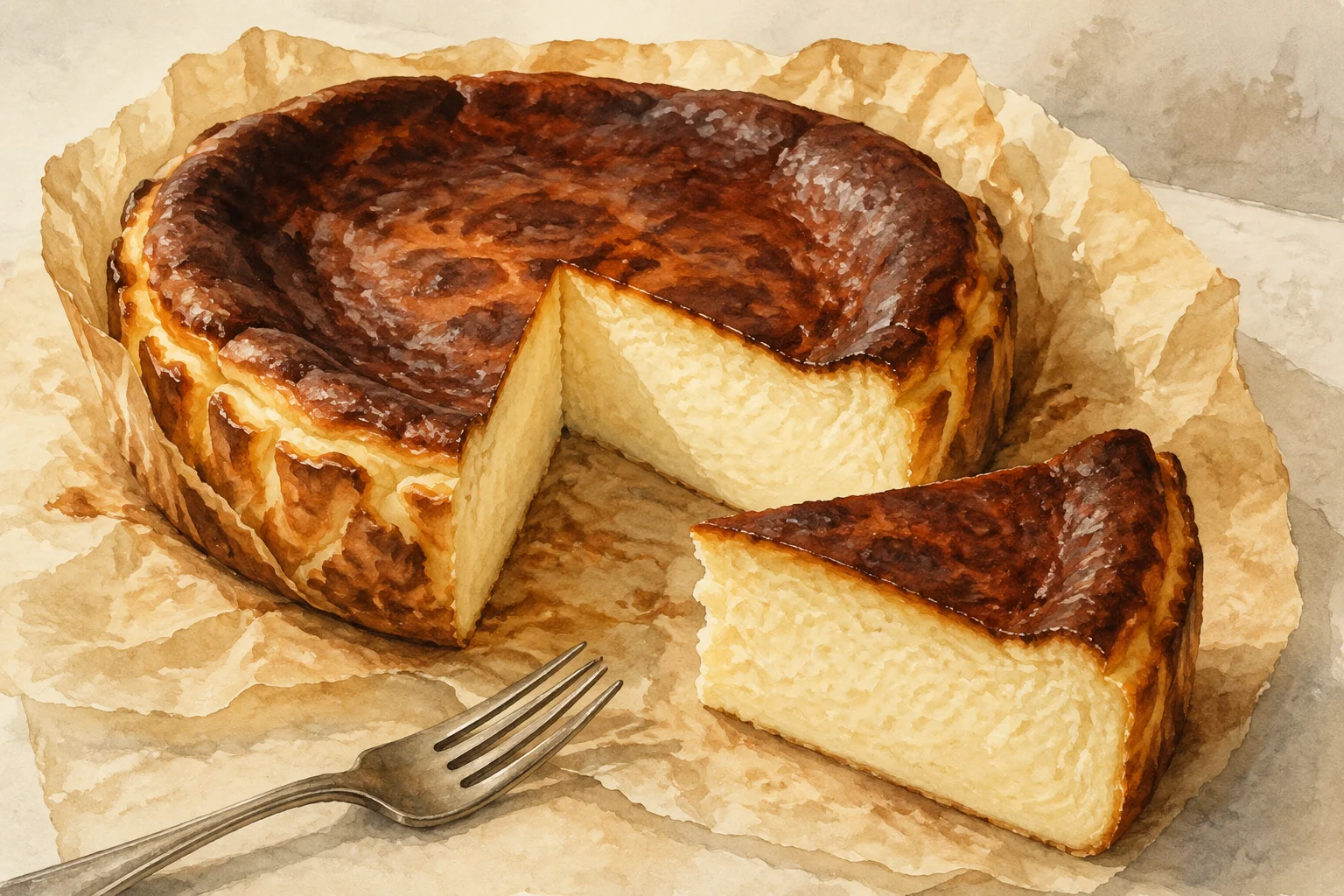
A dark, almost burnt top hides a soft kefir cheesecake center with a cleaner tang than a cream-only filling.
Make it
Method
- Heat the oven to 220°C. Line a 20 cm springform pan with two overlapping sheets of baking paper.
- Beat the kefir cheese, cream cheese, sugar, and salt on low speed until smooth. Scrape the bowl often.
- Add the egg in four portions, mixing each one in before adding the next. Mix in the cream.
- Fold in the sifted flour just until no streaks remain. Pour into the pan.
- Bake for 45 minutes, then check every 5 minutes. The top should be deeply browned and the centre should move together, not slosh like liquid. Check that the centre reaches 71.1°C (160°F); continue baking if needed, loosely covering the top if it is getting too dark.
Measure the centre, not the pan
71.1°C 160°F
- 1From above
- 2Centre
- 3Clear of the pan
Section view of the cake in its pan. Browning and wobble cannot replace a temperature check.
Insert a clean, thin-tip food thermometer from above so its sensing area reaches the centre of the filling. Keep it clear of the pan base and sides; follow the thermometer’s insertion-depth instructions. Check several places.
- Cool in the pan on a rack, then refrigerate within two hours of leaving the oven; do not wait all afternoon for it to become completely cold. Chill for at least 6 hours before slicing.
The top browns before the centre firms
The hot oven colours the surface while the inside is still soft. Kefir cheese contributes acidity and moisture; how thoroughly it was drained changes the batter. Check the cooking endpoint, then give the cake its full refrigeration time before judging the set.
Store it
Cool promptly, cover, keep at 4°C or colder, and use within 3 days or the earlier remaining life of the kefir.
Use firm, drained cheese
The 600 g is the weight after draining. Spreadable, wet curd adds more water and will not set the same way. Keep the cream cheese and flour in the stated amounts for this version; mascarpone or cornstarch changes the setting behaviour.
If the chilled cake leaks liquid
First check that the cake reached the stated cooking temperature and was chilled for at least six hours. A little whey can separate from variable homemade cheese; a loose centre can also reflect the cheese moisture, pan depth or baking. Do not assume that five extra minutes will fix every batch. For the next bake, use firm curd weighed after draining, keep the same pan and verify the temperature. A cake that missed safe cooking or storage checks should not be served as a soft-centred dessert.