
Water kefir carbonation
How to make water kefir fizzy
The bubbles in water kefir come from carbon dioxide made by yeasts. A vented jar lets much of that gas escape; a bottle traps it. To carbonate safely, you need a verified method that matches the drink and pressure-rated bottle. Adding extra fruit and waiting longer is not a reliable way to control pressure.
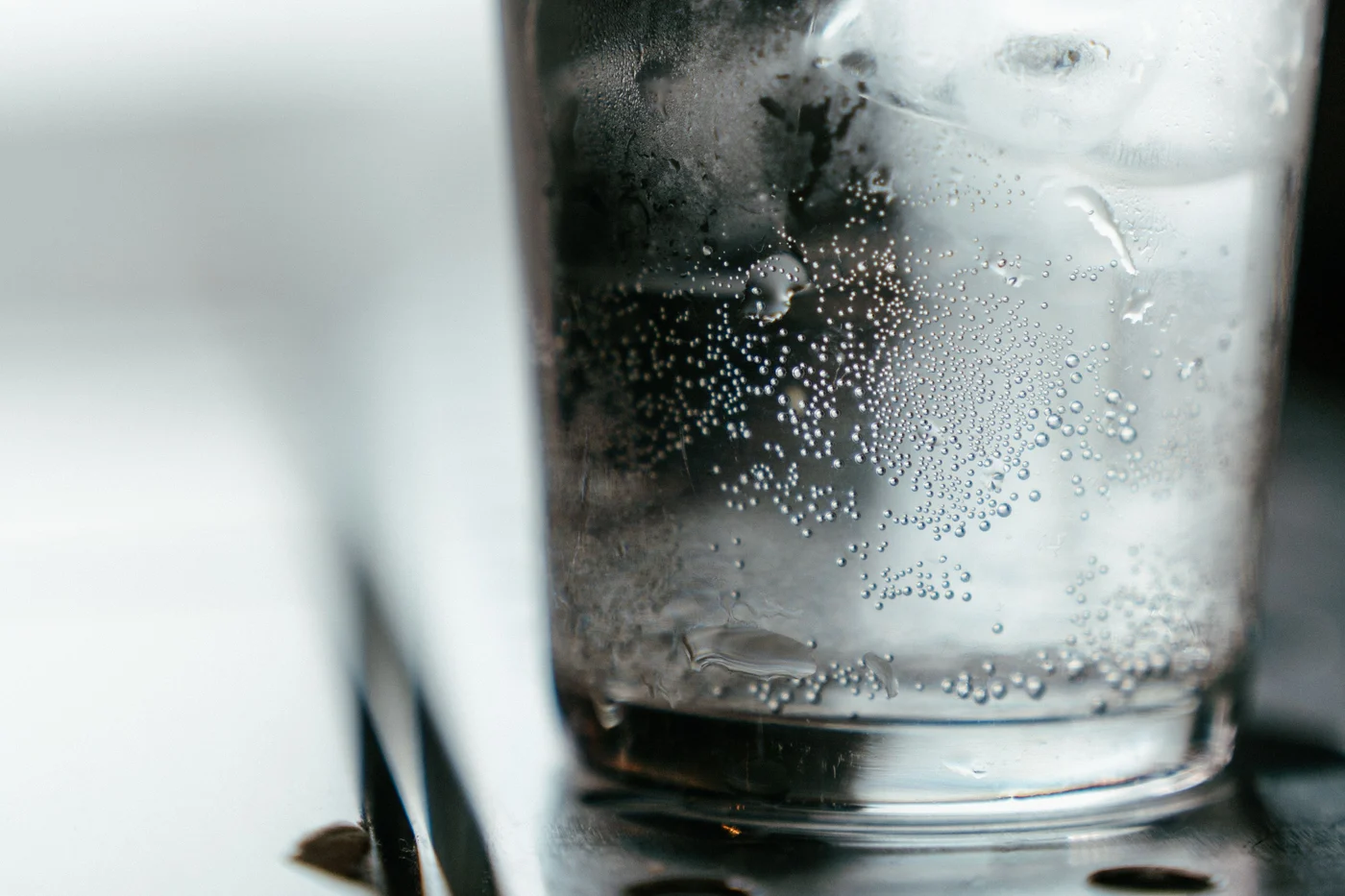
A quiet first ferment may be working normally
Start with a batch that met all the water-kefir method’s process checks. Lack of foam does not justify extra sugar, minerals or a longer primary ferment.
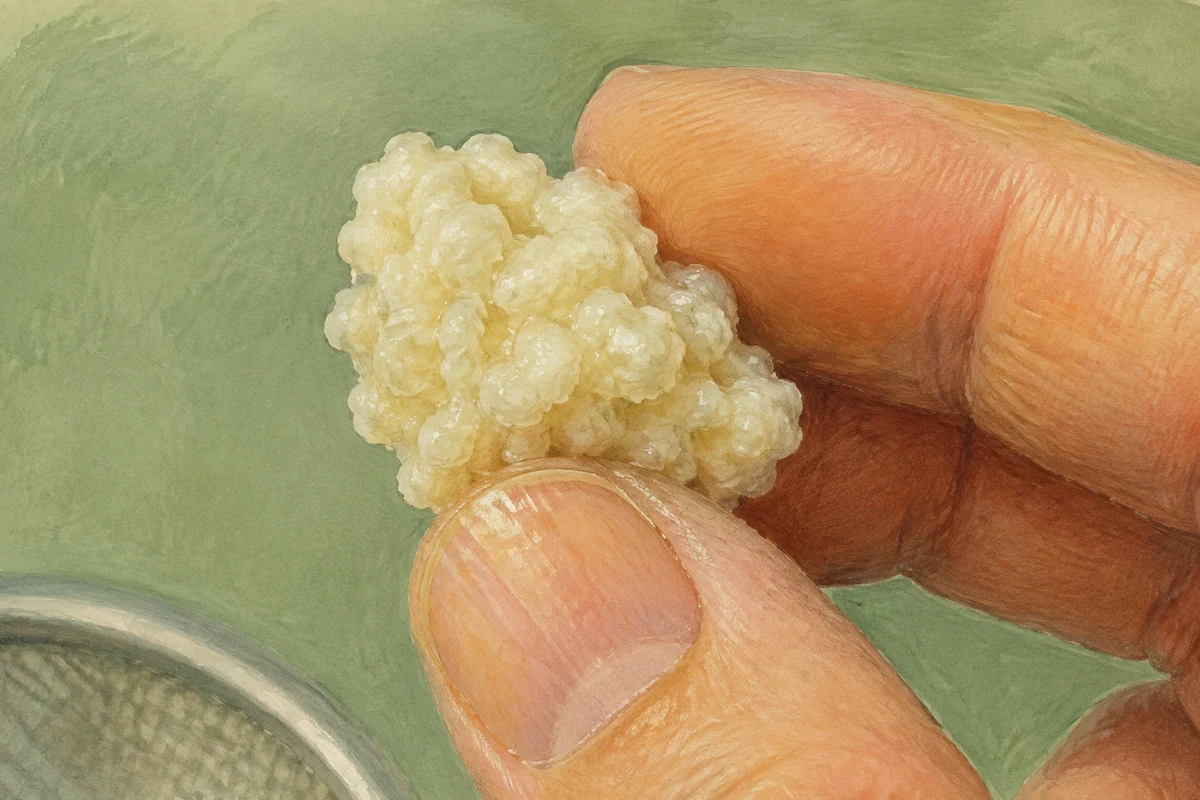
Remove the grains before flavouring. Bacteria and yeasts remain in the liquid, so fermentation can continue after straining.
Little fizz does not mean little fermentation
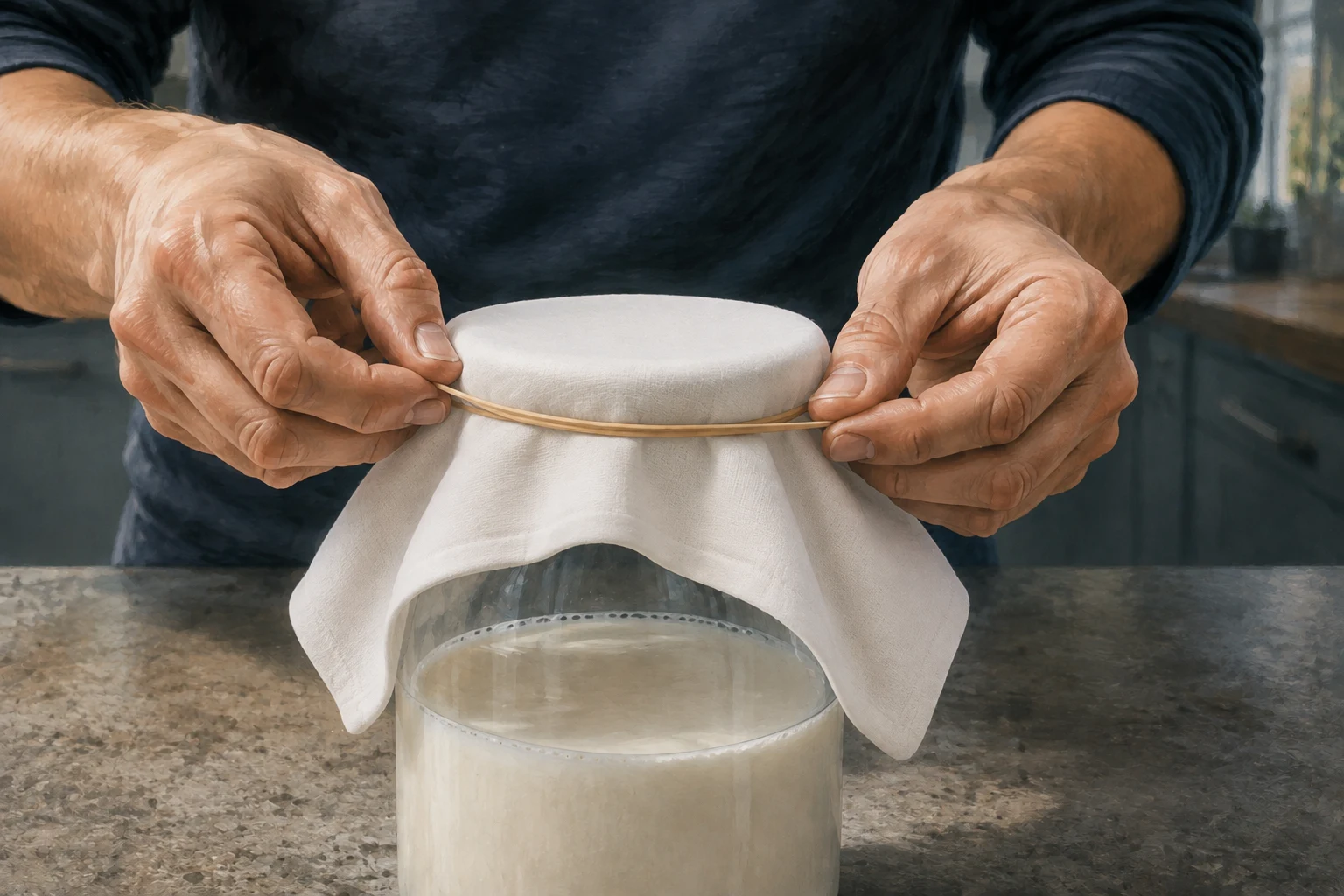
Vented cover: carbon dioxide can escape, so a normally fermenting drink can remain almost still.
Sealed bottle: carbon dioxide stays in the liquid and headspace, and pressure can keep rising. Bubbles cannot measure pressure or alcohol, or establish safety.
Do not simply seal the jar used for a first ferment. Bottle fermentation needs suitable pressure-rated equipment and a complete verified method for it. Understand the separate alcohol and pressure risks.
Choose the bottle and method together
Use a sound bottle explicitly rated for carbonation, with the maker’s fill, headspace and handling instructions. A reused decorative bottle or ordinary jar is unsuitable. The recipe must specify the drink volume, measured sugar or flavour addition, temperature, timing and pressure controls for that equipment. There is no universal safe number of warm hours for every bottle and batch.
If you do not have that complete method, flavour the strained drink in the refrigerator and serve it still. The flavour guide gives that option as much attention as the fizzy version.
A flat bottle does not necessarily need more sugar
| What changed? | What it may explain | Next step |
|---|---|---|
| A different cap or bottle | Gas may be leaking | Check equipment before changing the recipe |
| A colder room | Slower microbial activity | Follow the method’s temperature range |
| Grains recently revived | The first ferment may be unreliable | Restore the culture before bottling |
| A longer first ferment | Less fermentable sugar may remain | Compare with the recipe’s first-stage endpoint |
Do not correct several conditions at once. An extra sugar addition combined with more warmth and a better seal can produce much more pressure than the previous flat bottle.
Chill thoroughly before opening
Cold slows further fermentation and helps carbon dioxide stay dissolved. Follow the bottle method’s chilling instructions, keep the bottle upright and do not shake it. Open a sound, normally pressurized bottle slowly over a sink and away from faces.
A leaking seal, distorted cap, chip, crack or suspected extreme pressure is a different situation. Keep people away and follow the maker’s handling or disposal advice. Do not move or open damaged glass casually; chilling cannot repair it.
Would opening the cap every day make any recipe safe?
No. Gas can rebuild between openings, warm drink can foam suddenly, and venting does not establish how much pressure the glass can tolerate. Use the correct equipment and a controlled method; choose refrigerated flavouring when those are unavailable.
Fizz does not measure alcohol or health benefit
The yeasts also make alcohol. Chilling does not remove alcohol already formed, and the amount cannot be calculated from the bubbles. Read the alcohol guide if complete avoidance matters. A still, properly made water kefir is also a finished drink.
When a bubble trick is solving the wrong problem
Does “burping” the bottle guarantee safety?
No. Pressure can rebuild quickly, warm liquid can foam violently, and opening frequency does not fix weak glass or an uncontrolled recipe.
Should I shake the bottle to spread the fruit?
No. Mix the flavour gently before sealing. Do not shake a pressurized bottle before opening.
Does more carbonation mean more probiotics?
No. Gas reflects yeast activity and bottle conditions. It does not measure total live microbes or a health effect.
Research behind this answer
Where to go next
Comments (0)
No comments yet.
Comments could not be loaded.
Join the discussion