
Sleep, Stress & Gut-Brain Axis · Kefir Guide
Kefir for Sleep, Stress, and Mood: Evening Rituals and What the Gut-Brain Science Shows
Yes—enjoying a calm cup of plain kefir in the evening is a comforting, nourishing ritual that supports relaxed digestion and restful nights. Naturally rich in tryptophan, gentle milk protein, and fermentation-derived calming signals like GABA, kefir won’t knock you out like a sleeping pill, yet human studies show encouraging gains in sleep continuity, menopausal comfort, and everyday digestive ease.
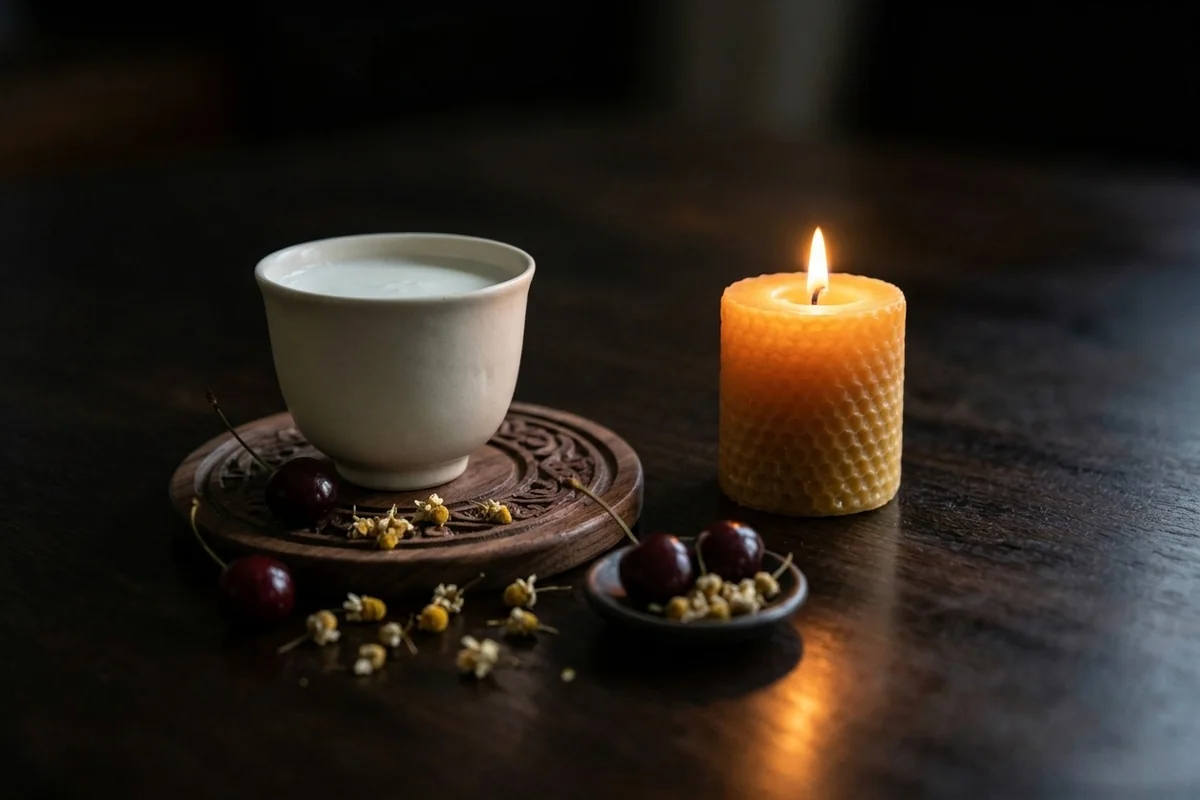
Drinking a small glass of plain kefir 1 to 2 hours before bed is a gentle, time-tested way to unwind your evening nervous system without weighing down your stomach. Across three human trials, daily kefir eased sleep disturbances and mood scores in postmenopausal women, reduced nighttime wakefulness in children on wrist sleep trackers, and noticeably calmed everyday tummy symptoms in young adults.
Think of evening kefir as a soothing kitchen cue—not an instant sedative—especially when paired with dim lights, a warm spice sprinkle, and fresh 24-hour fermentation tang.
From Russian bedside tradition to Japanese evening chōkatsu
If you grew up in Russia or Eastern Europe, few food habits feel quite as universal as kefir pered snom (кефир перед сном)—a quiet glass of kefir an hour or two before sleep. Generations of grandparents kept a pitcher in the kitchen because fermented milk feels light on a tired stomach, gently quiets late-night hunger without greasy heaviness, and creates a soothing physical rhythm before climbing into bed. Even in sanatoriums and family kitchens today, room-temperature kefir remains the quintessential nightcap.
Halfway across the world in Japan, modern wellness culture celebrates a remarkably similar habit under the idea of evening chōkatsu and nervous-system wind-down (夜の腸活・リラックス). While you rest, your parasympathetic “rest-and-digest” nervous system takes the wheel, slowing digestion down to an unhurried overnight repair shift. Stepping away from bright phone screens, dimming the kitchen lamp, and taking a few slow sips of cultured milk or berries sends your body an unmistakable message: work is done, and it is safe to shift gears.
Notice one smart detail tucked inside both traditions: temperature and timing. Rather than gulping ice-cold kefir straight out of a freezing fridge right as your head hits the pillow, pouring a modest 100–180 ml cup an hour or two before bed—and letting it lose its icy chill for fifteen minutes on the counter—keeps your belly relaxed and cozy. And if you prefer comparing morning versus nighttime rhythms across digestion and energy, check our morning or night kefir timing guide.

The gut-brain conversation: tryptophan, serotonin, and GABA in plain English
Why would something fermented in a jar on your kitchen counter have anything to do with calm thoughts or deeper sleep? Scientists call this two-way highway the gut-brain axis. Your intestinal lining and your brain stay in nonstop conversation through the vagus nerve, immune signals, and naturally produced chemical messengers.
Three gentle pathways help explain why a cultured dairy cup fits an evening wind-down so naturally:
- Tryptophan to serotonin and melatonin: Dairy proteins naturally contain tryptophan, an essential amino acid your body converts first into calming serotonin—roughly 90% of which is actually made in the gut—and then into sleep-guiding melatonin. Because kefir also holds a tiny bit of lingering natural milk sugar (or pairs easily with a few berries), a mild, steady carbohydrate nudge helps tryptophan travel smoothly across the blood-brain barrier without creating a jarring sugar crash.
- Fermentation-linked GABA pathways: GABA (gamma-aminobutyric acid) acts like your brain’s natural brake pedal, toning down racing stress signals. Several lactic acid bacteria found in traditional kefir carry the natural enzymes to convert glutamate into GABA—and in an experimental microbiome study (van de Wouw et al., 2020), mice fed traditional milk kefirs showed higher gut-microbiome capacity to produce GABA alongside calmer stress behaviors.
- Calm overnight digestion: Trying to sleep on an empty, growling stomach or a heavy greasy meal equally disrupts deep rest. Kefir’s fermented milk proteins and digested lactose sit lightly, giving steady overnight amino acids while leaving your digestive tract peaceful.
What three human clinical studies found about kefir, sleep, and mood
Human sleep science with fermented foods is young, warm, and refreshingly realistic. In a 30-day randomized trial published in Holistic Nursing Practice (Özcan et al., 2019), 68 postmenopausal women aged 45 to 65 with ongoing sleep troubles either drank 500 ml of milk kefir daily (split into morning and evening glasses) or kept their usual routine; by day 30, the kefir drinkers reported noticeably lower insomnia scores, lighter depressive feelings, and higher overall quality of life. More recently, a six-week randomized trial in BMC Psychiatry (Lawrence et al., 2025) gave 53 children aged 8 to 13 with ADHD 125 ml of organic milk kefir or placebo daily: wrist sleep-trackers recorded fewer minutes spent awake during rest periods in the kefir group alongside friendly shifts in gut Bifidobacterium, though subjective questionnaires felt mixed and daytime behavior did not shift dramatically. And in a 2026 randomized trial in The Journal of Nutrition (Bakırhan et al., 2026) following 65 healthy young adults sipping 250 ml of lactose-free kefir for six weeks, everyday digestive symptoms eased clearly while sleep and mental well-being scores nudged upward gently—showing that kefir supports comfort and calm best as part of an unhurried evening routine rather than acting as a strong sleeping pill.
Evening Gut-Brain Loop: Biological Pathways & Human Sleep Findings
Left: Natural calming messengers in an evening cup. Right: Real results from three human kefir trials (2019–2026) and your best bedtime window.
Evening Wind-Down Picker
How do your evenings usually feel? Pick a pattern for your coziest kefir pairing
Tap the evening scenario that feels closest to your nights to dial in timing, batch freshness, and simple toppings.
Pour 120–150 ml mild fresh kefir with warm cinnamon
Take your kefir out of the fridge 15 minutes early so it feels gentle and cozy rather than icy. Stir in a pinch of cinnamon or nutmeg and a few fresh berries or tart cherries, then sip it slowly by soft lamp light while letting your shoulders drop. Mild 24-hour kefir (see one-day vs. three-day kefir) keeps evening acidity soft and pleasant.
Pair steady daily sips with light afternoon walks and bone support
In Özcan et al. (2019), postmenopausal women split their daily milk kefir between morning and evening for 30 days and felt clearer gains in sleep and mood. Try half a cup with breakfast and another calm half-cup 1 to 2 hours before sleep—an evening habit that also supports nighttime calcium balance in our kefir and bone health guide.
Enjoy your kefir with dinner or afternoon tea, not right before pillows
Any liquid or slightly tangy drink consumed right before lying flat can nudge acid upward if your esophageal valve runs sensitive. Move your kefir pour to at least three hours before bedtime (or pair it with lunch or dinner), stick to fresher 24-hour batches rather than ultra-sour kefir, and read our full kefir for acid reflux & gastritis guide.
Try unsweetened soy kefir or tart-cherry infused water kefir
If milk protein bothers your stomach or sinuses at night, unsweetened soy kefir offers comforting creaminess alongside natural plant tryptophan, while a small splash of water kefir lightly infused with sour cherries or chamomile (thoroughly fermented so sugar stays low) feels crisp and soothing. Just keep the glass small (100–150 ml) so late-night bathroom trips do not wake you.

How to craft a soothing evening kefir ritual (without waking your stomach)
You do not need elaborate sleep powders or expensive supplements to enjoy kefir’s nighttime charm. Three tiny kitchen tweaks turn an ordinary fridge pour into a genuine wind-down pleasure:
- Pick a comfortable portion & timing window: For most people, 100 to 180 ml about 1 to 2 hours before bed hits the sweet spot—substantial enough to soothe bedtime hunger without sitting heavy or triggering midnight bathroom trips. If you tend to get heartburn or acid reflux, enjoy your kefir at least 3 hours before lying down instead.
- Let it warm slightly & keep it mild: Drinking very cold kefir straight from a 4°C shelf can briefly wake up gut motility; letting your glass sit out for 15 minutes (or stirring in warm-spiced mashed banana) feels much gentler. Freshly strained 24-hour kefir also has softer acidity than long-fermented three-day jars.
- Keep toppings sleepy, not stimulating: Warm spices like Ceylon cinnamon, cardamom, or a tiny grating of nutmeg pair dreamily with tart cherries, blueberries, sliced kiwi, or a teaspoon of rolled oats. Save dark cocoa, matcha, espresso, and sugary honey glazes for morning smoothies so hidden caffeine or blood-sugar swings never interrupt deep sleep!
Remember too that if you are brand-new to kefir and start pouring big evening glasses on night one, mild extra rumbling or gas can keep light sleepers awake—a gentle reminder to break in your gut during daytime meals for the first week or two (see kefir for IBS and bloating and starter portions) before turning it into a bedtime companion.
When sleep trouble needs more than a cozy cup
Evening kefir makes a lovely supportive lifestyle habit, yet chronic insomnia, loud snoring or gasping (possible sleep apnea), persistent anxiety, or depression lasting more than two weeks deserve personal medical support. As NIH NCCIH sleep guidance highlights, proven approaches like cognitive behavioral therapy for insomnia (CBT-I) and talking with your healthcare provider are the gold standard whenever sleep struggles persist.
Frequently Asked Questions
Is it really good to drink kefir before bed?
Yes—if your stomach feels comfortable with dairy and you do not have nighttime acid reflux, sipping 100–180 ml of plain kefir 1 to 2 hours before sleep is a classic Russian and Eastern European bedtime habit. It brings light, easy-to-digest protein, tryptophan, and friendly cultures without weighing you down.
Does kefir make you sleepy right away like a melatonin pill?
No—kefir is a nourishing whole food, not a fast-acting sedative. Rather than forcing drowsiness in 20 minutes, its tryptophan, calm gut-brain pathways, and soothing digestive ease work gently alongside good sleep hygiene over weeks.
Should I drink kefir cold from the fridge or at room temperature at night?
Room temperature or slightly cool feels much friendlier before bed! Pour your glass and let it sit for 10–15 minutes while you brush your teeth or tidy the kitchen so icy temperature does not stimulate your stomach right as you lie down. Never boil kefir—gentle warmth is cozy, whereas high heat retires the live probiotics.
What should I avoid pairing with kefir before sleep?
Skip cocoa powder, chocolate chips, matcha, coffee, heavy syrups, and spicy toppings late in the evening, since caffeine and fast sugar spikes both disturb deep sleep. Stick to warm cinnamon, nutmeg, blueberries, tart cherries, or plain oats instead.
Can I drink kefir at night if I get acid reflux or bloating?
If you experience heartburn or reflux when lying flat, shift your kefir earlier—at least 3 hours before bedtime, or enjoy it at breakfast or lunch. If you are still adjusting to bloating, start with 60 ml alongside daytime meals for a couple of weeks before trying an evening glass.
Sources
- Özcan H, Oskay Ü, Bodur AF. (2019). Effects of Kefir on Quality of Life and Sleep Disturbances in Postmenopausal Women. Holist Nurs Pract (PMID 30768439)
- Bakırhan H, Ozyurek Arpa F, Pehlivan M, Kalkan I. (2026). Effects of Kefir Consumption on Gastrointestinal Health, Biochemical Parameters, Sleep, and Mental Well-Being in Healthy Young Adults: a Randomized Controlled Trial. J Nutr (PMID 41314291)
- Lawrence K, Fibert P, Toribio-Mateas M, et al. (2025). Effects of kefir on symptoms, sleep, and gut microbiota in children with ADHD: a randomised controlled trial. BMC Psychiatry (PMID 41286799)
- van de Wouw M, Walsh AM, Crispie F, et al. (2020). Distinct actions of the fermented beverage kefir on host behaviour, immunity and microbiome gut-brain modules in the mouse. Microbiome (PMID 32423436)
- NIH National Center for Complementary and Integrative Health (NCCIH): Sleep Disorders: In Depth