
From milk tank to refrigerator
How is commercial kefir made?
A bottle can say “made from pasteurized milk” and still contain live cultures. The order of the steps explains why. Follow the milk through seven production decisions, then change the culture and finishing method to see what each combination means for the bottle in your fridge.
Follow the production line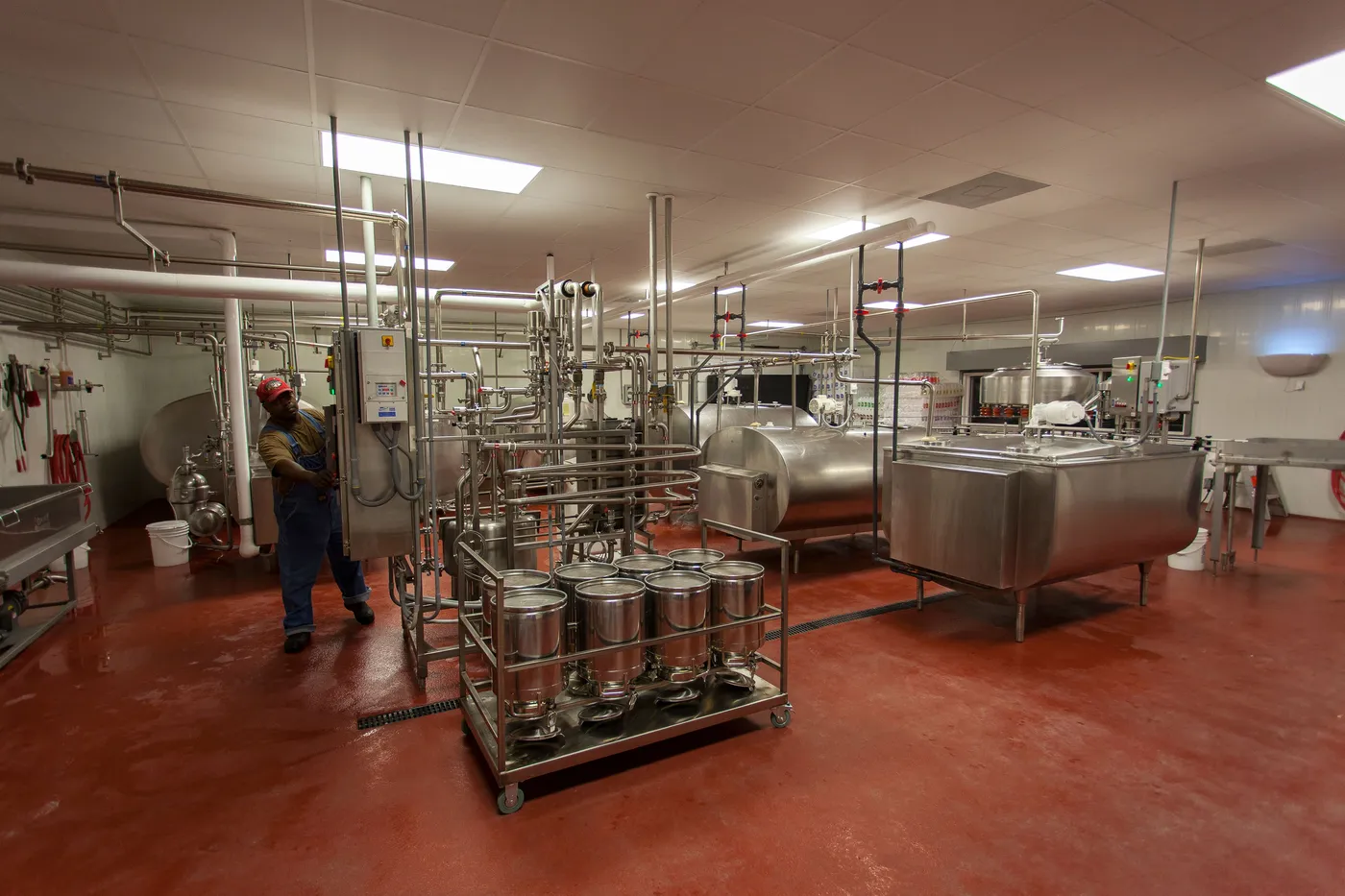
Seven connected decisions
Tap each station to see what changes
This is a typical route through a commercial dairy, not one mandatory factory recipe. The exact equipment, time, temperature, and order can vary.
Station 01
Build a consistent starting point
The dairy checks the milk and may adjust fat or milk solids for the product it wants to make. Many lines also homogenize the milk so fat stays evenly dispersed and the finished drink has a steadier texture.
Station 02
Prepare the milk for a controlled fermentation
The milk is heat-treated before the culture is added, then cooled to the temperature chosen for that starter. The heat step controls competing microbes and also helps shape the protein network that gives fermented milk its body.
Where does the heat step happen?
- 01Heat the milk
- 02Cool for the starter
- 03Add the culture
- 04Fermented food
If heat is applied after fermentation
The living cultures in the finished food are affected too. “Made with pasteurized milk” and “heat-treated after fermentation” describe different steps.
Find the distinction on a labelStation 03
Choose the microbial team
A producer may prepare a bulk starter with grains, use a grain-derived culture, or add a selected concentrated frozen or freeze-dried starter. These choices help make fermentation repeatable at factory scale. See how grains and starter powder differ if the package uses either term.
Station 04
Follow acidity, not just the clock
The culture works in a controlled tank or package. Producers monitor temperature and acidity as bacteria and yeasts change the milk. Some processes include a later ripening stage to develop the familiar lightly yeasty kefir character.
Station 05
Slow fermentation at the chosen endpoint
The kefir is cooled quickly and handled gently. Lower temperature slows further acid development, while careful pumping and mixing help protect the texture from thinning or separating.
Station 06
Keep it plain or add flavour and texture
A plain kefir may move directly toward filling. A flavoured version can be blended with fruit, sugar, flavouring, or texture ingredients at a point chosen for that process. The ingredient list reveals the finished recipe, not just the fermented base.
Station 07
Choose the final live or heat-treated path
The producer fills the product under controlled conditions. A live-culture kefir stays on a refrigerated path. A different product may be heated after fermentation for another shelf-life plan; that later heat changes or removes culture viability.
Build one possible bottle
Two choices can change the story on the shelf
Try both culture systems and both finishing paths. Notice which choice affects live status, and which describes how the fermentation begins.
Bring the factory story back to the bottle
Five label clues now make more sense
Product name
Start with milk kefir, a flavoured fermented milk, or a drink based on fermented milk. Similar-looking bottles can belong to different product types.
Culture and live wording
A named culture, viable-count promise or live-culture statement adds information. If you see CFU, check what the unit counts and whether the promise applies through the stated shelf life.
Ingredient list
This is where fruit, added sugar, flavouring, stabilizers, and other recipe decisions become visible.
Allergen statement
Milk kefir still contains milk protein. Lower lactose does not make a milk product dairy-free.
Storage, date, and opening
Follow the temperature, printed date and after-opening instructions for that exact package. Once it is home, the storage guide explains why the refrigerator and clean serving habits still matter.
Use this on your next bottle
Turn the production story into a 60-second label check
Sources behind this explanation
- Standard for Fermented Milks, CXS 243-2003Codex Alimentarius Commission
- Fermented Milk Products — production of kefirTetra Pak Dairy Processing Handbook
- Microbiological and chemical changes during kefir manufactureInternational Dairy Journal
- 乳品類衛生標準Taiwan Food and Drug Administration
- 發酵乳應標示保存期限及保存條件Taiwan Food and Drug Administration