
Something for the cake tin
Kefir muffins: one method, six flavours
The last few strokes of the spoon matter. Stop when the dry flour disappears, while the batter still looks a little lumpy. Start with blueberry and lemon; the variations below also cover apple, chocolate, pumpkin, matcha and black sesame—with less kefir where fruit purée supplies some of the moisture.
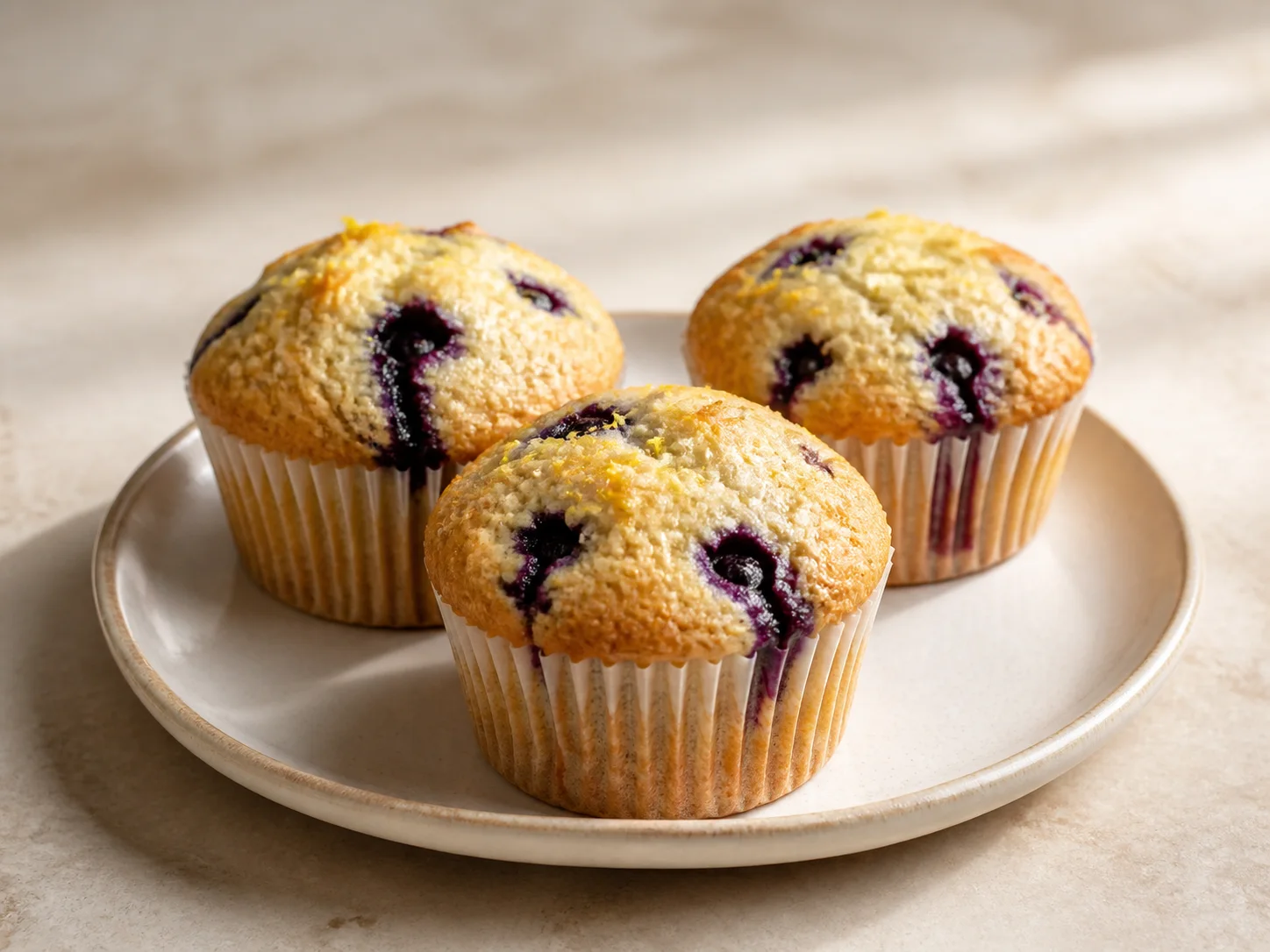
Mix briefly, then bake
Method
- Heat the oven to 190°C conventional, with a rack in the middle. Line a standard 12-cup muffin pan. If making a variation below, check its kefir quantity before measuring.
- Whisk the kefir, eggs, sugar, oil and lemon zest in one bowl. In another, mix the flour, baking powder, baking soda and salt thoroughly.
- Pour the wet mixture into the dry ingredients. Fold with a spatula, adding the blueberries as the mixture starts to come together. Stop when no dry flour remains; do not beat it smooth. Divide among the cups, filling about three-quarters full. If your cups are smaller and batter remains, use an extra lined cup rather than filling to the rim.

Fold the batter; leave the lumps At 0:27–0:37, the spatula lifts and folds a thick, lumpy batter, then folds in the blueberries. For this kefir recipe, stop once no dry flour remains; do not beat it smooth. RecipeTin Eats uses a different formula, so keep the quantities and baking instructions above. The clip has music, with no spoken instructions.
Open the original video on YouTube - Bake for about 20–25 minutes, checking from 20 minutes. The tops should spring back gently, and a skewer inserted into the centre of a muffin should come out without wet batter; blueberry juice is different. Bake a little longer if needed. Leave in the pan for 10 minutes, then transfer to a rack to cool.
Pick a flavour before you measure the kefir
Each option replaces the blueberries and lemon zest. Keep the other ingredients, except for the kefir changes shown. Choose one combination per batch.
Use 240 ml kefir: apple or matcha
Apple and cinnamon: 160 g peeled apple, cut into small dice + 1 teaspoon cinnamon. Mix the cinnamon with the flour; fold in the apple towards the end.
Matcha and white chocolate: 2 teaspoons matcha powder + 70 g white chocolate chips. Mix the matcha into the dry ingredients and add the chips towards the end. Matcha contains caffeine; white chocolate usually contains milk.
Use 180 ml kefir: banana or pumpkin
Chocolate banana: 1 mashed ripe banana + 25 g unsweetened cocoa + 60 g dark chocolate chips. Whisk the banana into the wet ingredients, mix the cocoa with the flour, then fold in the chips.
Pumpkin and walnut: 150 g cooked, cooled pumpkin purée + 60 g chopped walnuts + 1 teaspoon cinnamon. Whisk the pumpkin into the wet ingredients, put cinnamon with the flour, and add walnuts towards the end. Use plain purée, not sweetened pie filling.
Black sesame and banana: 1 mashed ripe banana + 2 tablespoons unsweetened black sesame powder. Add the banana to the wet mixture and sesame to the dry ingredients.
These use less kefir because the mashed fruit or pumpkin adds moisture. Banana size and the water content of pumpkin still vary; the baking checks matter more than an exact minute on the clock.
A few lumps are better than another minute of mixing
Once flour meets liquid, stirring develops the structure that can make a muffin chewy. King Arthur’s basic muffin method uses brief, gentle mixing and leaves small lumps. Stop when the ingredients come together; the batter does not need to look smooth.
Can I use frozen blueberries?
Yes. Fold them in near the end and expect that the muffins may need longer in the oven. Check the centre for wet batter, not just the colour of the top. Frozen fruit can release more juice; this baking guide explains the difference.
Why are they heavy or rubbery?
Too much mixing is one possibility, but also check the flour weight, the freshness of the baking powder and whether the oven was fully heated. A dense, wet centre can be underbaking, especially in a large cup or a batch with very wet fruit. Those problems need different fixes.
The tops are browned but the centres are wet
Give them more time. If the tops are getting too dark, cover loosely with foil. Next time, check the oven temperature with an oven thermometer and avoid overfilling the cups. A skewer pushed only into the top cannot tell you whether the middle is cooked.
Wait until after baking to taste. Raw flour and egg batter can carry harmful bacteria; wipe up spills and wash the mixing tools before using them for ready-to-eat food.
Cool first; pack for later
Let the muffins cool on a rack so trapped steam does not make the bases soggy. Once cooled, keep them in a covered container in the fridge and eat within four days, or freeze for later. Refrigerate within two hours of baking, or one hour in heat above 32°C. Thaw in the fridge; warm briefly before serving if you prefer a softer crumb.
The base contains milk, egg and wheat. The variations may also contain walnuts, sesame or allergens listed on chocolate packaging. A fermented milk ingredient still contains milk proteins.
Bake the muffins, or keep your kefir cold?
Kefir brings liquid and acidity to this batter. A baked muffin is not equivalent to the live drink used in a health study, so the findings from those studies should not be treated as benefits of this recipe.
For a cold breakfast with fruit, try overnight oats. If you would rather use the frying pan, the pancake guide has sweet and savoury choices. Curious about the drink itself? Start with what kefir is.