
Milk grain care
How to care for milk-kefir grains
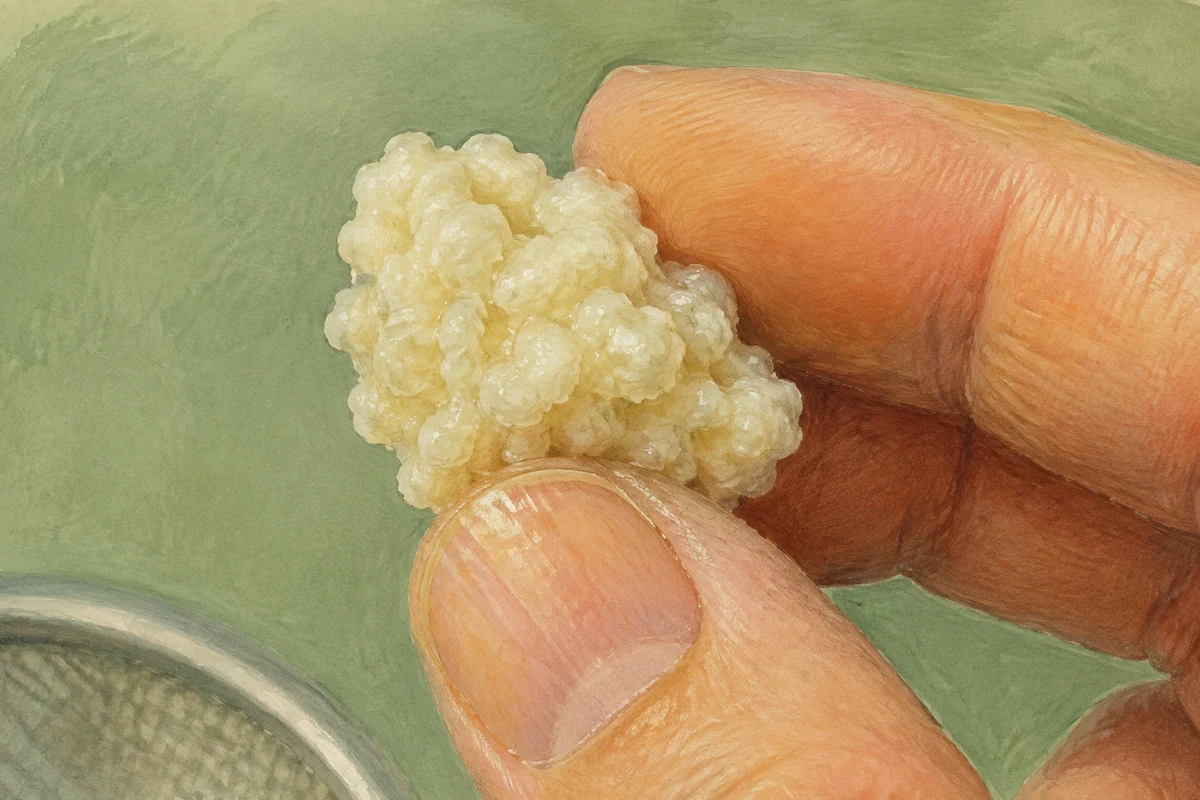
Healthy milk-kefir grains repeatedly acidify fresh milk under the same conditions. They do not have to keep doubling in size. If a familiar batch starts finishing much earlier, weigh the grains: growth may have changed the ratio without you changing the written recipe.

Keep a reference batch
Record the milk, volume, drained grain weight, temperature and finish time of a normal batch. Look for the usual tart aroma and texture, alongside the acidity check in the milk-kefir method. Those observations are more useful than judging whether every grain looks identical.
Routine rinsing is unnecessary. Use clean equipment to strain the finished kefir, then put the grains into fresh pasteurized milk. Keep the process simple enough to repeat.
When the jar suddenly finishes early
More grains in the same milk usually speed acidification. Warmer conditions, less milk and a later check can also explain early separation. Weigh the working grains and check the temperature beside the jar before adding supplements.
Reduce a grown portion, adjust the milk volume to what you can use, or choose a more stable location. Change one condition at a time. The ratio guide helps you choose a starting adjustment.
The grains hardly grow, but the milk ferments normally. Should I replace them?
Growth alone is not a replacement test. Keep observing whether the measured batch reliably meets its acidity and timing checks. If it does, increasing grain size is not a necessary goal. The grain-size study explains why bigger does not automatically mean better.
When fermentation becomes slow
Recent transport, refrigeration, cool conditions or a milk change can slow a culture. Return to a small batch of its familiar pasteurized milk and follow the relevant revival instructions. Record each fresh feeding, rather than leaving one jar warm for several days.
Do not drink recovery liquid until the culture meets normal process checks repeatedly. A milk batch that does not reach pH 4.6 or less within 36 hours has failed. Discard that liquid; repeated failures need a culture or method review, not more time in the same milk.
Keep surplus manageable
Retain the working quantity you need. Share healthy surplus with its feeding history, keep a separate backup using a preservation method, or discard surplus that no one can maintain. Increasing milk indefinitely can create more finished kefir than you will use.
For a short break, healthy grains can rest in fresh pasteurized milk at 4°C or colder for up to seven days. The storage and revival guide covers preparation and returning to normal batches.
Replace contaminated grains
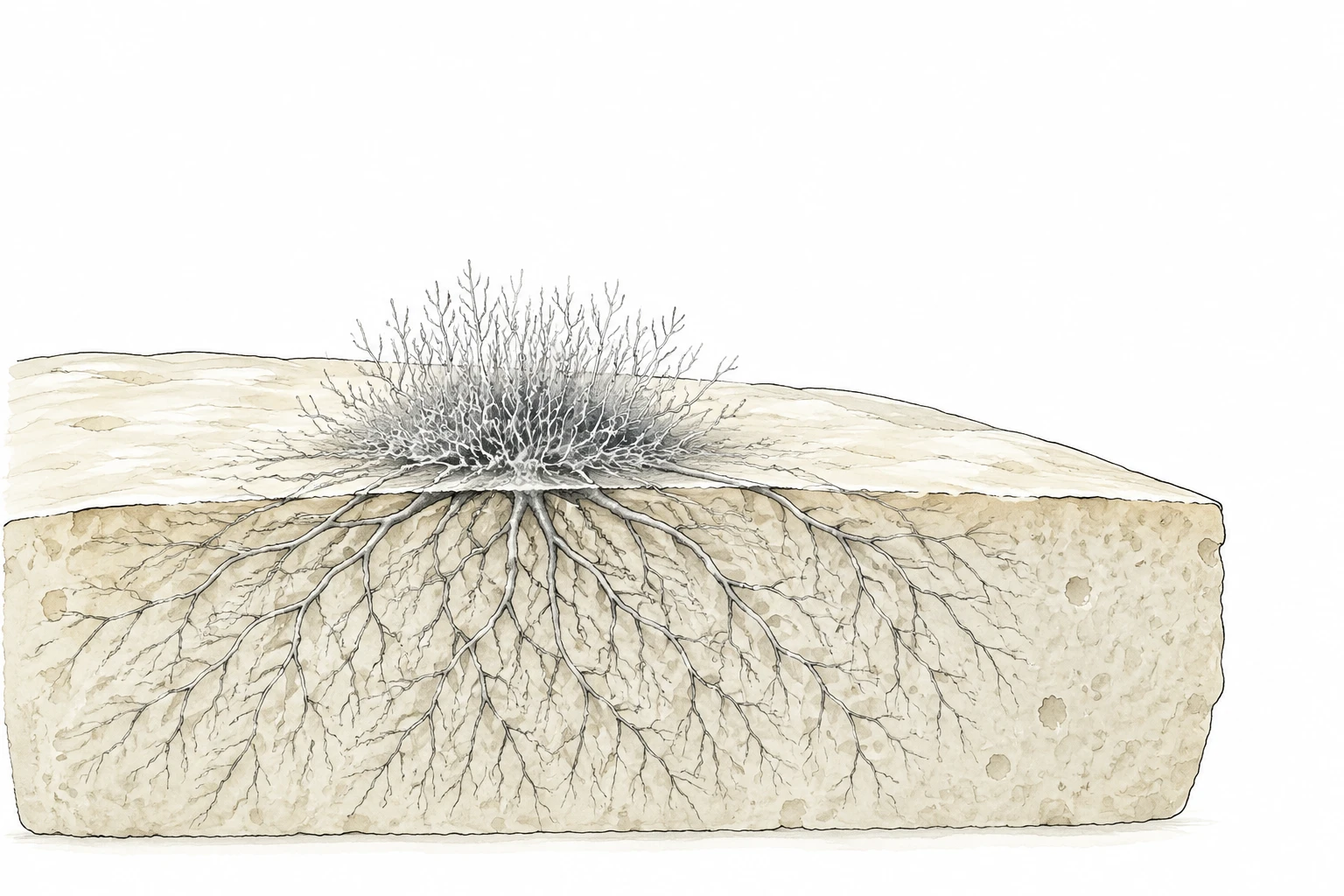
Fuzzy growth, unusual coloured patches, insects or rotten or sharply chemical odour mean discarding the liquid and grains without tasting. Clean and sanitize the equipment, review ingredients and restart with a healthy culture. Rinsing mouldy grains is not a safe recovery method.
The weekly culture check-up
- 1Performance
Does it make clean kefir near the familiar time?
- 2Ratio
Has the grain weight quietly increased?
- 3Environment
Did temperature, milk, storage, or timing change?
- 4Decision
Maintain, adjust one variable, recover, or replace.
What healthy grains do not need to prove
Should I rinse the grains after every batch?
No. Routine rinsing is unnecessary. Strain with clean equipment and put the grains into fresh milk.
Must healthy grains keep growing?
No. Growth varies. Repeated clean fermentation on a reliable schedule is the more useful test.
Can I rescue mouldy grains by washing them?
No. Discard the liquid and grains, clean the equipment, and restart with a healthy culture.
Do healthy grains have to float?
No. Gas, trapped curd, grain shape, and movement in the jar can make grains rise or sink. Judge repeated fermentation, not position.
Is every yellow grain unhealthy?
No. Milk, fat, age, and storage can shift colour. A new coloured patch, fuzzy growth, or an abnormal smell is different and calls for replacement.
Research behind this answer
Where to go next






Comments
No comments yet.
Comments could not be loaded.
Join the discussion