
Make kefir
Is this kefir safe to drink?
A layer of pale whey can look alarming and still be an ordinary fermentation change. A small fuzzy patch is a different matter: discard the batch and any grains that touched it. The decision needs both the appearance and the history of the food. Do not taste a questionable batch to find out.
Decision 1: Do you see a clear discard sign?
Discard the entire batch if you see any of these:
- fuzzy or hairy growth;
- pink, orange, green, blue, or black spots that are not part of a known ingredient;
- insects, larvae, or obvious dirt inside the container;
- a cracked, leaking, bulging, badly damaged, or unclean container; or
- an unfamiliar rotten, putrid, ammonia-like, or sharply chemical smell.
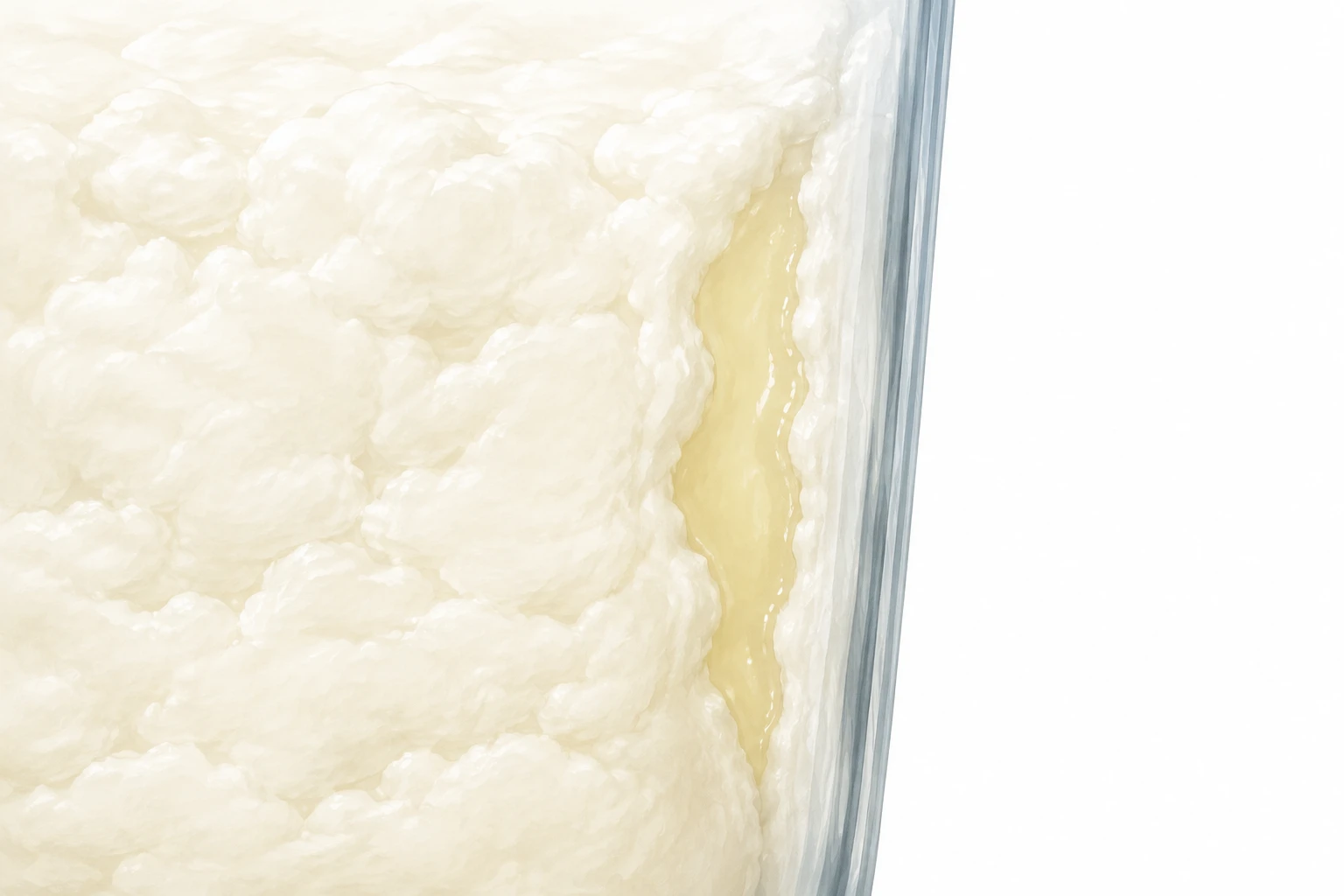
The visible patch is not the whole problem
Schematic — not a diagnostic photograph
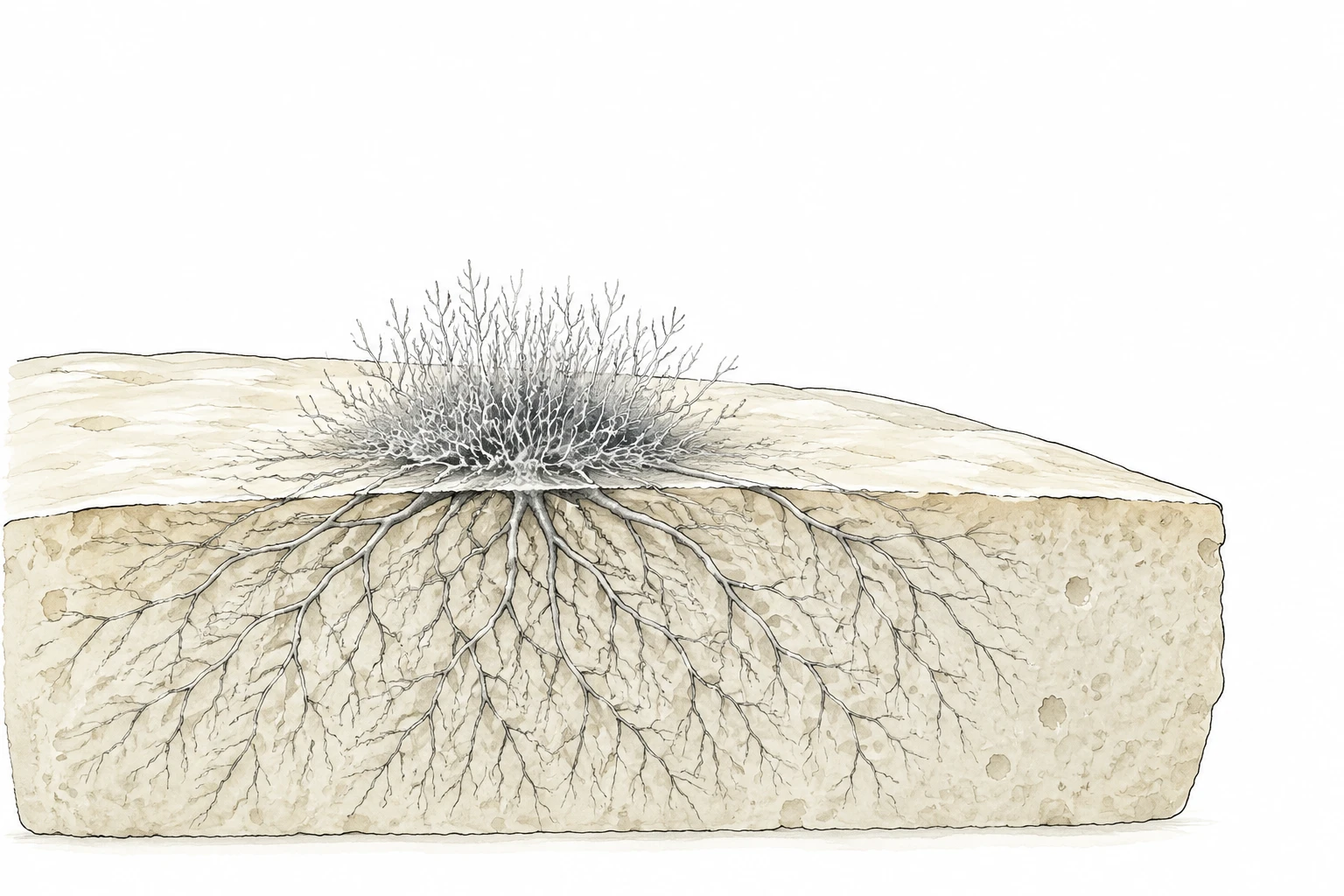
Discard the whole batch rather than skimming off a spot or keeping the clearer liquid underneath. Grains that contacted the contaminated food should go too. Clean the container and tools thoroughly; replace equipment that is damaged or cannot be cleaned properly. Restart with a separate healthy backup or a new culture.
There is only one fuzzy spot. Can I rescue the grains?
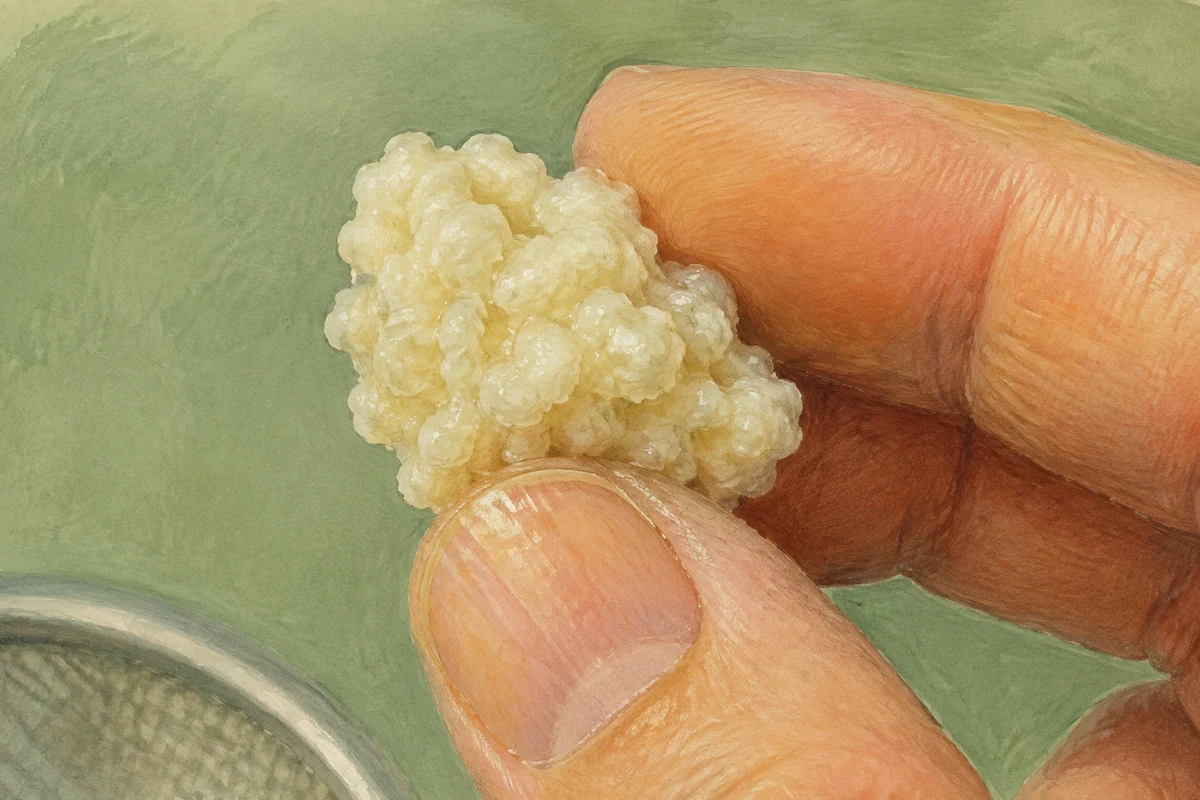
No. The visible spot does not show the full extent of contamination. Discard the contacted grains as well as the liquid. Do not rinse them and return them to fresh milk.
Check how the batch was made
Use pasteurized milk, active milk-kefir grains and clean equipment. The BCCDC kefir guidance describes traditional milk fermentation at 20–25°C, usually around 18–24 hours, with an acidity checkpoint of pH 4.6 or lower. If it has not reached that pH within 36 hours, the batch has failed and should be discarded. Thirty-six hours is an outer failure limit, not a target to keep every jar warm.
After the proper endpoint, strain and chill promptly to 4°C or colder. This guidance specifies cooling within four hours after filtration; do not use that as a reason to leave finished kefir on the counter.
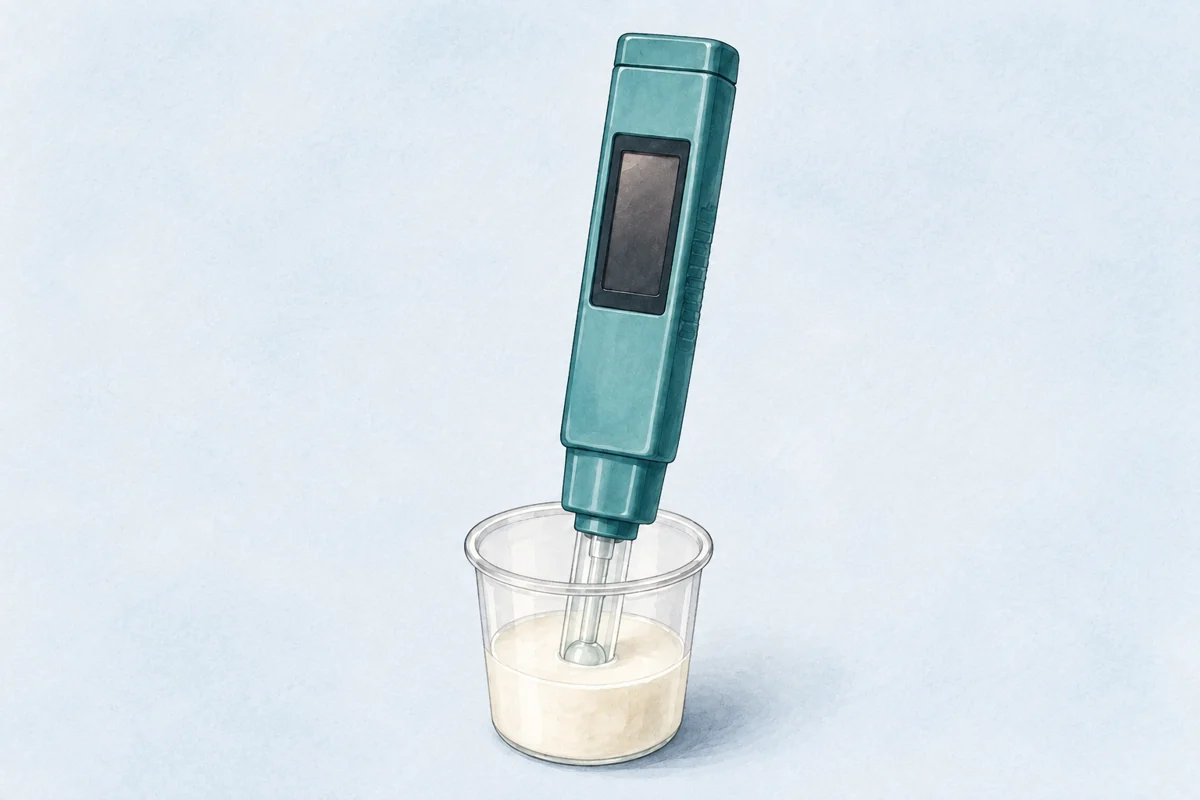
Acidity is one process check. Acid-resistant pathogens can survive, so a reading below 4.6 does not prove that raw milk, dirty equipment or unsafe storage became harmless. Read how to use a pH meter for measurement limits and the complete milk method for the whole process.
Water kefir and plant-based ferments need instructions for their own base and culture. Do not use the milk timetable as their safety test. When the milk's handling before fermentation, an ingredient's identity or the finished drink's refrigeration is unknown, do not serve the batch.
Check the history too
A discard sign?
Fuzzy growth, unexplained colour, contamination or damaged packaging
Yes → Discard the batch and contacted grains.
↓ No visible warning → check the history
Is the history known?
Ingredients, equipment, fermentation and cold storage
No → Do not serve it. A normal smell cannot fill the gap.
↓ History known → check the whole process
Did it meet its own method?
Use the correct base, culture, time, temperature and measured acidification.
No or uncertain → Do not use texture or tasting to approve it.
↓ Only after process checks, consider texture preferences.
Measure pH correctly · Full milk method · Pressurized bottles need a separate decision
Some untidy-looking changes can be normal
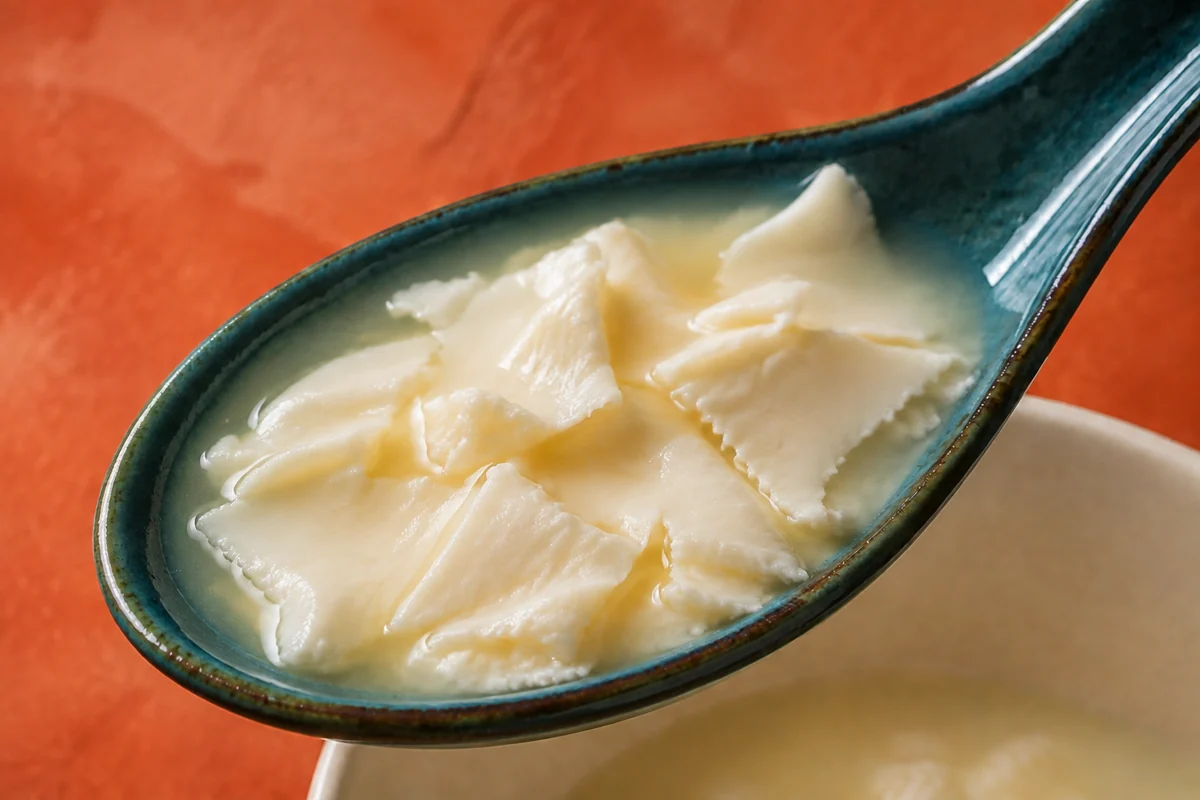
Milk kefir may set unevenly, form soft white curds or separate into curds and pale yellow whey. Separation often means it fermented further than the texture you prefer. If the ingredients, clean process, timed acidification and refrigeration were sound, this can be a texture problem rather than contamination.
White curds and pale yellow liquid, with no unusual growth
These can be ordinary milk-kefir curds and whey. Check the process first; if it was sound, you can stir them together. The drink will still taste more sour than an earlier finish. The jar-reading guide explains the stages.
It looks smooth and smells normal, but I do not know whether it stayed cold
Appearance cannot settle a missing storage history. Do not serve it. Refrigerating it now cannot undo earlier unsafe handling.
Sediment in water kefir may come from the culture or known ingredients. A plant-based drink can separate differently from milk. Compare the batch with the normal appearance of that exact base and recipe, and discard when there is unfamiliar growth or another contamination sign.
A sealed bottle needs a separate decision
Fermentation can continue after straining. Gas trapped in a sealed container can build pressure, and chilling slows that process without eliminating pressure already inside.
For deliberate carbonation, use a validated method and containers rated for that purpose. Headspace and occasional opening do not make an unsuitable bottle safe. Keep bottles away from heat, chill before opening, do not shake, and keep the opening away from faces. Read the bottle-pressure guide before attempting a sealed fermentation.
If a bottle is cracked, leaking or appears dangerously pressurized, stop handling it. Keep people away and follow local safe-disposal advice. Do not try to rescue the drink by opening damaged glass beside your face.
Alcohol can be present in homemade milk or water kefir. If you need to avoid it completely, do not rely on taste or a home fermentation timetable; choose a product with an appropriate verified alcohol specification.
Make the next batch easier to judge
Label the culture, base, start time, temperature and refrigeration date. Keep milk and water cultures separate, and do not return experimental portions to the parent culture. The fermentation journal helps connect an observation with what actually changed.
If the food was made safely but the taste is too sour or the texture is thin, keep that question separate from contamination. Troubleshooting can help you change one variable in the next batch.
Pregnant people, children under five, adults 65 and older, and people with weakened immune systems have a higher risk of serious foodborne illness. Use pasteurized ingredients and reliable handling; an uncertain homemade batch is not suitable for these households. People who are seriously ill or significantly immunocompromised should discuss live-microbe products with their treating team.
If someone already drank it
Stop serving the batch. Keep the ingredient, package and timing information so you can explain what happened. Food poisoning can cause diarrhoea, abdominal pain, nausea, vomiting and fever.
CDC advises medical attention for bloody diarrhoea, diarrhoea lasting more than three days, fever above 38.9°C, vomiting that prevents keeping liquids down, or dehydration signs such as very little urine, dry mouth or dizziness on standing. During pregnancy, fever with flu-like symptoms also needs prompt medical attention.
Breathing trouble, sudden lip, tongue or throat swelling, or faintness after a food may be a serious allergic reaction. Get emergency medical help immediately and follow any prescribed adrenaline plan. This is a different problem from a sour or contaminated batch.


Comments
No comments yet.
Comments could not be loaded.
Join the discussion