
Savory kefir recipes
Kefir chicken marinade: herbs or curry
Garlic, rosemary and black pepper coat chicken thighs in a tangy kefir marinade. Give them a few hours in the fridge, then spread them out on the roasting tray so the edges can brown.
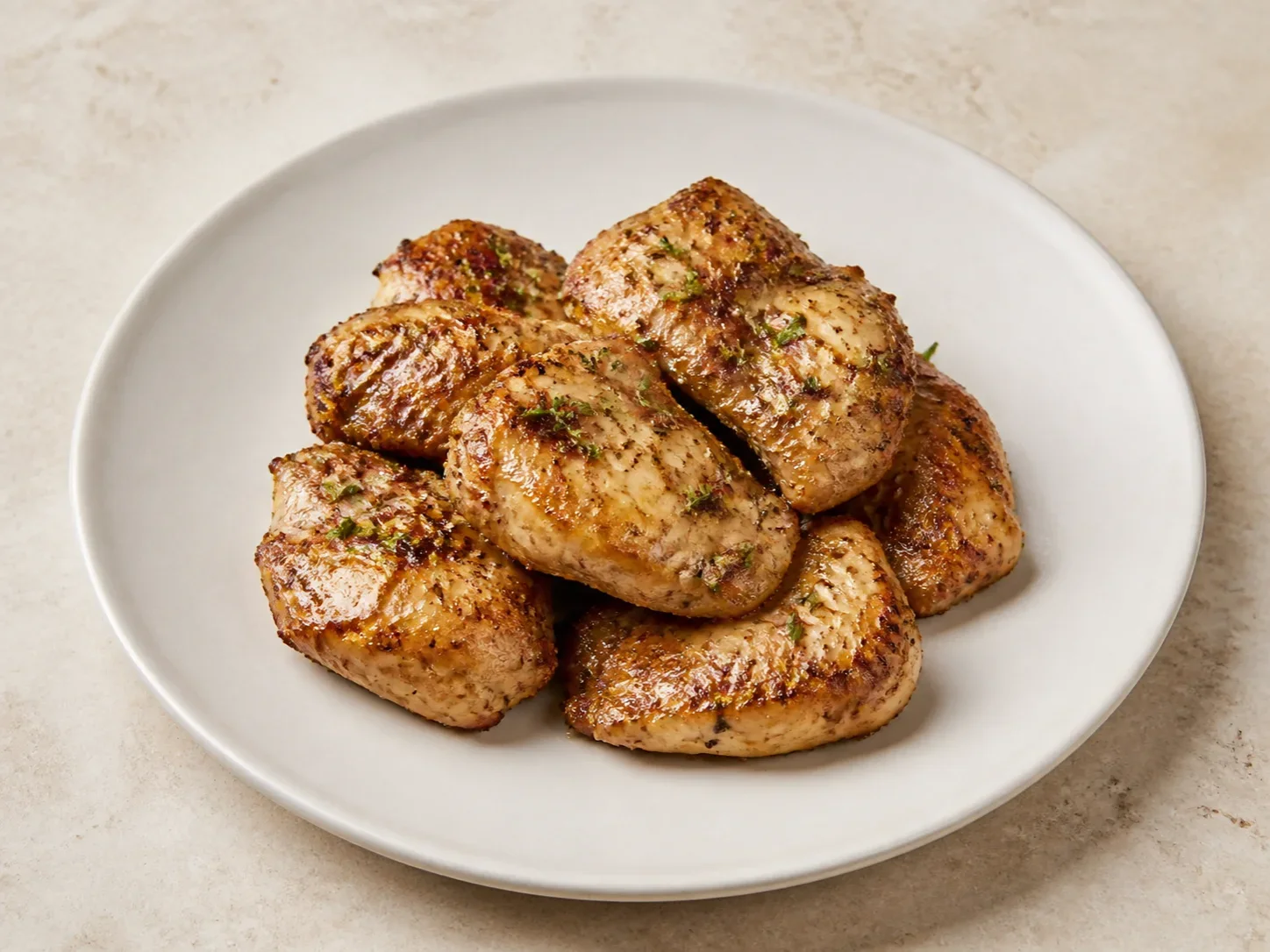
Make it
Method
- Whisk the kefir with the listed seasonings in a clean bowl.
- Put the chicken in a lidded container, add the marinade, and turn each piece until every surface is coated.
- Refrigerate for 2 to 8 hours, turning the chicken once if the pieces are not fully covered.
- Heat the oven to 200°C. Lift the chicken out, let excess marinade drip off and arrange in one layer on a roasting tray. Discard the used marinade. Roast for about 25–35 minutes, checking that the thickest part of each large piece reaches 74°C. Use clean tongs for the cooked chicken.
What does the marinade change?
Kefir carries the garlic, herbs and spices in a coating over the chicken. Salt can move into the meat, while much of the herb flavour stays near the surface. Evenly thick pieces help you cook the centre through without drying the thinner edges.
Keep raw and cooked food separate
Marinate covered at 4°C or below. Kefir does not disinfect raw chicken. Discard used marinade and wash its utensils. Refrigerate cooked leftovers within two hours, or one hour above 32°C, and use within three days; reheat to 74°C. Safe cooking temperatures.
Choose herbs or curry
Rosemary, garlic and pepper
Use the main recipe: 600 g boneless skinless chicken thighs, 240 ml kefir, 2 grated garlic cloves, 1 tablespoon chopped rosemary, 1 teaspoon salt and ½ teaspoon black pepper.
Curry, ginger and garlic
Keep 600 g boneless skinless chicken thighs and 240 ml kefir. Replace all the herb seasoning with 1 tablespoon mild curry powder, 1 grated garlic clove, 1 teaspoon salt and 1 teaspoon grated ginger. Use the same refrigerated marinating time and roast to 74°C in the thickest pieces. Curry blends differ in heat and ingredients; check the packet.
Why is the cooked chicken dry or soft?
Dry meat can come from cooking longer than needed, especially with thin pieces. Check the temperature earlier next time and remove pieces as they reach 74°C. If the surface becomes unusually soft during marinating, the acidic mixture or a long soak may be contributing; use the shorter end of the suggested time for the next batch. Texture alone cannot tell you whether raw chicken is safe. Do not cook chicken that smells spoiled or has an unusual slimy surface.