
Kefir and digestion
Can you drink kefir with lactose intolerance?
Possibly—and the reason is more interesting than “fermentation removes some lactose”. In a small human study, the milk and kefir servings contained exactly the same amount of lactose. People still digested plain kefir better and reported less severe gas. That makes it worth considering if milk bothers you, although it does not guarantee that every bottle will agree with you.

What happens to lactose after you swallow it?
Lactose is the sugar naturally present in milk. Your body needs an enzyme called lactase to break it into smaller sugars it can absorb. Fermentation uses some lactose, but ordinary milk kefir still has a variable amount left. The route below explains what can happen after you swallow it:
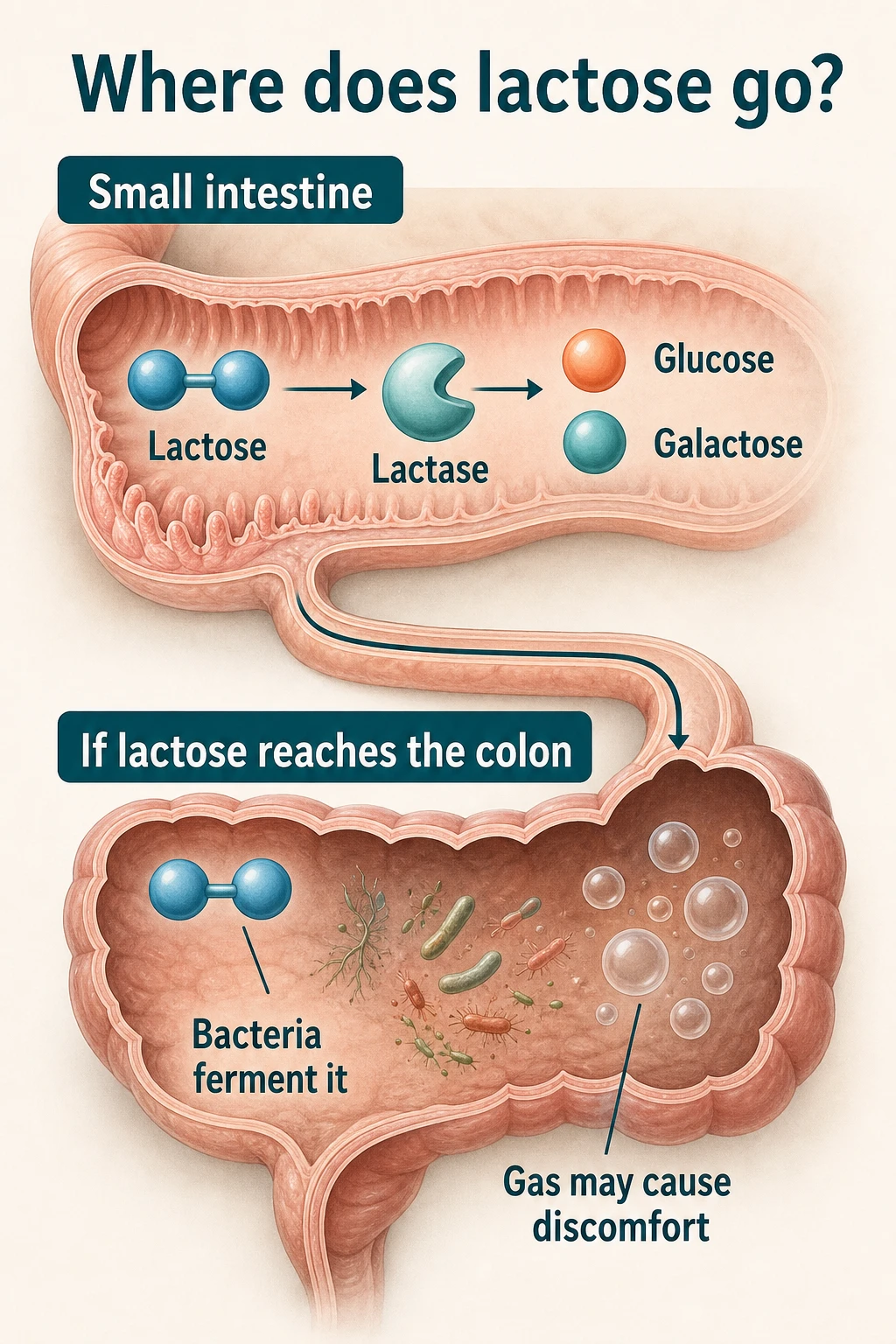
With lactose intolerance, that last step can mean bloating, rumbling, gas, pain or diarrhoea. The amount matters: many people tolerate some lactose, particularly in small servings with a meal. NIDDK explains why tolerance varies.
An allergy is an immune reaction to milk proteins. Changing the lactose content does not make a milk product suitable for someone with milk allergy.
Fifteen people, five drinks, one equal lactose challenge
In the 2003 crossover study, 15 adults with confirmed lactose maldigestion tried milk, plain and raspberry kefir, and plain and raspberry yogurt on separate days. Every test meal supplied 20 g of lactose, after an overnight fast.
Researchers measured breath hydrogen and digestive symptoms for eight hours. Breath hydrogen helps show how much of the lactose escaped digestion and was fermented in the colon; it is not a measurement of how much lactose remained in the bottle.
Plain kefir produced a substantially lower breath-hydrogen response than milk. Plain yogurt performed similarly, while raspberry kefir fell between plain kefir and milk. Across the kefir and yogurt meals, people rated the severity of flatulence 54–71% lower than after milk. Pain and diarrhoea were negligible across the test meals, so this was chiefly a digestion and gas result.
Fermentation does more than use up sugar
Microbes use part of the lactose while milk ferments. They can also supply an enzyme called beta-galactosidase, which breaks down lactose. That offers another way a cultured milk can be easier to digest—even when the lactose load is the same.
The enzyme explanation has experimental support, including an animal study of active versus heat-treated kefir cultures. It helps explain the mechanism; it does not tell us how much benefit a particular person will get from a particular bottle.
If you want the kind of cultured product represented in the human study, look for live cultures and check whether it was heat-treated after fermentation. A clearly labelled lactose-free kefir is a more direct option when your priority is minimizing lactose. Our guide to choosing kefir explains the differences between bases and labels.
A sourer jar is not a lactose test
With homemade kefir, the milk, culture, time and temperature all affect the result. Sourness tells you about acidity; it cannot tell you the lactose concentration. Extending fermentation until a drink is unpleasantly sour is a poor substitute for a lactose-free label.
If you have lactose intolerance and want to try milk kefir, make the first serving easy to judge:
- Try a small amount with a familiar meal. Around 60–120 ml is a practical food suggestion, not a dose established by this study.
- Notice how you feel over the following hours. Keeping the product, portion and meal similar makes your observations more useful.
- If it agrees with you, keep the amount you enjoy. If it repeatedly causes symptoms, stop; you do not need to push through them.
It can go into food, too. A little kefir in a herb dressing or overnight oats may fit your meal better than a glass on its own. The lactose still counts: turning kefir into a recipe does not remove it.
What if kefir still makes you feel unwell?
A kefir label says “lactose-free”. Does that make it safe for milk allergy?
No. Lactose is a sugar; the allergy concerns milk proteins. Lactose-free milk kefir still contains those proteins. For a diagnosed milk allergy, check the ingredients and allergen information of any alternative and follow your allergy care plan.
Three details that are easy to miss
Goat milk still contains lactose. Switching animals does not remove the sugar. A product’s actual lactose content and your response matter more than a claim that goat milk is automatically easier.
Milk-kefir grains can carry milk residue. Rinsing a milk-grown culture does not establish that it is dairy-free. Water-kefir grains are a different culture, usually grown in sugar water; check ingredients and handling if dairy avoidance is essential.
Better lactose digestion is a specific benefit. It does not demonstrate that kefir has cured an allergy or treated another gut condition. For constipation, microbiome changes and other digestive claims, the evidence comes from different studies.