
Everyday Nutrition · Kefir Guide
Kefir for Weight Loss and Satiety: What Really Works in Everyday Life
Kefir isn’t a magic fat burner—yet plain, unsweetened milk kefir is one of the most satisfying whole foods you can put in your kitchen when managing weight. With around 9 grams of protein for roughly 105 to 160 calories per cup, it calms cravings effortlessly when it replaces sugary drinks and snacks.

Plain, unsweetened milk kefir helps support weight management—not by melting fat overnight, but by keeping you genuinely satisfied on modest calories. Human clinical studies show that kefir on its own produces mild or mixed changes on the scale, yet its ~9 grams of dairy protein per cup (~105–160 kcal) and creamy tang make cutting back on sugary drinks and late-night snacks feel surprisingly easy.
In your own kitchen, the biggest win comes from using plain kefir as a nourishing breakfast anchor or smart afternoon swap rather than pouring extra calories on top of heavy meals.
Why kefir shines for satiety—even though it isn’t a magic fat burner
Scroll through wellness blogs in English, German nutrition columns on Abnehmen (healthy weight loss), or Taiwanese body-management forums, and you will see two very different stories about kefir. Animal studies in lab mice occasionally show dramatic drops in body fat, which makes for eye-catching headlines. Yet when researchers look closely at human adults going about real life, the truth is gentler, calmer, and actually much more practical.
In a 2023 systematic review and meta-analysis pooling randomized human trials (Yahyapoor et al., 2023), adults drinking kefir saw encouraging improvements in fasting insulin and insulin balance—meaning calmer energy regulation—while average body weight itself did not automatically plunge without overall calorie shifts. Similarly, an 8-week randomized trial of 75 overweight or obese premenopausal women (Fathi et al., 2016) found that adding extra servings of kefir or low-fat milk inside a structured dairy-rich plan led to similar, encouraging drops in weight, BMI, and waist size—showing that nutrient-dense dairy protein and calcium did the heavy lifting rather than any secret fat-burning compound.
That honest kitchen reality is actually wonderful news! You don’t need a crash diet or extreme promises. When you are aiming for a gentle, sustainable calorie deficit without feeling miserable or constantly thinking about your next snack, satiety (feeling pleasantly, steadily full) is what decides whether a healthy routine lasts two days or two years.
The nutrition math: why ~9 grams of protein per cup feels so steady
According to standard USDA nutrition benchmarks, a 1-cup pour (about 240 ml) of plain, unsweetened milk kefir lands right in a sweet spot for everyday energy balance:
- Plain low-fat milk kefir (240 ml): Roughly 104–110 kcal, ~9 g protein, 2.5 g fat, and 11–12 g natural milk lactose (0 g added sugar).
- Plain whole-milk kefir (240 ml): Roughly 149–160 kcal, ~8–10 g protein (around 9 g average), 8 g fat, and 11–12 g natural lactose (0 g added sugar).
Clinical nutrition research on protein and weight management (Paddon-Jones et al., 2008) explains why those 9 grams of dairy protein feel so different from a sugary snack or refined pastry. Milk protein—a natural blend of quick-acting whey and slow-digesting casein—signals fullness hormones in your gut, uses slightly more energy during digestion, and helps protect lean muscle while you gradually lose excess fat. Even better, kefir’s gentle lactic acid and thick, velvety body slow down how fast a snack empties from your stomach, while keeping post-snack energy smoother (Salari et al., 2021).
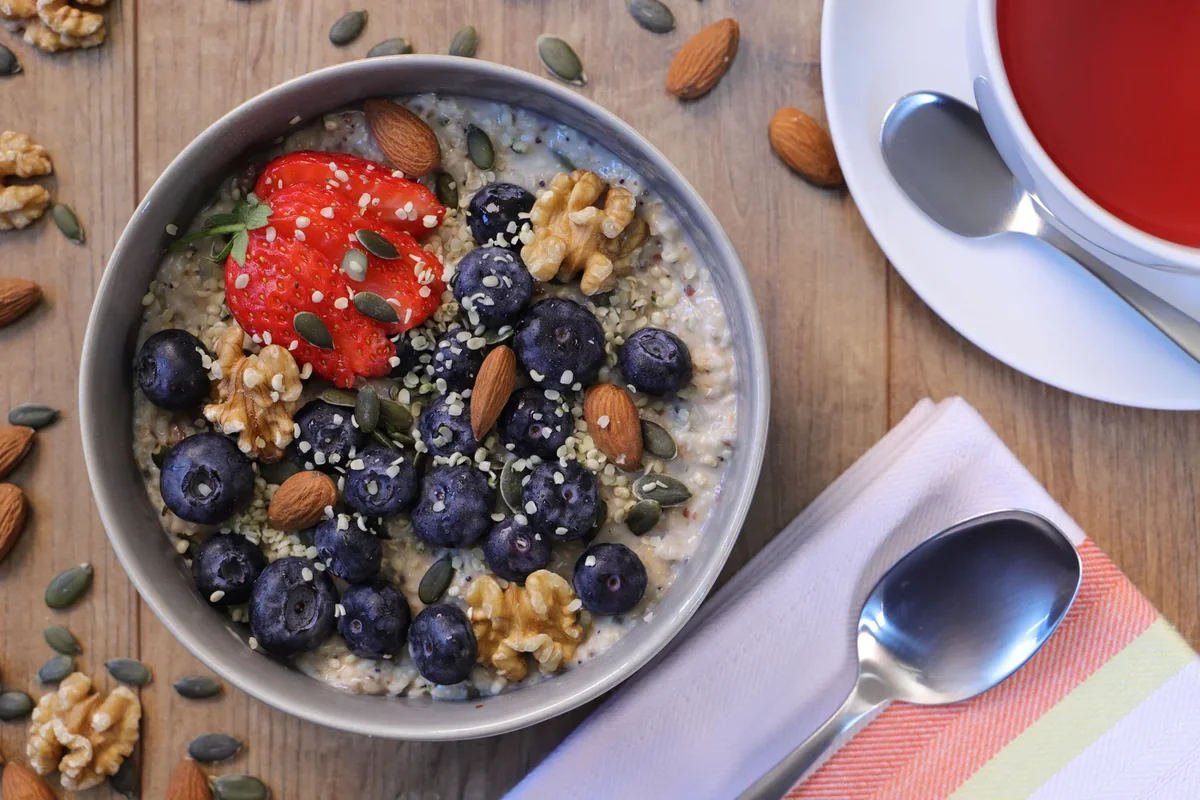
Pair a 150–240 ml glass with soluble fiber from rolled oats, chia seeds, or berries, and you get a breakfast or afternoon mini-meal under 250–300 calories that holds you comfortably until your next proper meal. Want to explore how morning vs. evening timing affects hunger? Read our morning or night kefir timing guide.
Visual Guide: Cup-for-Cup Calorie Reality & 3 High-Satiety Kefir Habits
Left: Plain unsweetened kefir vs. flavored bottles and sweet drinks per 240 ml cup. Right: How real kitchens use kefir to curb cravings.
Watch out for sneaky sugar in flavored kefir and water kefir sodas
Here is the single biggest pitfall we see in home fermentation kitchens and supermarket aisles alike: assuming every bottle with “kefir” or “probiotics” on the label is automatically light on sugar.
When store-bought kefirs add mango purée, strawberry jam, honey, or cane sugar to soften kefir’s natural tang, a modest 130-calorie cultured drink quickly climbs past 210 calories with 3 to 4 teaspoons of added sugar. Even in Taiwan’s chilled dairy case, bottles labeled simply “Original” (原味) often contain added sugar unless they explicitly say “Unsweetened / No Added Sugar” (無加糖)—check our kefir label guide anytime you shop.
And what about sweetened water kefir fruit sodas? Traditional water kefir starts from sugar water (roughly 5–6% sugar). After 24 to 48 hours of primary fermentation, the grains consume most of that sugar, leaving an unflavored brew with roughly 20–25 kcal and 2–4 g of residual sugar per 100 ml and practically zero protein. However, if you bottle it for a bubbly second fermentation with grape juice, mango nectar, apple juice, or extra spoonfuls of cane sugar, a tall 400–500 ml bottle can quietly pack 150–250 calories of fast-absorbing liquid sugar—with none of the satiating protein found in milk kefir! Enjoy fruity water kefir as a joyful, lighter replacement for regular soda (American Heart Association healthy beverage guidance), just don’t count it like plain zero-calorie water.
| Everyday Drink (per 240 ml cup) | Calories | Protein | Added Sugar & Fullness Feel |
|---|---|---|---|
| Plain unsweetened low-fat milk kefir | ~104–110 kcal | ~9 g | 0 g added sugar · light, steady satiety |
| Plain unsweetened whole-milk kefir | ~149–160 kcal | ~8–10 g | 0 g added sugar · rich, long-lasting fullness |
| Plain unsweetened water kefir (unflavored, 48h) | ~48–60 kcal | 0 g | ~5–9 g residual sugar · refreshing fizz, light fullness |
| Fruit-juice water kefir soda (F2 bottled) | ~90–140+ kcal | 0 g | ~14–28 g sugar · enjoyable treat, treat like light juice |
| Flavored store yogurt drink / milk tea | ~200–320+ kcal | 1–5 g | ~18–35+ g added sugar · quick energy spike, hungry soon |
Kitchen Strategy Finder
Which hunger moment throws off your day?
Tap the pattern that feels most familiar to get a warm, realistic kefir routine that works without strict dieting.
Pair 150–240 ml of plain kefir with oats or eggs
Toast, plain rice porridge, or a sweet pastry alone leaves you hungry again by 10:30 AM. Stir 150–240 ml of plain milk kefir into apple-walnut kefir overnight oats or pour a quick glass beside two boiled eggs and cherry tomatoes. You get ~9 g of extra dairy protein plus fiber and live cultures in under two minutes.
Trade your 3 PM sweet drink for chilled kefir & fruit
Afternoon bubble tea or flavored café lattes easily run 250–450 kcal with lots of added syrup. Chill 150–200 ml of plain unsweetened milk kefir with a handful of fresh blueberries, sliced Taiwan guava, or a dash of cinnamon—brisk, refreshing tang resets your palate for roughly 80–130 kcal while keeping dinner appetite calm.
Keep a measured 120 ml cup ready for evening hunger
When genuine hunger—not just boredom—hits at 9:30 PM, trying to white-knuckle through often backfires into finishing half a bag of chips. Sipping 120 ml of plain kefir (~55–80 kcal, ~4.5 g protein) or spooning two tablespoons of creamy strained kefir cheese over cucumber slices takes the edge off comfortably without weighing down sleep.
Enjoy water kefir in 150 ml portions—keep water as your main hydrator
If you love making bubbly fizzy water kefir with fruit juice or dried figs, treat it like a refreshing craft soda rather than plain drinking water! Pour a modest 150–200 ml glass with meals, ferment primary batches a full 48 hours for less residual sugar, and rely on plain milk kefir or strained kefir cheese when you actually want protein fullness.
Whole milk vs. low-fat kefir—and three kitchen-tested ideas
People often ask whether low-fat or whole-milk kefir is better when trimming waistlines. Happily, both work nicely—and the best choice depends on your palate and overall meals:
- Low-fat kefir (~104 kcal/cup): Saves roughly 45–55 calories per glass while delivering the exact same ~9 g of protein and live-culture richness. Great if you enjoy creamy smoothies, Bircher muesli, or want a bigger pour on a lighter calorie budget.
- Whole-milk kefir (~150–160 kcal/cup): Feels luxuriously thick and velvety in your mouth! Many home fermenters find a smaller 120–180 ml pour of homemade whole-milk kefir satisfies them far better than a watery low-fat snack, keeping them full for hours.
Try bringing plain kefir onto your weekly table in ways that actually feel joyful, not restrictive:
- High-protein overnight oats: Combine rolled oats, a teaspoon of chia seeds, chopped apple, and plain milk kefir in a jar (apple-hazelnut kefir Bircher muesli makes mornings feel like a café treat).
- Lighter salad dressings & savory bowls: Whisk plain kefir with garlic, lemon, and herbs instead of heavy mayonnaise—our kefir herb ranch dressing brings big flavor for a fraction of the calories.
- Cooling summer lunch bowl: Blend plain kefir with roasted beets or cucumbers into chilled beet kefir soup alongside grilled chicken or chickpeas—hydration, fiber, and ~15–25 g of balanced protein on one plate.
Curious about making your own plain batch from living grains so you control every ingredient? Follow our beginner milk kefir guide or check how much kefir to drink daily.
Skip “kefir-only” crash diets
Some online posts promote drinking only kefir for three to seven days to drop weight fast. Please skip extreme liquid cleanses—rapid drops mostly reflect water and muscle loss rather than lasting fat loss, and often trigger rebound hunger, fatigue, or tummy upset. Enjoy plain kefir alongside colorful vegetables, whole grains, legumes, and regular movement; and check with your doctor or registered dietitian if you are pregnant, managing diabetes, recovering from disordered eating, or navigating a medical weight program.
Frequently Asked Questions
Can drinking kefir every day help me lose belly fat?
Kefir doesn’t selectively burn belly fat on its own, yet plain unsweetened milk kefir can play a helpful supporting role in healthy fat loss. With ~9 g of protein for ~104–160 kcal per cup, swapping it in place of sugary beverages or heavy snacks helps you feel full comfortably while maintaining an overall calorie deficit.
Is whole-milk kefir or low-fat kefir better for weight management?
Both can work wonderfully! Low-fat plain kefir saves ~45–55 kcal per 240 ml cup while keeping ~9 g of protein, whereas whole-milk kefir (~150–160 kcal) offers extra richness that helps many people feel satisfied on a smaller 120–180 ml pour. Pick whichever version keeps you happiest and free of added sugar.
Does sweetened water kefir hinder weight loss?
It can sneak in extra calories if you sip fruity second-ferment bottles freely all day! Unflavored 48-hour water kefir is modest (~20–25 kcal/100 ml), yet adding fruit juice, mango, or cane sugar for fizzy bottling raises liquid sugar without adding any filling protein. Treat flavored water kefir as an occasional soda swap, not a protein snack.
When is the best time to drink kefir for appetite control?
Whenever hunger tends to trip you up most! Having 120–240 ml with breakfast helps prevent mid-morning snacking, while enjoying a chilled glass at 3 PM or 120 ml in the evening takes the edge off sweet cravings gently.
Can I drink kefir for satiety if regular milk upsets my stomach?
Often yes—friendly bacteria and yeasts in milk kefir digest most of the lactose during fermentation, making it much gentler than regular milk for many people with lactose sensitivity. You can also try unsweetened soy kefir for plant protein; if you have a true milk-protein allergy, avoid dairy kefir completely.
Sources
- Yahyapoor F, et al. (2023). Effects of Kefir Consumption on Cardiometabolic Risk Factors: A Systematic Review and Meta-analysis of Randomized Controlled Trials. Curr Drug Targets (PMID 37102491)
- Fathi Y, Faghih S, Zibaeenezhad MJ, Tabatabaei SHR. (2016). Kefir drink leads to a similar weight loss, compared with milk, in a dairy-rich non-energy-restricted diet in overweight or obese premenopausal women: a randomized controlled trial. Eur J Nutr (PMID 25648739)
- Paddon-Jones D, Westman E, Mattes RD, Wolfe RR, Astrup A, Westerterp-Plantenga M. (2008). Protein, weight management, and satiety. Am J Clin Nutr (PMID 18469287)
- Salari A, et al. (2021). Effect of kefir beverage consumption on glycemic control: A systematic review and meta-analysis of randomized controlled clinical trials. Complement Ther Clin Pract (PMID 34280689)
- American Heart Association: Healthy Eating & Reducing Added Sugars